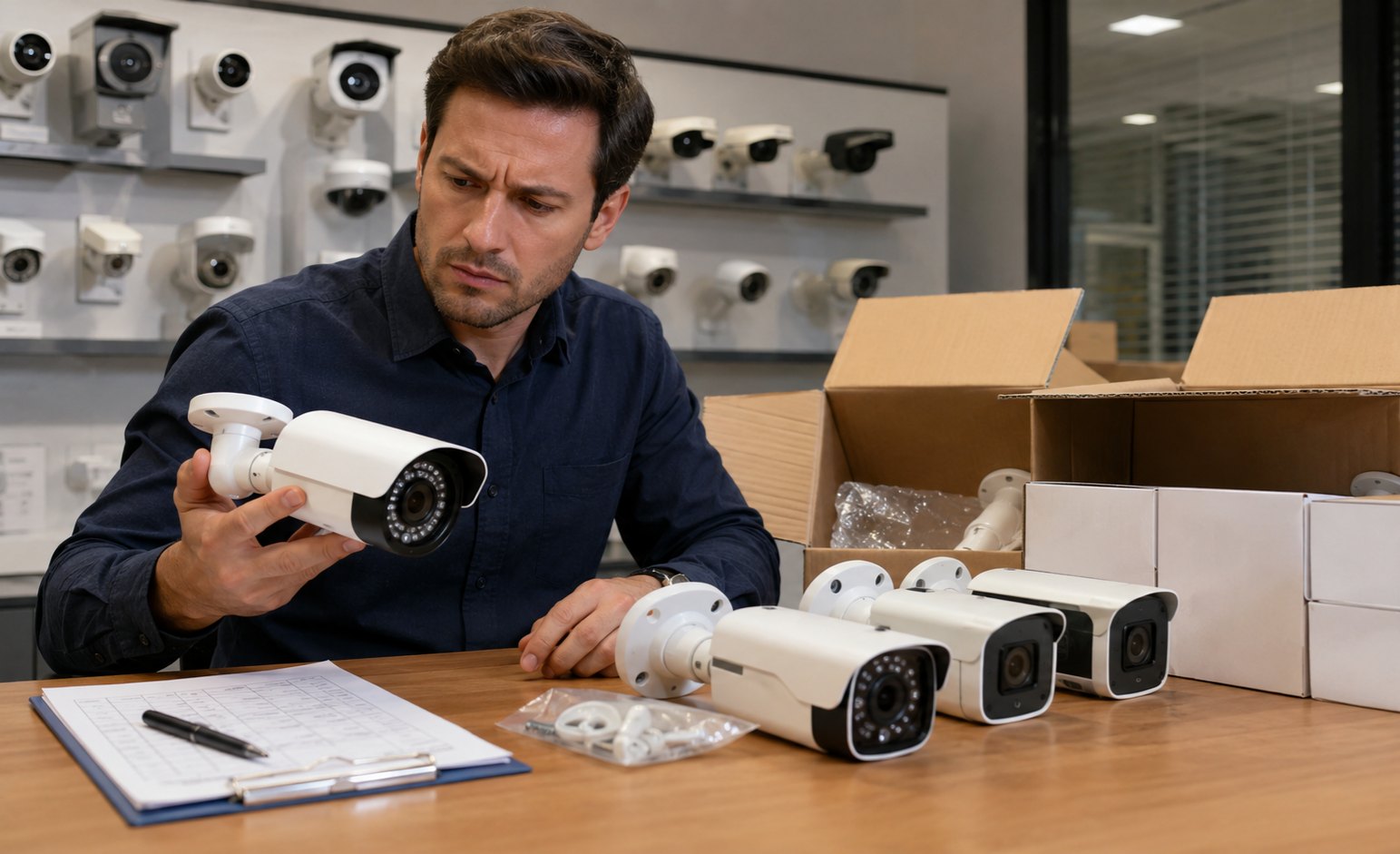
A camera order can leave the factory on time and still create trouble at the job site. The usual causes are not dramatic: a different lens, a weaker night image, an APP that will not replay footage, or a carton missing the waterproof kit. Each small mismatch can turn into installation work, returns, complaints and a damaged channel relationship.
Why Procurement Risks Can Delay Delivery
Procurement risk is broader than a failed unit. It covers anything that changes the promised product, prevents a smooth installation, or leaves the buyer without a workable response after shipment. A quotation may list 4MP or 6MP video, AI, storage and full-color night vision, while the approved sample and the bulk shipment behave differently.
The practical response is to connect every important claim with a test and a written acceptance point. That means checking the sample, recording the firmware version, confirming the accessories, and deciding what happens when a result is outside the agreed range. The goal is fewer surprises between purchase order, delivery and customer handover.
Specification and Sample Risks
Parameters That Look Correct on Paper
Resolution alone does not describe the finished image. Sensor size, lens focal length, bitrate, IR illumination, white-light behavior and compression all change what a user sees. A camera that looks sharp in a close indoor test may lose useful detail across a warehouse aisle or at a gate after dark.
Create one parameter sheet with fixed requirements and optional items. Record the sensor, lens, chipset, APP version, storage method, power input, night mode and housing rating. For each critical field, set a pass threshold before sampling. For example, the face target must remain identifiable at the quoted distance, the stream must keep the agreed frame rate, and a 24-hour recording test must have no unexplained gaps.
Sample-to-Bulk Variation
One of the most expensive surprises is a good sample followed by a different production configuration. The sensor, lens, chipset, APP build, power adapter or accessory pack may change without a visible change to the model name. Ten cartons should be checked like ten products, not treated as one assumption.
A useful rule is to keep one approved sample sealed and compare it with random units from the pilot run. Check the image, night mode, APP pairing, label, bracket, screws, waterproof parts and carton contents. If a component changes, the supplier should issue a new sample or a written deviation for approval before the order continues.
Night Vision, AI, and APP Risks
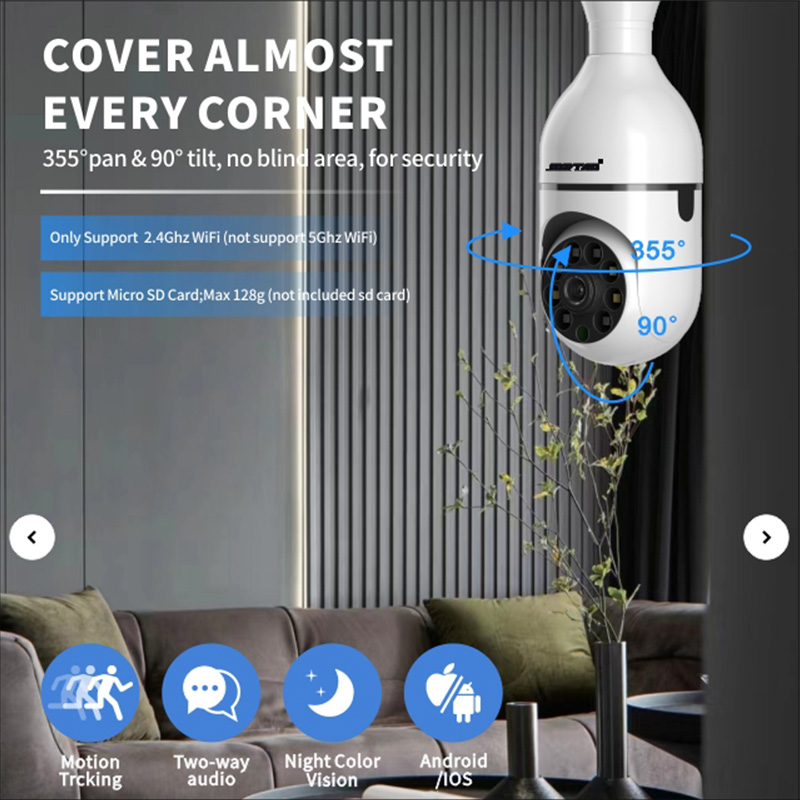
Night vision is often judged too late. Full-color claims, IR distance and dual-light warning behavior can change under rain, reflective walls, low ambient light and moving targets. Glare from a white wall may wash out a face, while an installation farther from the camera can make an advertised distance irrelevant.
Use the intended mounting height and target distance during testing. Record a person walking towards and across the camera, then check color, edge detail, switching time and false alarms. A practical pass condition might be stable identification at the quoted distance, no repeated black screen during day/night switching, and an alert decision that stays within the project’s agreed tolerance.
AI detection needs the same discipline. Test people, vehicles, shadows, rain and small animals in the actual warning area. Measure false alerts over a fixed period instead of accepting a general claim. If the system sends ten irrelevant alerts in one shift, the installer or end customer will treat the feature as a burden rather than a benefit.
APP problems often appear after installation: slow pairing, failed playback, missing language options, unstable multi-user sharing or poor remote access. Test first setup, reset, password change, live view, event playback, export and reconnection from a different network. A successful live view besides the router is not enough.
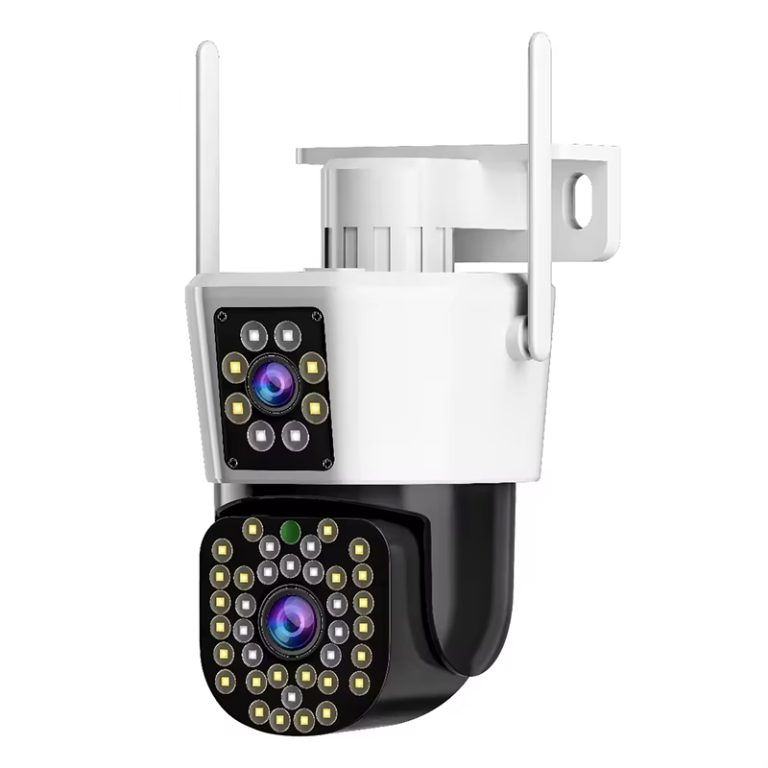
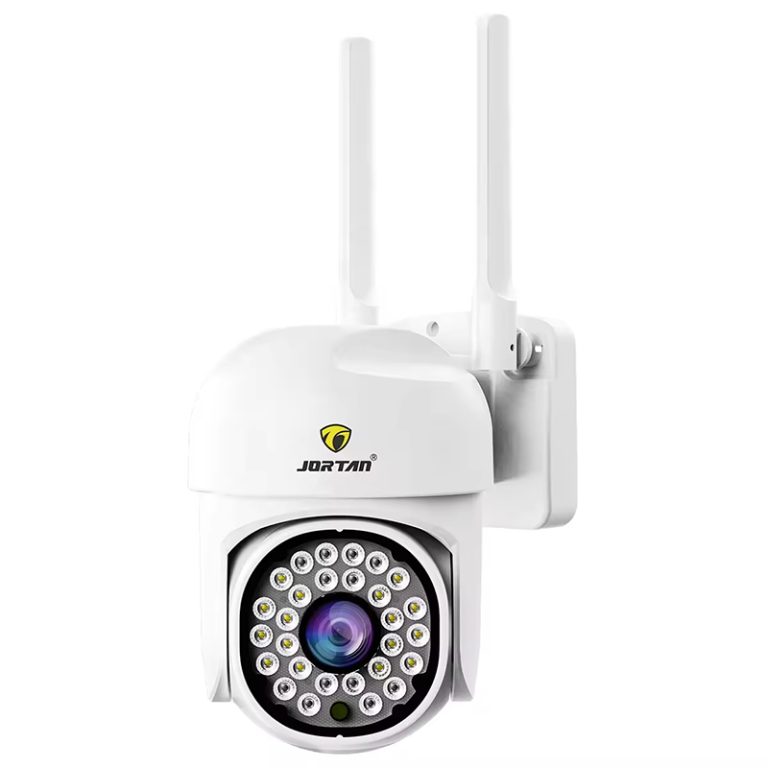
For a camera using white and infrared lighting, Jortan’s JT-8293QJ can serve as a comparison sample because its published configuration combines 11 infrared lights with 12 white lights and supports full-color and infrared night vision. The buyer still needs to verify the final firmware, APP behavior and lighting result under the intended project conditions.
Storage and Network Compatibility Risks
Storage should be confirmed as a complete path, not as a single feature. TF card, HDD, cloud storage, NVR and DVR support may differ between camera models and software versions. A buyer may discover after installation that the camera records locally but cannot replay the file through the selected NVR or APP.
Use a simple capacity calculation before ordering. If one camera produces 18 GB per day and the project needs seven days, the base requirement is 18 × 7 = 126 GB. Add a margin for bitrate variation and formatting, then test loop recording, overwrite behavior, export and playback. The same file should be checked on the camera APP and the intended recorder or platform.
Outdoor Reliability and Installation Risks
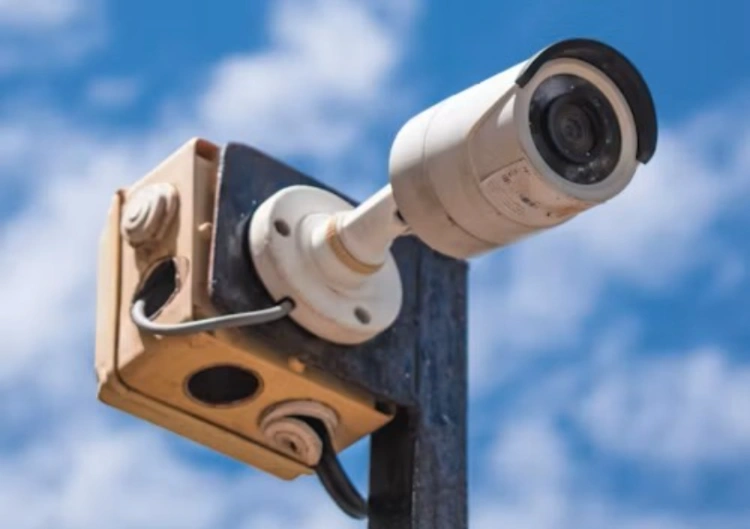
Outdoor projects expose weak points that a clean showroom cannot show. Rain, humidity, heat, cold, dust, cable bends, connector position and bracket movement all affect stability. A housing can have a suitable rating while the cable entry, power adapter or mounting joint remains poorly protected.
Inspect the waterproof kit and cable gland, then run continuous power with recording, night switching and alerts enabled for at least 72 hours. Check for reboots, fogging, overheating, loose brackets and storage errors. Use the actual installation angle and cable route. This is especially important for farms, warehouses, parking areas and remote gates, where a return visit costs more than the camera itself.
When IP66 outdoor protection is central to the project, Jortan’s cameras provides a useful basis for discussing housing, lighting and installation requirements. The purchase specification should still name the exact model, power supply, accessories and test conditions rather than relying on a broad product category.
Packaging, Documentation, and After-Sales Risks
A product can pass its functional test and still fail at delivery because the plug, screws, waterproof parts, QR code, label or manual does not fit the destination market. Missing accessories stop installers on site. A manual with the wrong language or APP name increases training time and makes a simple setup look like a product defect.
A coordinated OEM/ODM service is useful when the brand needs the camera, packaging, APP settings, production records and after-sales communication to stay aligned. The value is in controlling the chain from the approved sample to the repeat order, not in adding a logo at the last minute.
A Practical Risk-Control Checklist Before Shipment
Before approving shipment, ask five direct questions: Do the parameter sheet, sealed sample, BOM and firmware version match? Have night vision, APP, storage, network and outdoor stability been tested in conditions close to the project? Are recording, alerts, accessories and packaging within the agreed thresholds? Are MOQ, lead time, warranty, spare parts and responsibility boundaries written down? Can the supplier show which units were tested and how exceptions were closed?
Use three results: pass, corrective action or fail. A corrective action should have an owner and deadline, not just a promise to improve the next batch. This small discipline reduces rework, protects the launch schedule and gives distributors a clearer answer when customers ask what happens after installation.
For project-specific configuration, packaging or after-sales arrangements, contact Jortan with the target market, estimated volume and required changes. The more precise the brief, the easier it is to connect sampling, MOQ and production decisions to the real delivery risk.
FAQ
Q1: Which risk should be checked first in a security camera order?
A1: Start with the differences that can change the customer experience: sensor, lens, night vision, APP version, storage path and power configuration. These items affect image quality, installation and support more directly than carton appearance.
Q2: What is a practical acceptance threshold for night vision and APP testing?
A2: Test at the intended distance and mounting height. The target should remain identifiable, day/night switching should not repeatedly lose the scene, and a 24-hour recording should have no unexplained gaps. The APP should pair, replay, export and reconnect after a short network outage.
Q3: How can Jortan help reduce procurement risk?
A3: Jortan can be evaluated for coordinated product selection, OEM/ODM changes, packaging, sample confirmation, production and after-sales communication. The buyer should still place the agreed parameters, firmware, test thresholds, spare parts and response time in the order documents.