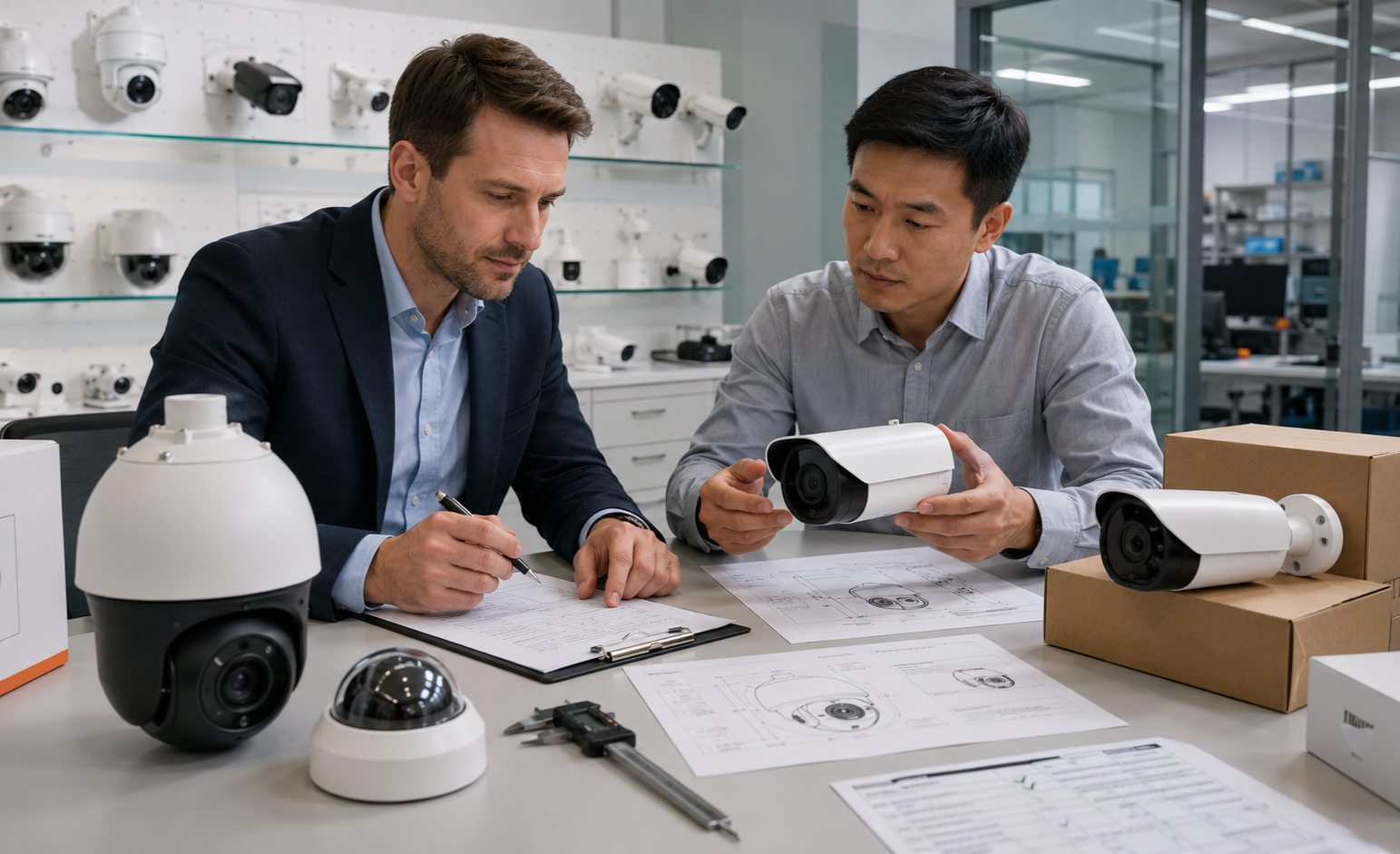
A private label camera project can look simple at the quotation stage. The trouble usually appears later: the sample has one APP version, the shipment has another, the carton misses a mounting part, or a requested feature works only under the factory’s test conditions. OEM/ODM buying needs a written product brief, a repeatable sample test, and commercial terms that match the real launch plan.
1. Turn the Product Idea Into a Testable Brief
Start with the job the camera must do. A distributor selling indoor WiFi units needs a different configuration from an installer supplying IP66 outdoor PTZ cameras, even when both ask for two-megapixel video. Write the brief in measurable fields: resolution, sensor, lens or focal length, field of view, day/night mode, infrared or white light, audio, detection, storage, network, power, housing, APP, language, packaging, and required certifications.
The same sheet should separate fixed requirements from options. For example, IP66 protection, a 12 V power input, and local TF-card recording may be fixed; logo color, carton language, and cloud-service activation may be configurable. A useful acceptance rule is simple: every fixed field must be confirmed on the sample and again before mass production. Anything left as ‘similar’ can become a cost or warranty dispute.
The business model matters too. OEM keeps a mature platform and changes branding, packaging, or selected settings. ODM goes further, with changes to appearance, structure, firmware, APP behavior or a new product combination. State the route before discussing MOQ.
2. Parameters That Need Proof Before Customization
Image, Lens, and Night-Vision Checks
A sample test should use the same scene for every candidate. Place a face at the intended identification distance, add a backlit doorway, record a moving person at night, and check whether the image loses detail when digital zoom is used. Compare the actual stream and the playback file, not just a still image supplied for sales use.
For a pass, set a practical threshold before testing: the target face should remain identifiable at the quoted distance; focus should not drift after 24 hours of operation; night switching should occur without a long black screen; and the recording should keep the agreed frame rate. If a project needs a specific lens, record the focal length and viewing angle, since changing the lens later can alter coverage and mounting positions.
Connectivity, APP, and Storage
Network testing should cover the customer’s real installation, not only a router placed beside the camera. Measure pairing time, video delay, reconnection after a 10-minute outage, and remote playback from a different network. For 4G models, test the intended SIM bands and data plan in the target country. For WiFi models, record the distance and wall conditions used in the test.
Storage needs a calculation. If one camera generates 18 GB of usable recordings per day and the project requires seven days, the base capacity is 18 × 7 = 126 GB. Add room for formatting and bitrate variation rather than selecting a 128 GB card with no margin. Check TF-card cycling, cloud event clips, NVR compatibility, H.265 playback, and APP export.
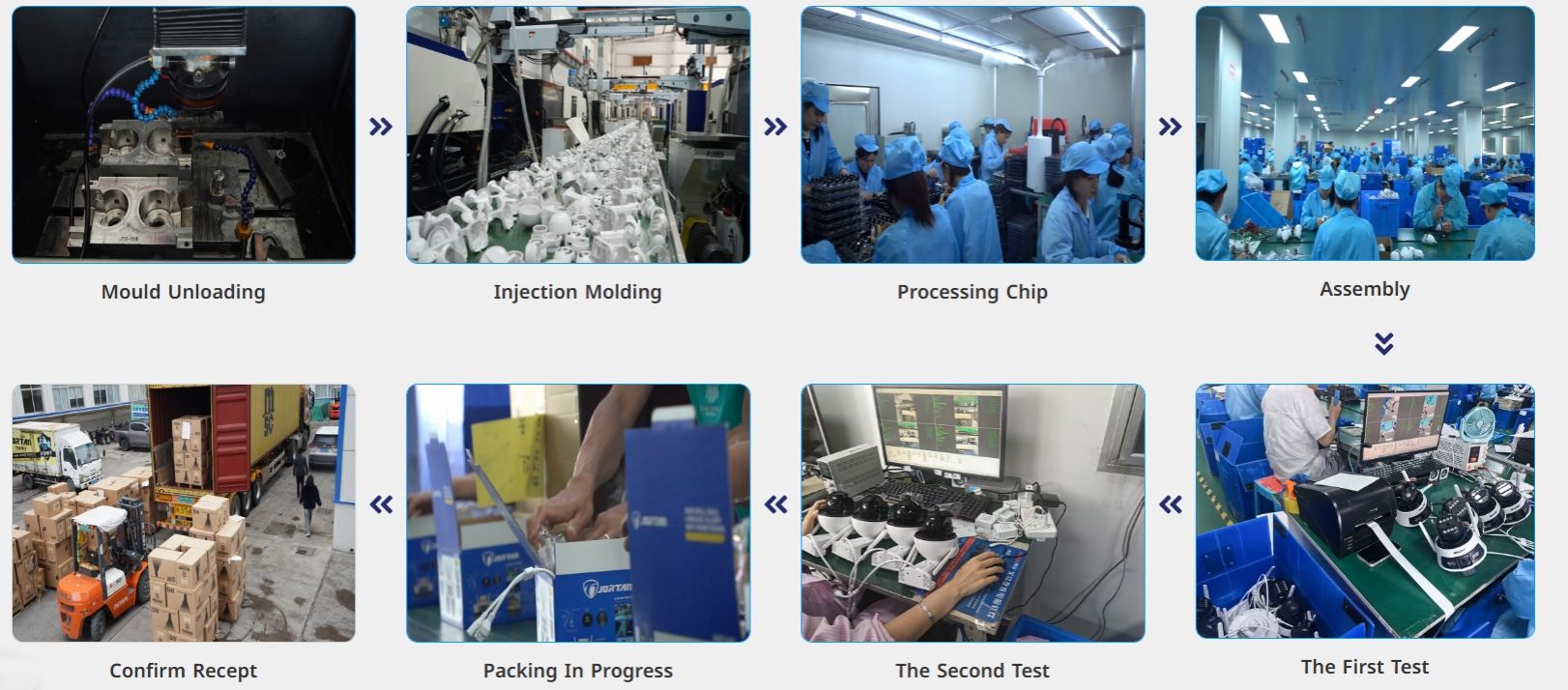
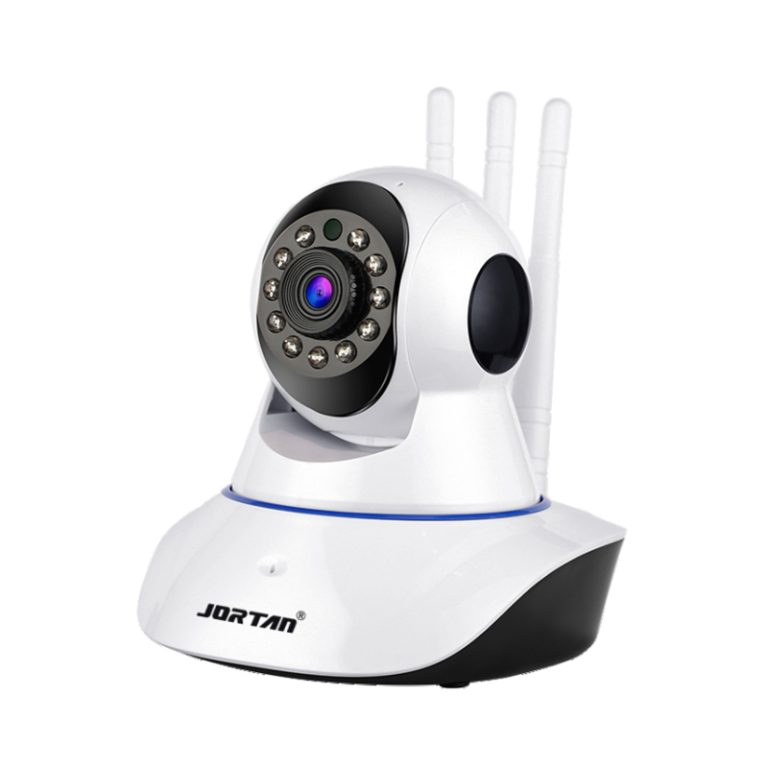
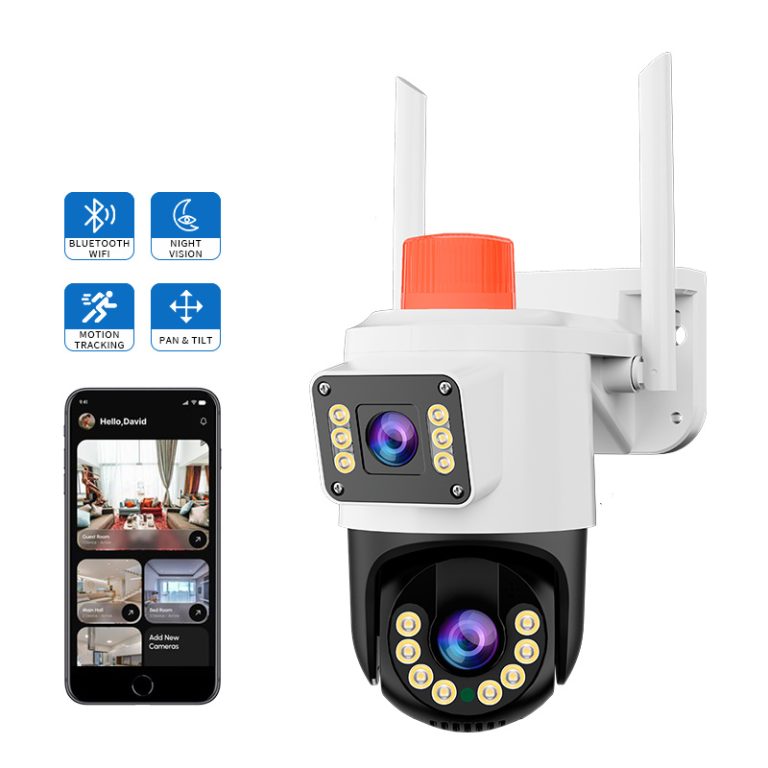
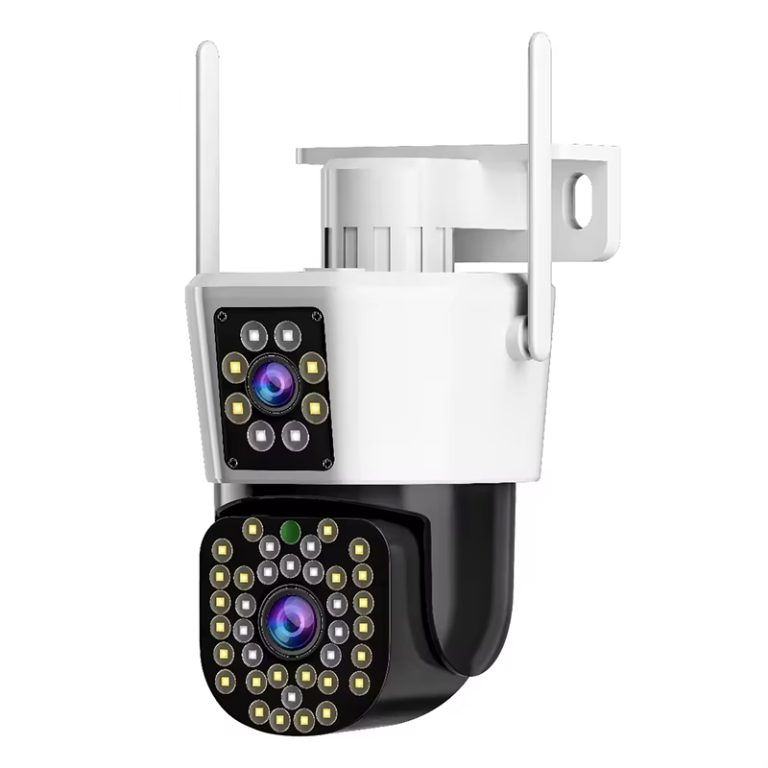
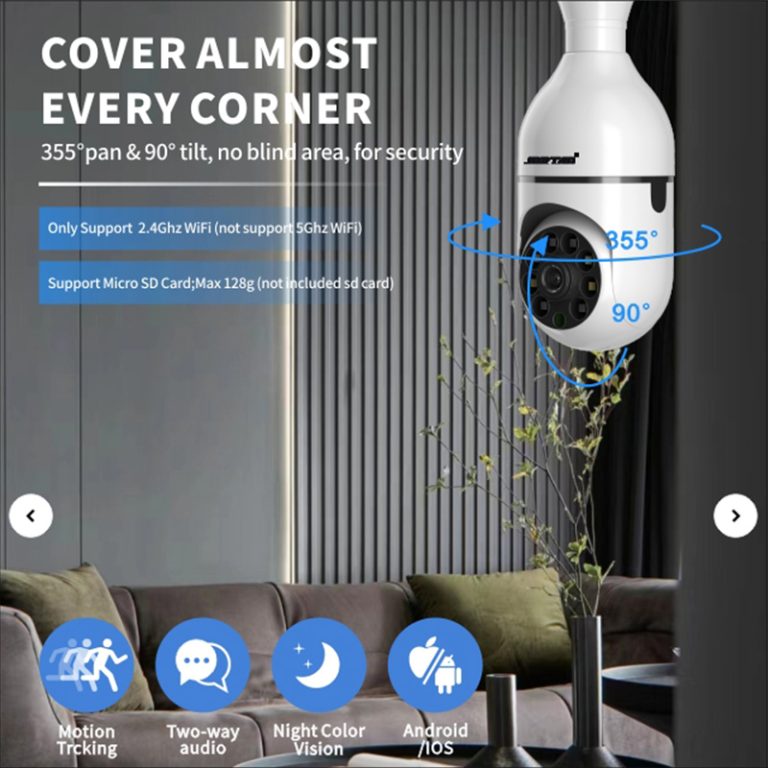
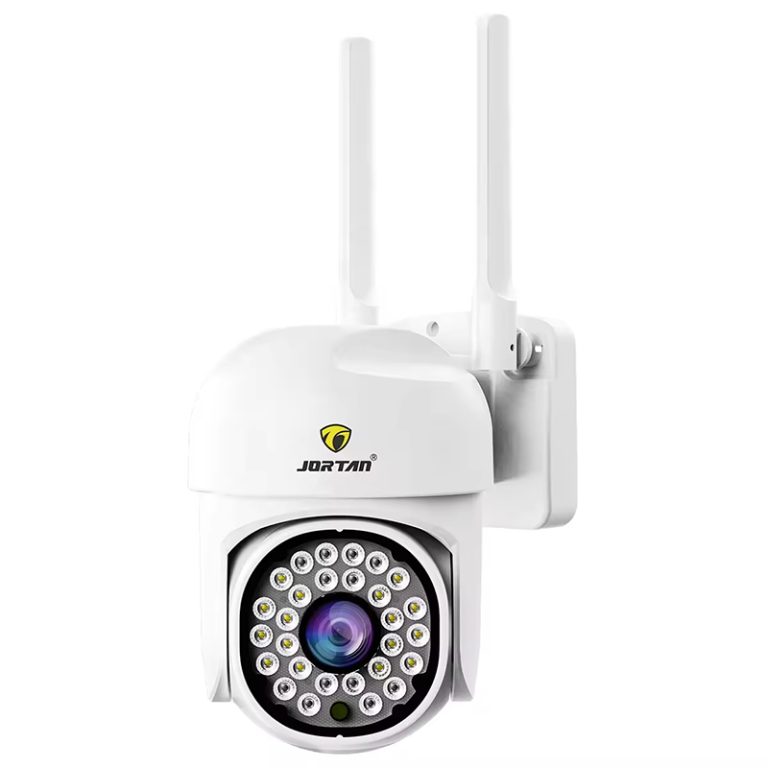
For a mature platform example, Jortan’s OEM/ODM camera service can be discussed after the functional brief is fixed. The useful question is not whether a supplier can add a logo. It is whether the requested APP, firmware, packaging, and hardware changes can be tracked from sample approval to production.
Housing, Power, and Installation
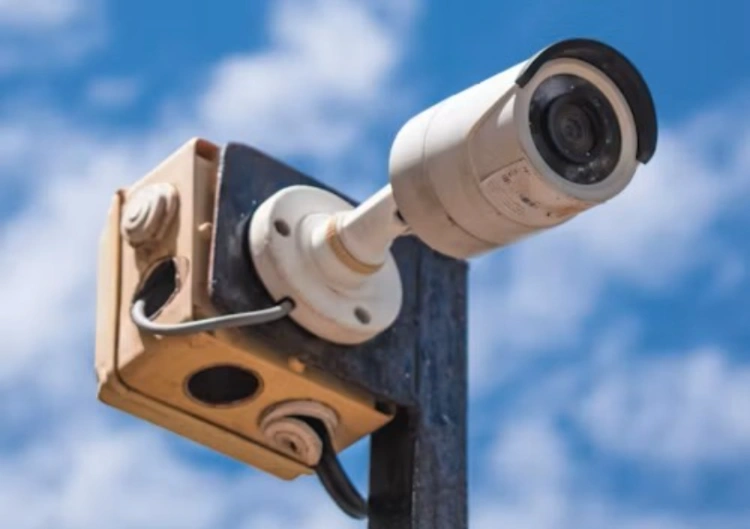
Outdoor samples need a practical protection check. Inspect the cable gland, waterproof kit, housing joint, and mounting holes, then run continuous power and wet-condition testing suitable for the project. IP66 is a useful baseline for dust and strong water jets, but the test should still cover the actual connector and installation angle. Poor sealing at the cable entry can defeat a good housing rating.
Run a 72-hour power test with day/night switching, motion alerts, and recording enabled. Watch for reboots, overheating, APP disconnections, or storage errors. The result should include the firmware version, power adapter model, and test temperature. These details help separate a genuine product issue from an installation issue after delivery.
3. Sample Testing Before the First Bulk Order
A workable sample process has three stages. First, check appearance, dimensions, labels, accessories, and the carton against the approved drawing. Second, run function tests for image, audio, night vision, detection, network, storage, and reset behavior. Third, install several samples in different positions and leave them operating for at least seven days.
Use a decision table:
| Check | Suggested pass threshold | Commercial consequence |
| APP pairing | First setup within 5 minutes; reconnect after outage | A long setup time increases installer labor |
| Recording | No missing clips during the 24-hour continuous test | Gaps can fail project acceptance |
| Configuration | All approved fields match the signed sample | Batch variation raises returns and support cost |
| Packaging | 100% of required accessories are present in 10 cartons | Missing parts cause site delays |
The thresholds can be tightened for critical projects. What matters is that the threshold exists before production, the test files are retained, and any exception has a written disposition. Keep one approved sample and one sealed production sample for later comparison.
4. MOQ, Tooling, and the Customization Chain
MOQ should follow the type of change. A logo and carton change may fit a smaller trial order. A new housing, tooling set, custom PCB, or revised APP usually needs a larger commitment because engineering, materials, and production setup must be spread across units. Ask for separate quantities and costs for sampling, pilot production, first bulk order, and repeat order.
A simple planning calculation is useful: target quarterly demand × lead-time coverage + service stock = opening quantity. If quarterly demand is 600 units, lead-time coverage is 25%, and service stock is 10%, the opening plan is 600 × 1.35 = 810 units. Compare that number with the quoted MOQ. If MOQ is much higher, negotiate staged delivery or a shared platform across two models instead of carrying obsolete inventory.
Confirm who owns tooling, which changes require approval, how firmware versions are labeled, and whether replacement parts can be ordered separately. Packaging language, QR codes, manuals, cloud activation, power plugs, and certifications belong in the same agreement. These small items are common sources of relabeling work and dealer complaints.
For brands that need more than a label change, Jortan can be evaluated on the full chain: product selection, configuration, appearance or packaging work, sample coordination, production, and after-sales communication.
5. Choosing OEM or ODM for the Launch Plan
Choose OEM when speed, a known platform, and lower engineering risk matter most. It suits a distributor adding a private label to a proven indoor or outdoor model. Choose ODM when the market needs a different housing, lens combination, APP workflow, lighting behavior, power design, or product bundle that existing catalog units cannot cover.
A mixed route is often more practical. Launch two mature OEM models for immediate channel sales, then develop one ODM model for a clear market gap. This keeps the first shipment manageable while giving the brand a product that is harder to compare only by price. The same test sheet, firmware control, and spare-parts policy should apply to both routes.
Before signing, request a sample schedule, engineering change process, pilot quantity, production lead time, warranty response, spare parts availability, and escalation contact. For project-specific configurations or packaging, contact Jortan with the target market, estimated volume, and required changes so the quotation can be tied to a real brief.
FAQ
Q1: What should be tested first in an OEM/ODM camera sample?
A1: Start with the functions that affect installation and acceptance: image quality, lens coverage, night switching, APP pairing, recording, network recovery, and power stability. Cosmetic checks follow, but a perfect shell cannot rescue unreliable playback or missing footage.
Q2: How can a buyer set a reasonable MOQ?
A2: Separate standard production from custom tooling, PCB, firmware, and packaging. Use forecast demand plus lead-time and service stock, then compare the result with the MOQ. A staged shipment is usually safer than buying excess units that may become outdated.
Q3: Can Jortan support a project from sample to after-sales?
A3: Jortan can be considered when the project needs coordinated product configuration, OEM/ODM changes, packaging, production, and after-sales communication. The buyer should still place the agreed parameters, firmware version, test thresholds, spare parts, and response time in the purchase documents.