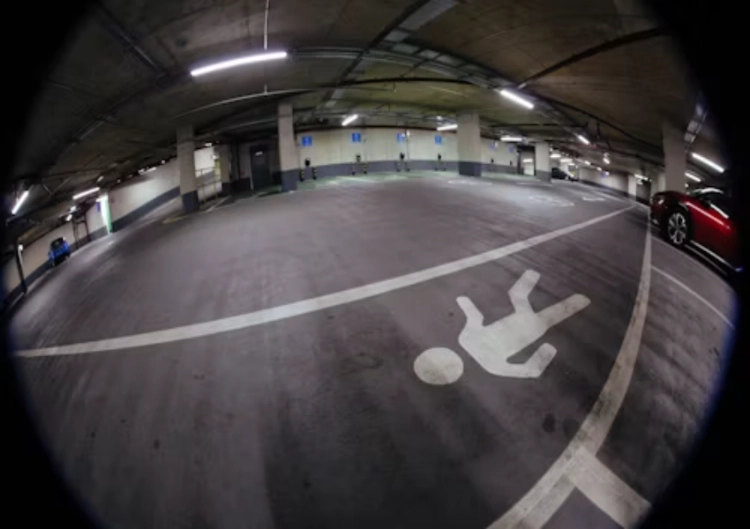
A parking lot camera setup has to do two jobs at once. It must show the wider pattern of traffic, parked vehicles and pedestrian routes while also preserving useful detail at entrances, payment points and conflict areas. A wide image alone can leave vehicles too small. A close view alone can lose the approach route. The most reliable layout assigns different roles to different angles and checks those roles after dark, when headlights, wet pavement and uneven lighting change the scene.
Start with vehicle entry and exit, lanes, pedestrian crossings, accessible spaces, payment equipment, loading edges and the route between the lot and building entrance. Lenses need different viewing angles for large parking lots and small rooms. It also identifies full-color camera use in parking and underground garage conditions where vehicle body color and plates may matter. The exact evidence requirement should decide the view.
Divide the Lot Into Evidence Zones
An entrance usually needs a tighter view than the central parking area. A fixed overview can show which direction a vehicle traveled, while a second view at the lane can preserve more useful detail. Do not point every camera at the same wide middle area. Mark lamp poles, trees, signboards, ticket barriers, ramps and neighboring light sources because each can block or distort a night image.
PTZ can add flexible detail around a larger scene, but it should not be treated as permanent coverage for every corner. When it follows a target or moves to a preset, it is looking away from another area. Keep a fixed view for the baseline record and use a movable view where staff need to inspect a changing point. Presets should be tested at night and after parking patterns change.
Night Evidence Needs A Real Light Test
Night footage should be checked with normal traffic, not just an empty lot. Headlights can wash out a nearby object; a wet surface can reflect lamps; infrared can behave differently around signs, white vehicles and insects near the lens. Test a person crossing the pedestrian route, a vehicle entering at normal speed and a vehicle stopping under the brightest lamp. Review the stored clip, not only the live image.
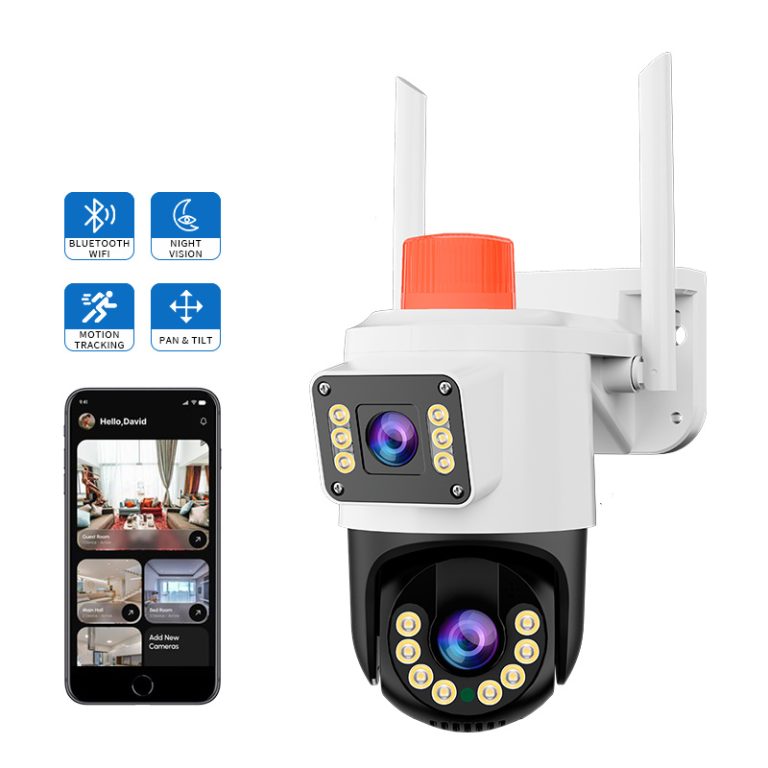
The JT-9999PRO dual-lens camera combines a listed three-lens arrangement, 2.4 GHz wireless transmission, full-color and infrared light elements, and a stated 30 meter IR distance. In a parking layout, its value lies in keeping multiple directions visible from a suitable mounting point. Confirm how every stream is recorded, how night lighting affects each lens and whether WiFi or RJ45 is the better route at the proposed pole.
Plan Network And Storage Around Events
Outdoor network planning begins at the camera mount. A WiFi path can be weakened by distance, metal structures, vehicles and changing site activity. A wired route may need weatherproof cable management and protected equipment at the pole or building. Measure the actual path with the normal doors, barriers and nearby equipment operating. A camera that remains reachable during an empty daytime test may fail when the lot is busy.
Storage needs to account for multiple simultaneous streams, daytime and night bitrate changes, event-led clips, continuous views and the required retention period. H.265 can reduce traffic and storage demand when the connected equipment supports the chosen configuration, but buyers should verify camera, recorder and app compatibility. A full parking lot at night may produce a different workload from a quiet daylight sample.
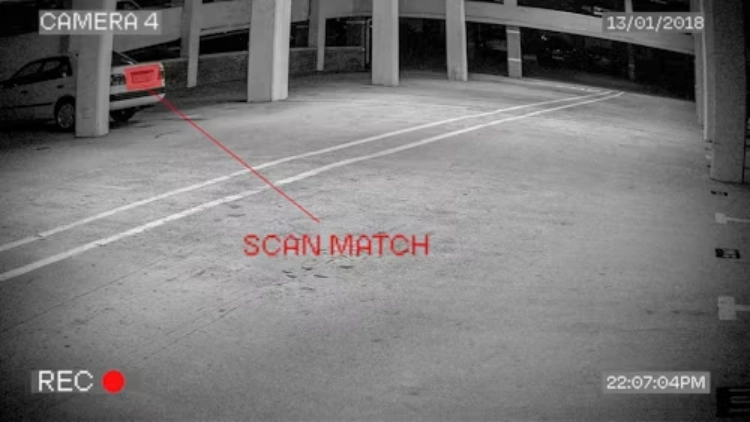
Put PTZ Into A Defined Operating Role
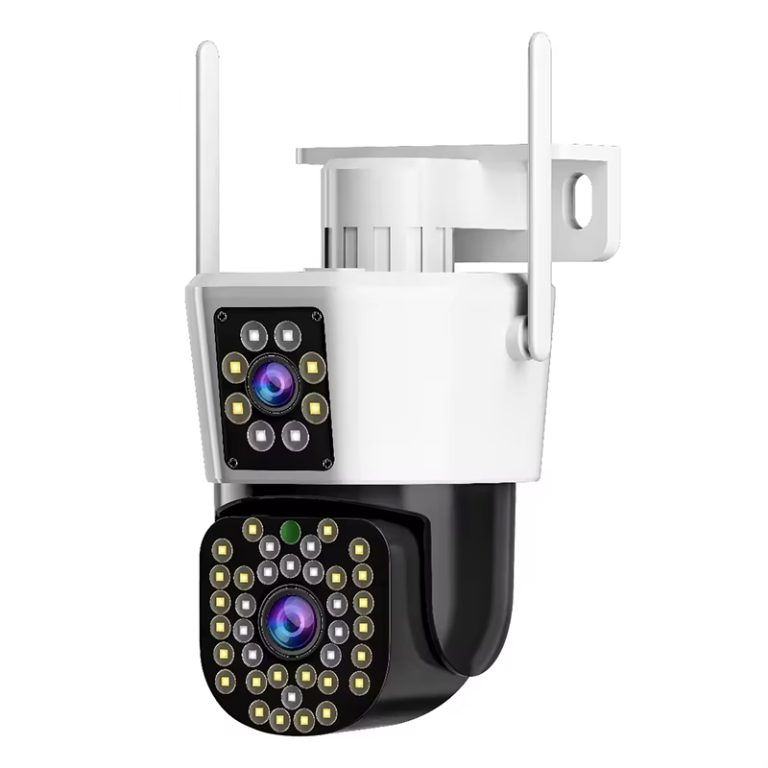
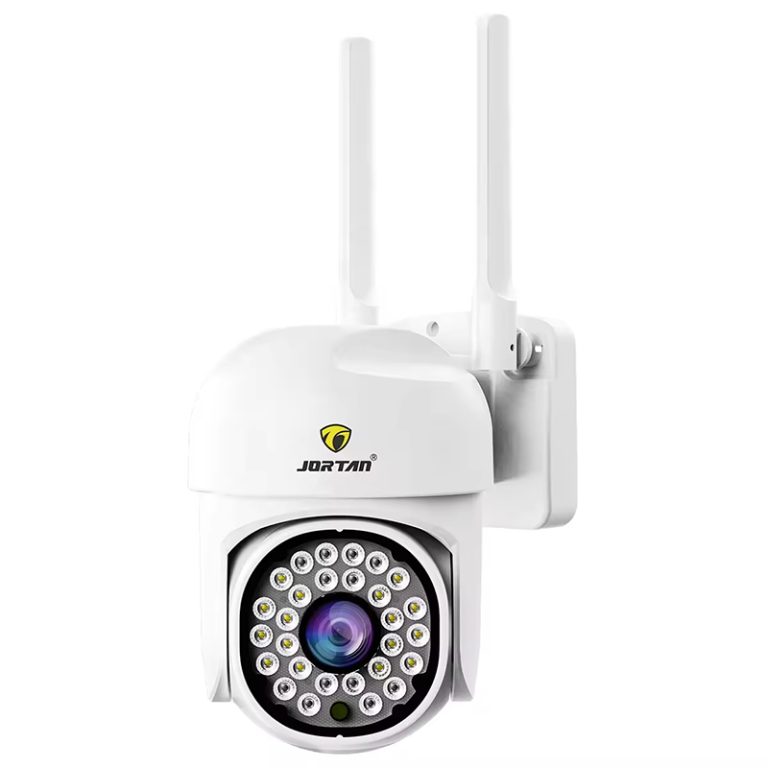
The JTZ-9690pro PTTZ camera is a dual-lens outdoor PTZ listing with H.265, IP66, color infrared night vision and both 2.4 GHz WiFi and RJ45. It can be considered for an entrance or lane where a baseline view and movable detail have a clear purpose. Confirm tracking, return behavior, fixed view coverage, bracket stability and night reflection before using it in a parking lot RFQ.
Write down who receives event notifications, who reviews video after a vehicle incident and how clips are exported. Jortan can support a comparison after the lot drawing is complete. Buyers can discuss a project configuration with camera heights, lane distances, available lighting, power and network routes rather than asking for a generic parking lot package.
Commission The Lot After Dark
The final installation walk should happen during the condition the system is expected to document. Check direction of travel, face and vehicle detail at the required points, glare, shadows, blind areas behind parked vans, playback speed and remote access. Repeat after rain if the surface is known to become reflective. Parking patterns are not static, so keep one scheduled review after signs, lighting or traffic flow changes.
A good parking setup is not the one with the highest camera count. It is the one where each camera has a specific evidence job, its night result has been reviewed, and the network and storage can carry the configuration every day. That is the standard a contractor and property manager can maintain after handover.
Parking lots also need a retention and retrieval routine. A property manager should know which channels cover each lane, how long normal recordings remain available, and how to preserve a clip after a reported collision or dispute. Test export quality from the NVR and mobile application, including timestamp visibility and the ability to locate the relevant camera quickly. This operational work is easy to postpone during installation, but it determines whether a technically good parking lot camera setup produces usable evidence when a driver reports an event days later. Keep the channel map with the maintenance record and update it whenever lanes, gates or lighting are changed.
Conclusion
Parking lot coverage becomes dependable when wide context, entrance detail, night lighting, network path and recording retention are designed together. Test the finished views after dark with real vehicle movement, then record the approved settings and responsibilities. The result is easier incident review and fewer surprises when the lot is busiest.
FAQ
Q1: Is a PTZ camera enough for a parking lot?
A1: Usually not by itself. It can add flexible detail, but fixed views are needed to preserve baseline coverage while the PTZ moves or follows another area.
Q2: Why should parking cameras be tested after dark?
A2: Headlights, wet surfaces, shadows, signs and fill light can alter the recorded result. Daytime framing does not prove usable night evidence.
Q3: What should an installer measure before choosing a network route?
A3: Check camera locations, distances, barriers, normal vehicle activity, available power, cable protection, WiFi signal, recorder capacity and remote-view requirements.