
Local storage and cloud storage solve different problems: one keeps footage close to the device or recorder, while the other supports remote access and backup. For B2B buyers, the better choice depends on project size, network conditions, recording needs, budget, and after-sales expectations.
Why Storage Choice Matters More Than It Looks
A storage decision affects daily use, installation cost, remote access, after-sales work, and how the final customer judges the whole system. Small shops may only ask for a few days of playback. A warehouse may need longer recording. A farm gate or outdoor yard may need evidence even when the network drops.
For distributors, storage also changes the sales conversation. TF card cameras are easier to explain in low-cost channels. NVR or HDD-based systems feel more familiar in project work. Cloud storage can make remote playback easier, but it brings internet dependence and service cost. None of these options is always better.
What Local Storage and Cloud Storage Mean in Real Use
Local storage for cameras that need offline resilience
Local storage means the camera or system keeps footage nearby. It may be a TF card or MicroSD card inside the camera. It may also be an HDD inside an NVR or DVR. The main advantage is obvious: recording can continue even when the internet is weak or unavailable.
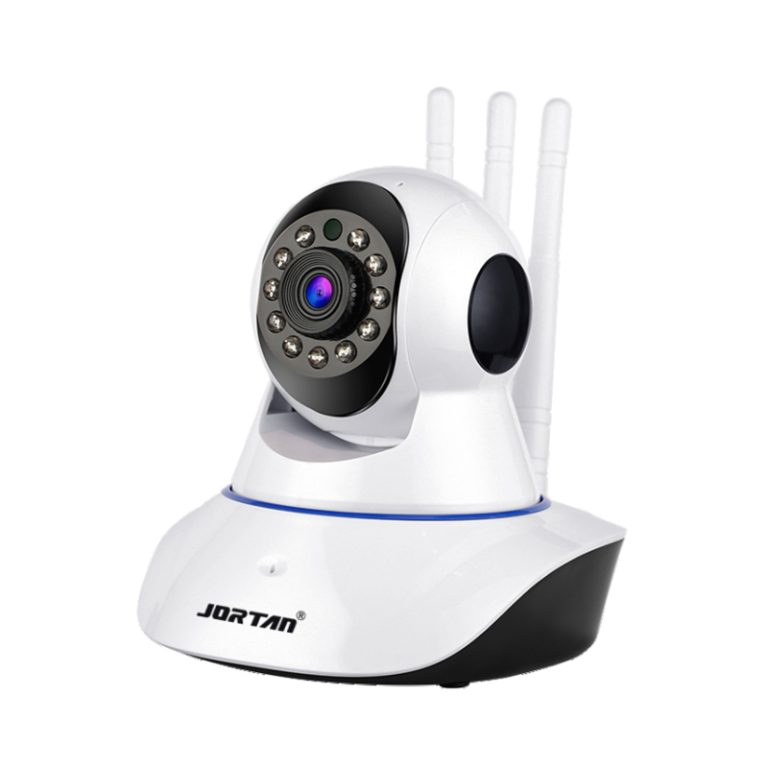
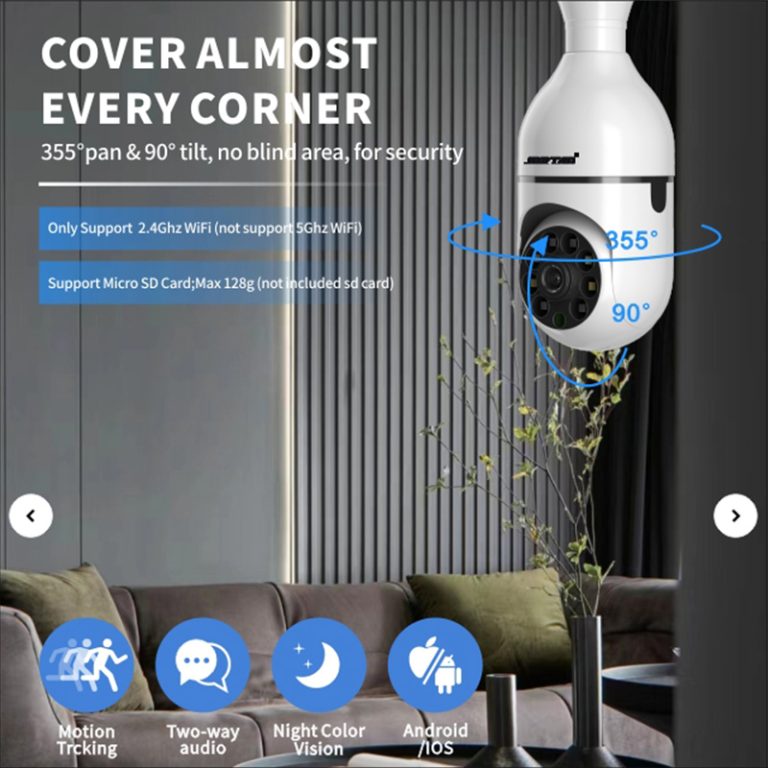
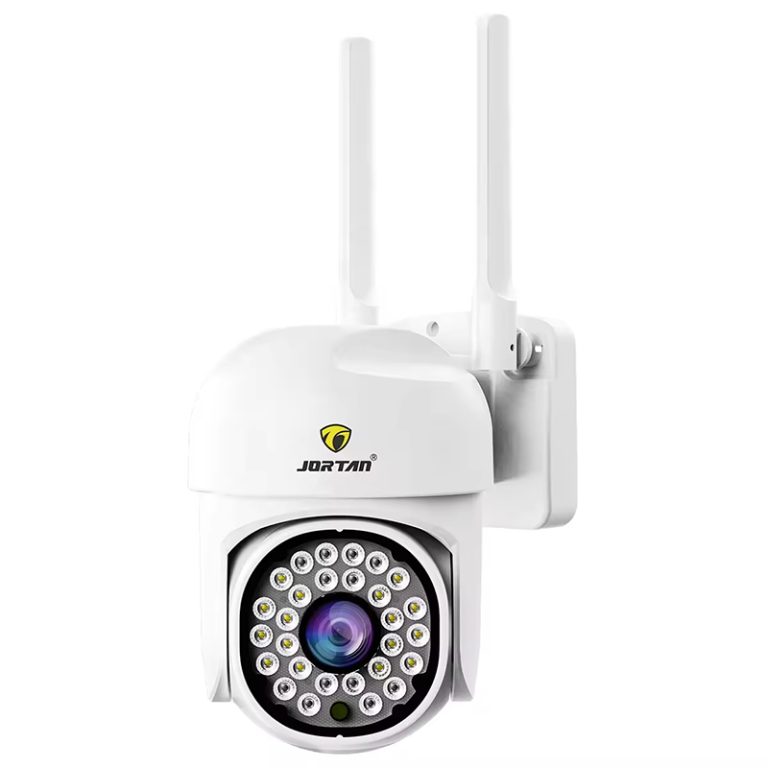
This matters in small shops, farms, temporary sites, warehouses, and outdoor corners where network quality is not steady. A model such as Jortan’s JT-8293QJ fits this discussion because it supports cloud, NVR, and Micro SD card storage, along with H.265, IP66, 2.4G WiFi plus RJ45, and local TF card storage up to 256 GB. For buyers, that makes it easier to test different storage habits before choosing one sales package.
Local storage has limits too. A TF card has finite capacity and will overwrite older files when full. HDD systems need installation space, power, and maintenance. If the camera is stolen or damaged, footage stored only inside the device may be lost.
Cloud storage for easier remote playback
Cloud storage sends footage or event clips to a remote server. The buyer usually cares about mobile access, multi-site management, and easier playback. This is useful for shop owners with several branches, property managers, and users who do not want to handle recorders or cards.
Cloud storage also helps when the device is damaged or removed. If the event has already been uploaded, the footage does not disappear with the camera. That point is easy for sales teams to explain, especially in retail channels. Still, cloud storage needs a stable internet connection and a clear service plan.
Local vs. Cloud: What Buyers Should Compare Before Ordering
Internet dependence, playback reliability, and evidence retention
The first comparison is network dependence. Local TF card or NVR storage can keep recording during internet failure. Cloud storage works better when the connection is stable and the user values remote access more than offline resilience. In many real projects, both are needed.
Evidence retention should be checked with real recording settings. A 128GB card may be enough for short event recording, but not for weeks of continuous HD footage. A 256GB TF card gives more room, but it is still not the same as a multi-terabyte HDD. Cloud storage depends on the paid plan and upload behavior.
Cost, maintenance, and after-sales pressure
Local storage often looks cheaper at first. There may be no monthly fee, and the customer can own the footage directly. But cards can fail, HDDs age, and users may not know how to export clips. If installers do not explain overwrite cycles, customers may ask for footage that no longer exists.
Cloud storage shifts part of the burden away from the site. Users can check playback from the APP and may feel safer if the camera is damaged. The cost is ongoing subscription work, account support, bandwidth demand, and privacy questions in some markets.
For B2B buyers, the after-sales side should be treated as part of the product cost. A cheap storage setup that creates repeated support calls is not really cheap. Sample testing should include card formatting, playback speed, cloud activation, clip export, APP sharing, and network recovery after disconnection.
How Buyers Should Build a Hybrid Product Line or Buy by Target Market
Keep both local and cloud options for mixed channels
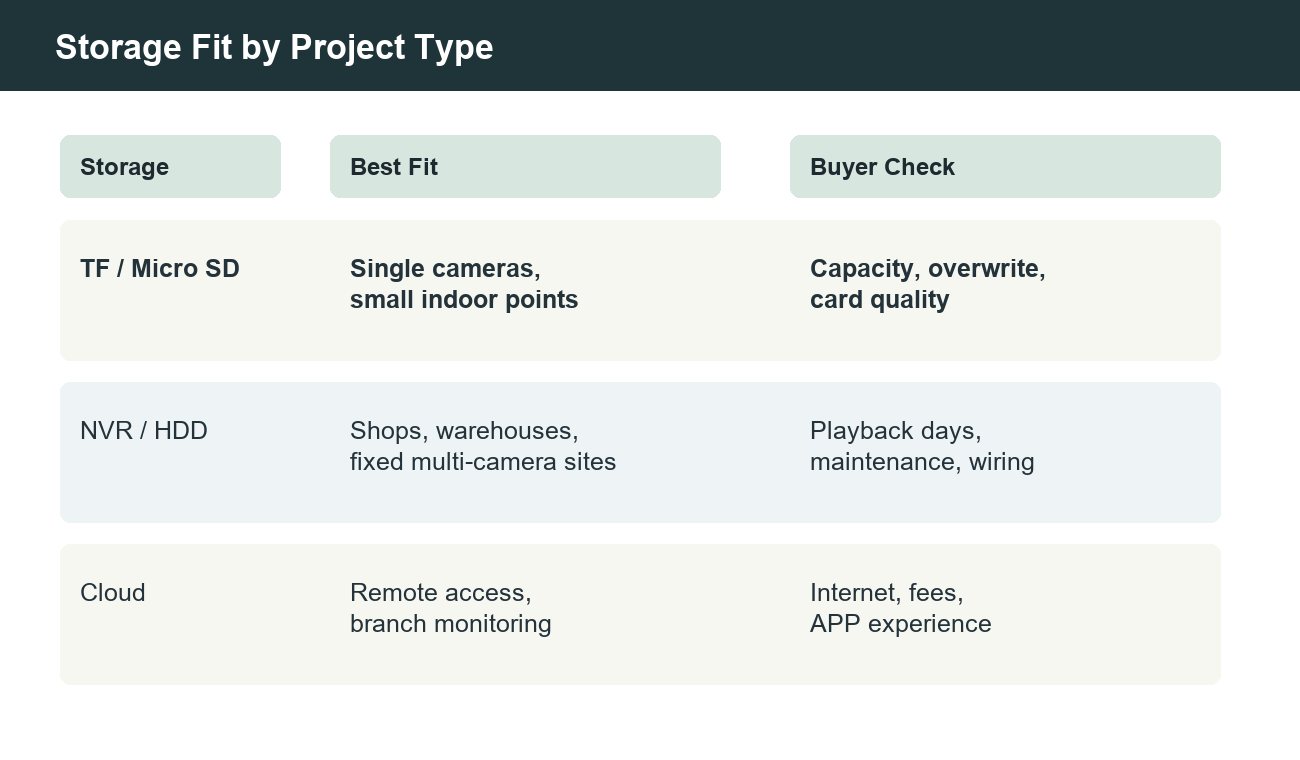
A mixed product line is usually safer for distributors. Keep TF card models for price-sensitive channels and simple installations. Keep NVR/HDD systems for shops, warehouses, offices, and projects with several cameras. Keep cloud-enabled cameras for users who want phone playback, branch monitoring, or off-site evidence backup.
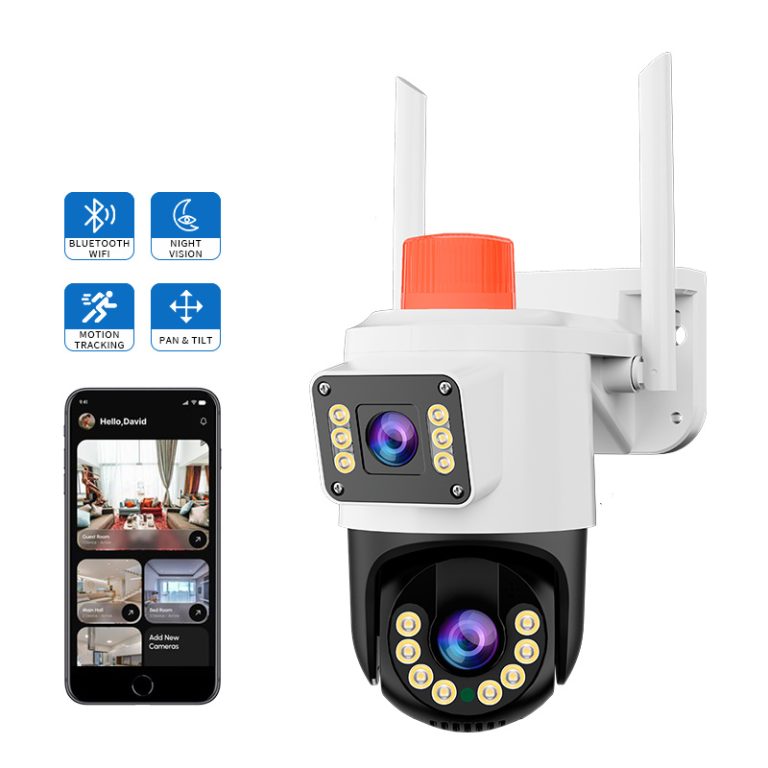
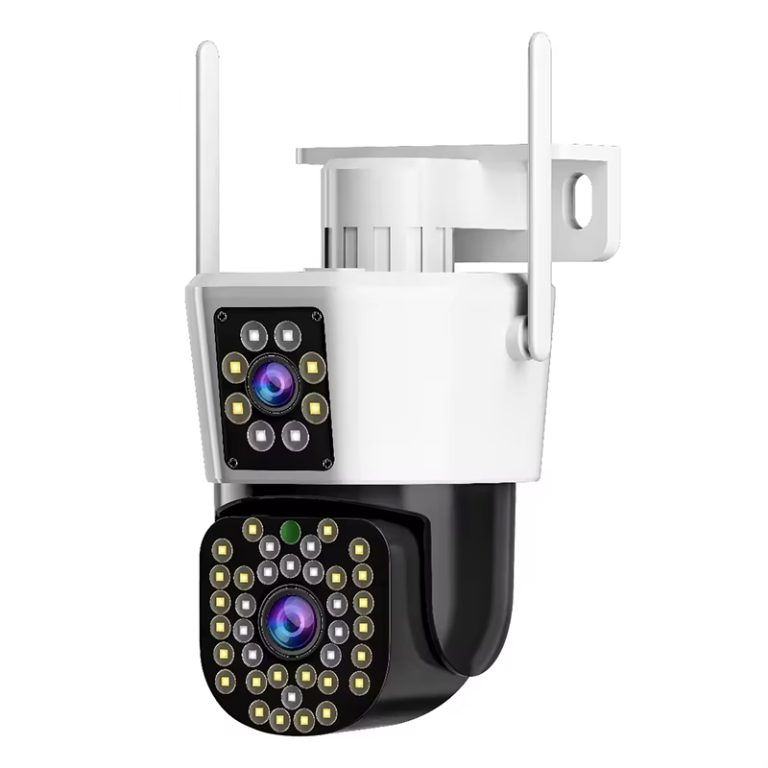
Outdoor PTZ products often sit in the middle of this planning. Jortan’s JTZ-9690PRO supports cloud storage and local TF card storage up to 256GB, with a 6MP dual-lens PTZ design, IP66 protection, H.265AI, 2.4G WiFi plus RJ45, human-shape detection, and a 20-30m IR distance. That makes it easier to place in farm gates, yards, parking areas, and warehouse perimeters where buyers may want both local evidence and remote checking.
A hybrid line also protects channel sales. If one market does not like cloud fees, local storage can still sell. If another market values APP playback and remote alerts, the cloud becomes the stronger talking point. The product line should leave room for both habits.
Buy by project type when the market has a clear storage habit
Some markets are clear. Small residential channels may prefer TF cards and cloud backup. Retail shops may accept NVR kits because they already understand recorders. Farm and outdoor projects may need local recording first because the network is unstable. Multi-site commercial buyers may choose the cloud because remote access is the main reason for the upgrade.
For private label orders, Jortan OEM/ODM camera customization can support logo, packaging, product appearance, APP-related requests, assembly, and inspection. This matters when the same buyer sells one storage package to retail channels and another to project installers. The card capacity, APP, storage wording, manual language, and packaging claims should match the actual configuration.
Buyers comparing broader options can also use Jortan’s security camera products as a reference point for indoor WiFi cameras, outdoor PTZ cameras, and related monitoring categories. The better buying habit is to choose storage after the site, network condition, playback period, and customer payment habit are clear.
FAQ
Q1: Is local storage still enough for most projects?
A1: It is enough for many small projects, especially single cameras, indoor points, and areas with weak internet. Buyers should still confirm card capacity, overwrite behavior, playback speed, and whether the customer needs footage for several days or several weeks.
Q2: When does cloud storage make more sense than TF card storage?
A2: Cloud storage makes more sense when users need remote playback, off-site backup, and easier access from several locations. It is less suitable when internet service is unstable or the target market strongly resists subscription fees.
Q3: Can Jortan support mixed storage options for OEM or ODM orders?
A3: Yes. Jortan can support camera categories with TF cards, Micro SD, NVR, and cloud-related configurations depending on the model. For OEM or ODM work, buyers should confirm APP, storage capacity, packaging wording, and sample settings before bulk production.