A camera housing can look correct in a photo and still create trouble during assembly. A lens opening may shift the night-light pattern. A screw post may not hold after repeated service. A gasket land may leave a gap. A trial record gives the buyer a way to approve the part as a working camera body rather than as an attractive plastic sample.
There has a practical development path: mold design, steelwork, trial molding, sample adjustment, appearance approval, and production release. Injection molding adds checks for material flow, shrinkage, warping, sink marks, flash, texture, color consistency, and parting-line quality. These observations should be captured while the mold can still be adjusted.
Each trial record should identify the mold revision, cavity or sample reference where applicable, material code, color, texture, date, machine or process note, and drawing revision. Attach clear images of the front, back, lens opening, screw posts, gasket area, mounting points, and parting lines. Without that context, a buyer may approve one trial and receive another revision later.
Inspect the Plastic Part Before the Camera Test
Start with dimensions that affect assembly: lens center, board support, LED opening, cable exit, bracket interface, gasket path, and screw alignment. Check for flash that could interfere with sealing or create a sharp edge. Check for sink marks and warping on visible faces. Confirm texture and color under the lighting used for product photography and retail packaging.
The record should also note what is not yet approved. A sample can pass appearance while failing the fit with the board, lens, LEDs, bracket, or cable kit. Buyers should not sign off the exterior as a finished product until the internal stack-up and service access have been checked. This is especially important when the housing is intended for a PTZ or dual-lens structure.
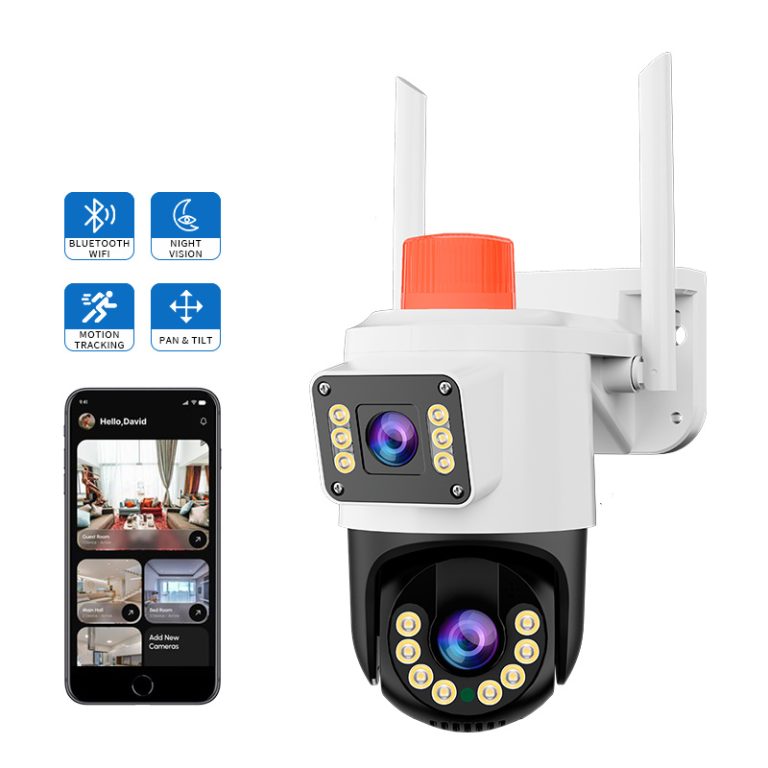
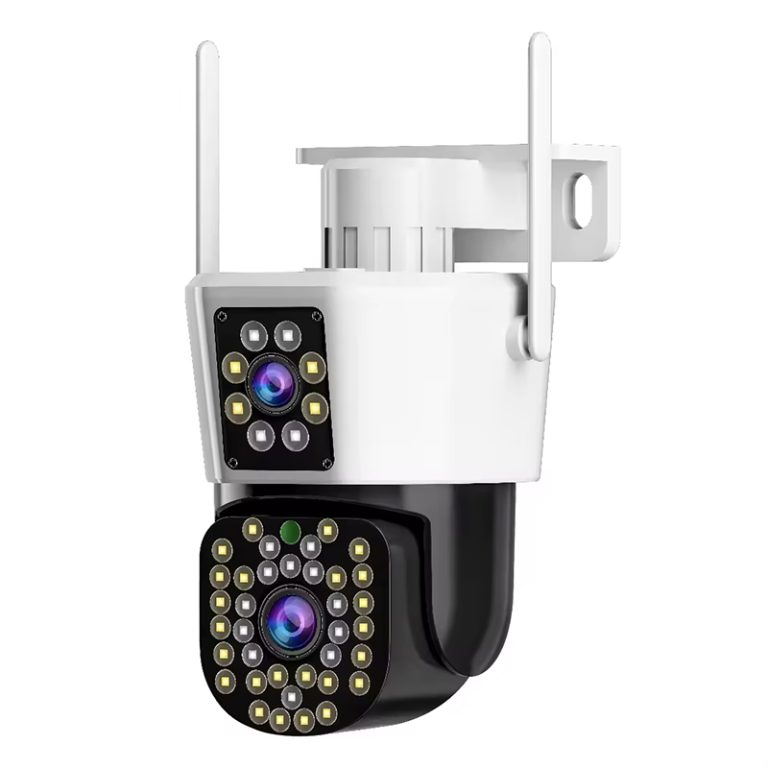
O JT-8698PRÓ can serve as a functional reference when discussing a PTZ, dual-lens housing. The model’s two views, movement, night-light openings, storage, and network options show why the shell and the electronics cannot be approved in isolation. The buyer should use the actual target board and optical parts during trial assembly, not a dummy insert.
Run a Complete Camera Trial With the Housing
Install the lens, board, LEDs, gasket, bracket, and cable kit in the trial shell. Power the camera. Check the image in daylight and darkness, rotate the PTZ if applicable, listen for rubbing or vibration, and inspect the cover after repeated assembly. Look for infrared reflection from the shell, blocked microphones, poor speaker openings, and a bracket that twists under normal handling.
Tie Every Finding to a Disposition
A useful record does not merely say pass or fail. It says accept, adjust and retrial, accept with a drawing change, or reject. Add the responsible party and the next date. If the mold is changed, the new trial needs a new revision and a clear statement of what was changed. That trail helps the buyer protect the approved baseline during mass production.
Jordan JT-9689UQJ and jt-8698pro housing information can serve as concrete model references when a buyer reviews body, lens openings, sealing parts, and assembly fit. The OEM e ODM desenvolvimento de câmeras path connects mold development with injection molding, assembly, packaging, product configuration, and inspection stages. That integrated path matters because a housing change can affect the carton, bracket, firmware label, spare parts, and after-sales notes. The supplier should explain how those downstream changes are captured.
Sign Off the Housing With Production Rules
Before mass production, approve the final drawing, material, surface finish, color reference, assembly sequence, gasket condition, optical openings, mounting method, and packaging fit. Confirm who owns the mold, where it is stored, how maintenance is handled, what revisions are included, and what happens if the model is paused. These commercial details are part of the housing decision.
UM mold approval contact should also set the change-notification rule. A different resin, texture, screw, gasket, LED board, or supplier can change the product even when the outside silhouette stays the same. Require a new sample when the change can affect sealing, heat, image, sound, movement, or assembly time.
Mold trial records turn a subjective approval into a shared production reference. They do not remove the need for incoming inspection or batch testing. They give those later checks something precise to compare, which is exactly what a buyer needs when the first bulk shipment arrives.
Keep a short visual history of the trial: the first shot, the adjustment, the revised sample, and the final approval. Add a ruler or simple gauge where dimensions matter. Record the light used for color review and the mounting angle used for the complete camera test. Clear images often prevent a later argument about whether a scratch, gap, or alignment issue was present at approval.
Jordânia can keep the project connected to the wider camera range, while a housing approval review should focus on the drawing, trial record, tooling responsibility, and production release. The supplier discussion is stronger when the buyer can point to a revision and a measured condition rather than asking for a general promise about mold quality.
Commercial terms belong beside the technical record. Confirm tool ownership, maintenance charges, revision limits, spare parts, storage, and the treatment of a paused model. A housing that is approved but impossible to maintain is not a finished private-label asset. The record should protect the buyer after the first production run as well as before it.
Keep the signed trial record accessible to production, inspection, and service teams. When a later question appears in the field, the team can compare the installed shell with the approved geometry and material instead of reopening the whole design discussion. That trace is especially valuable when the same housing is adapted to a related camera model.
Conclusão
A mold trial record is valuable because it preserves the reasoning behind a housing approval. Dimensions, material, surface finish, internal fit, light openings, movement, sealing parts, and production revisions all need a visible place in the record. Buyers that approve the complete camera, not only the plastic shell, reduce late changes and make mass production easier to audit.
Perguntas frequentes
Q1: What should a camera mold trial record contain?
A1: Record mold and drawing revisions, material, color, texture, dimensions, visible defects, assembly fit, optical and light openings, trial images, disposition, and the next action.
Q2: Can a housing be approved before electronics are installed?
A2: Appearance can be reviewed early, but final approval should include the actual board, lens, LEDs, gasket, bracket, cable kit, and a working camera test.
Q3: Who should approve a mold change before mass production?
A3: The buyer and supplier should follow the agreed change process, with the revised sample, drawing, material, test result, and production release recorded together.