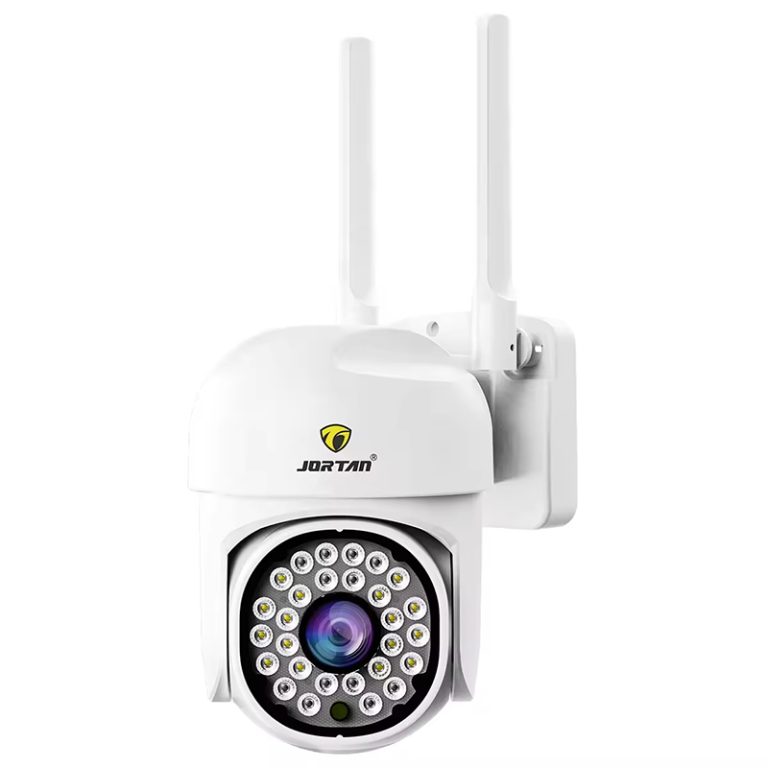
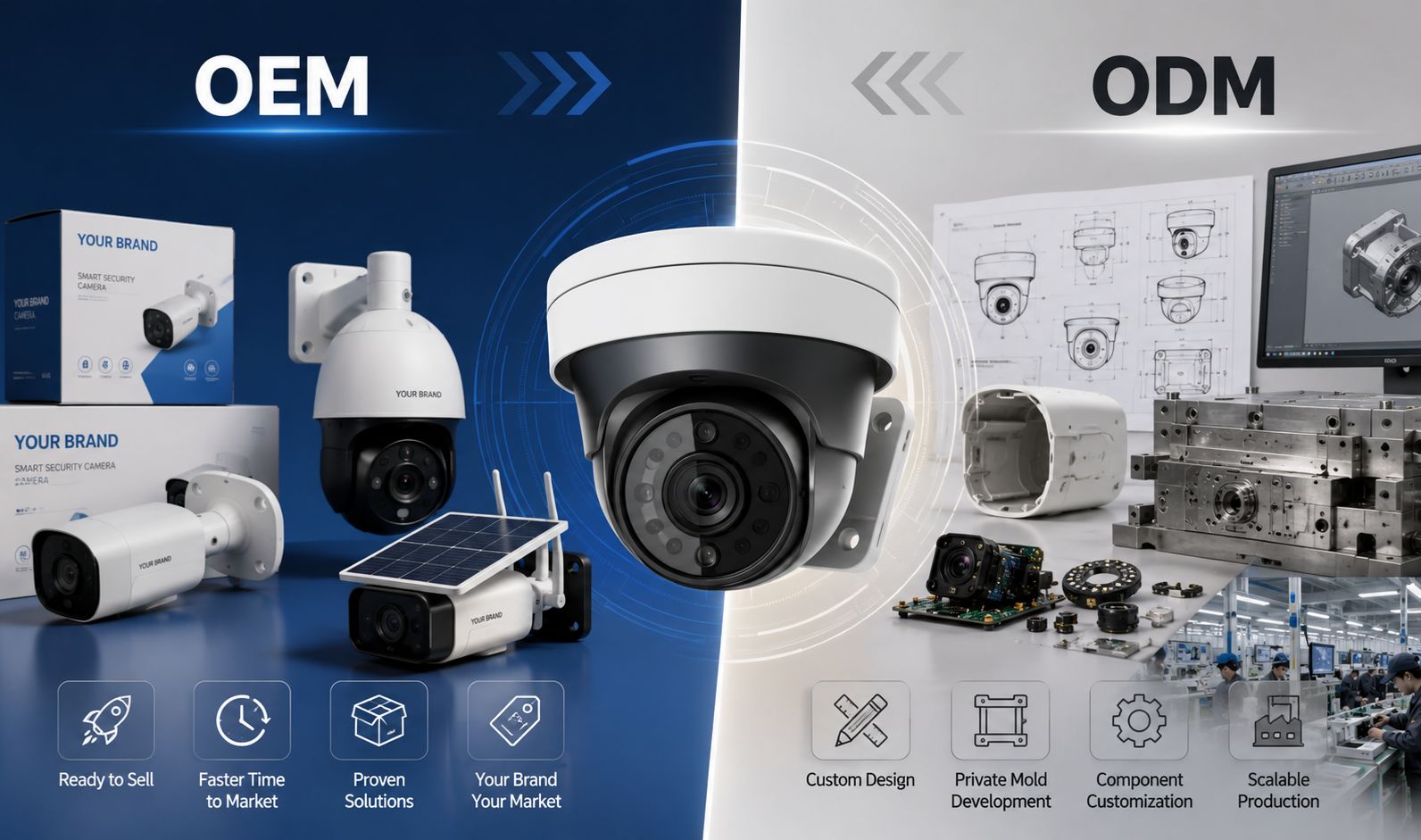
En 2026, le marché est devenu plus saturé. De nombreuses caméras se ressemblent extérieurement, utilisent des noms d'application similaires et revendiquent des fonctionnalités similaires. Pour les distributeurs, les installateurs et les marques de distributeur, cela pose un réel problème : comment vendre un produit suffisamment différent visuellement, suffisamment fiable et disponible à nouveau une fois le premier stock épuisé ? C'est pourquoi OEM et ODM Les décisions ont plus d'importance qu'auparavant.
Que signifient les termes OEM et ODM dans le contexte de l'approvisionnement en caméras de sécurité ?
OEM : Optimisation de la marque des modèles d’appareils photo matures pour une entrée plus rapide sur le marché
OEM signifie que l'acheteur utilise un modèle de caméra existant L'usine assemble ensuite les éléments de marque, tels que l'impression du logo, le design de l'emballage, la mise en page du manuel d'utilisation, l'étiquette, les options de couleur et parfois même les détails d'affichage de l'application. La structure du produit étant déjà finalisée, l'acheteur n'a pas à partir de zéro.
ODM : Développement de solutions de caméras personnalisées pour des marchés différenciés
La conception et la fabrication à façon (ODM) vont plus loin. L'acheteur peut avoir besoin d'un boîtier, d'une couleur, d'une combinaison de lentilles, d'une batterie, d'un panneau solaire compatible, d'un emballage ou d'une application différents. Dans certains cas, l'ODM inclut également la personnalisation de l'apparence du produit et l'ouverture de moules.
Pourquoi l'OEM est avantageux pour les acheteurs qui ont besoin de rapidité et d'un risque de développement moindre
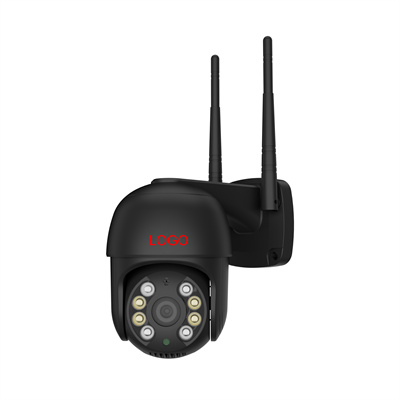
Lancement plus rapide avec les modèles existants de caméras IP, de caméras solaires ou de systèmes de surveillance
L'OEM est avantageux lorsque le temps est compté. Un acheteur peut choisir parmi des gammes de produits existantes et passer rapidement à l'échantillonnage, au conditionnement et à la préparation des ventes. Cette solution est idéale pour les marchés où la demande évolue rapidement ou lorsque l'acheteur souhaite tester plusieurs références simultanément.
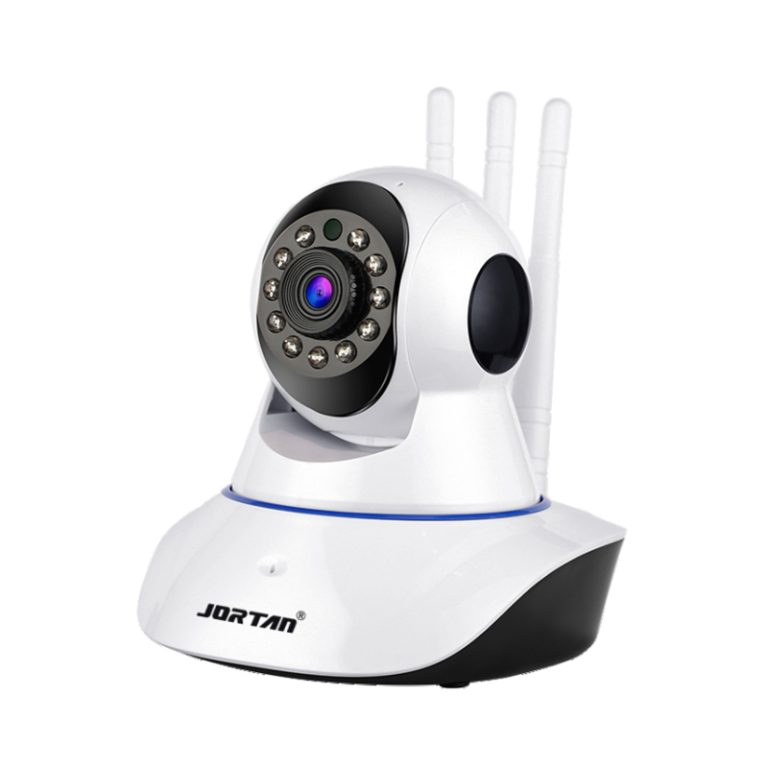
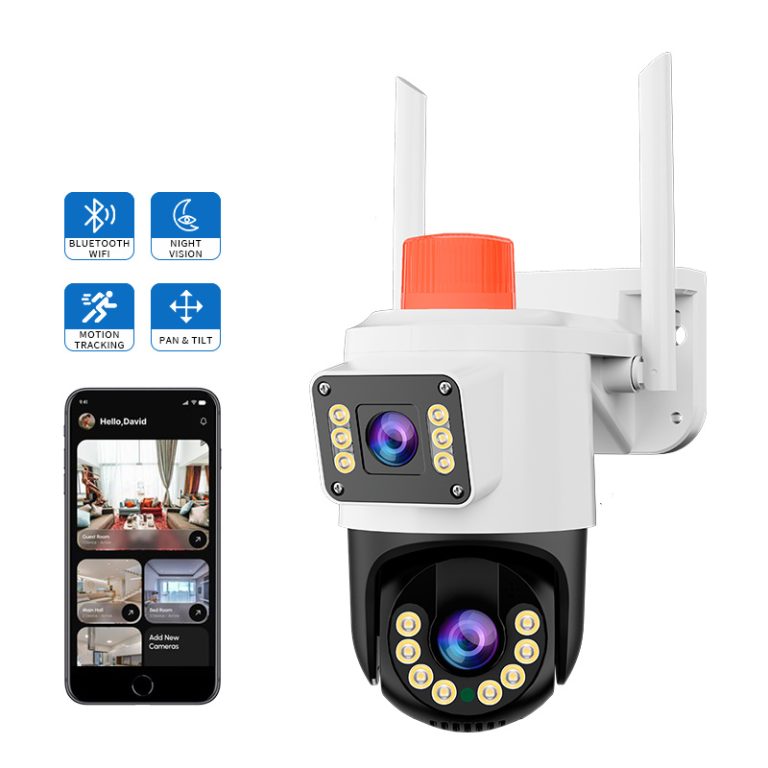
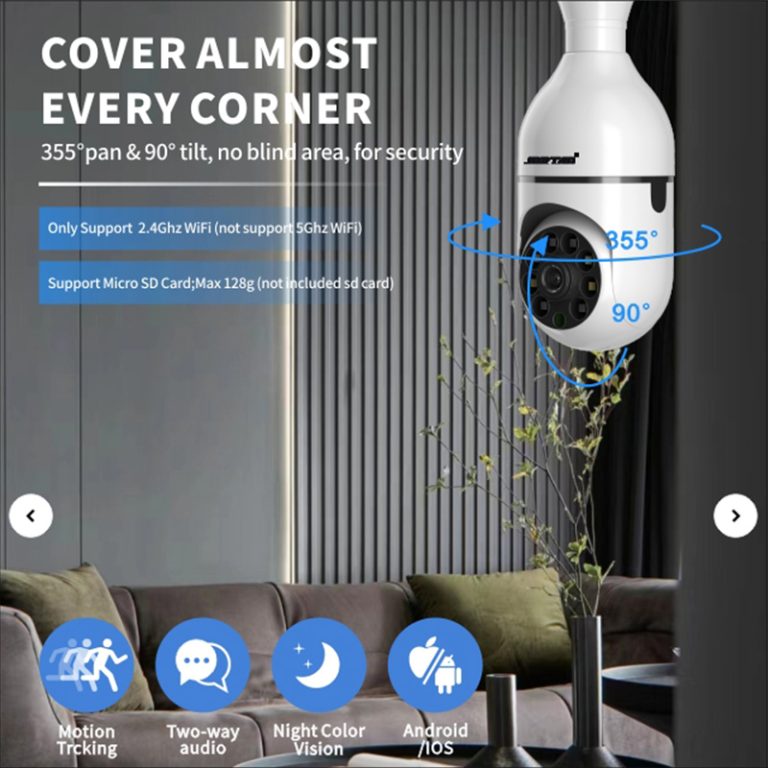
Pour les caméras de sécurité, une gamme de démarrage OEM peut comprendre une caméra IP d'intérieur, un modèle PTZ d'extérieur, une caméra solaire et un kit de surveillance. Cela offre aux équipes commerciales un choix suffisant sans complexifier la première commande.
JordanieLes catégories de produits de l'entreprise comprennent les caméras IP, les systèmes de surveillance et les caméras solaires. Pour les acheteurs souhaitant lancer rapidement une marque privée, cette gamme facilite la création de différents niveaux de prix et de groupes d'applications à partir d'un seul fournisseur.
Création de marque simplifiée grâce à la personnalisation du logo, de l'emballage, du manuel et de l'application
La fabrication pour compte de tiers (OEM) est souvent la première étape du développement d'une marque. Les acheteurs locaux n'ont pas forcément besoin d'un nouveau moule au départ. Ils recherchent avant tout un produit dont l'image de marque est bien structurée. Un logo épuré, un emballage adapté, un manuel d'utilisation clair et une application stable contribuent déjà à améliorer la présentation sur le marché.
L'emballage a également son importance pour le service après-vente. Un bon emballage, une étiquette claire et un manuel d'utilisation peuvent limiter les risques de confusion pour l'utilisateur. C'est particulièrement important pour les caméras sans fil et celles fonctionnant avec une application, où les questions relatives à la configuration constituent souvent la première source de réclamation après l'achat.
Pourquoi l'ODM convient aux acheteurs recherchant une différenciation produit plus marquée
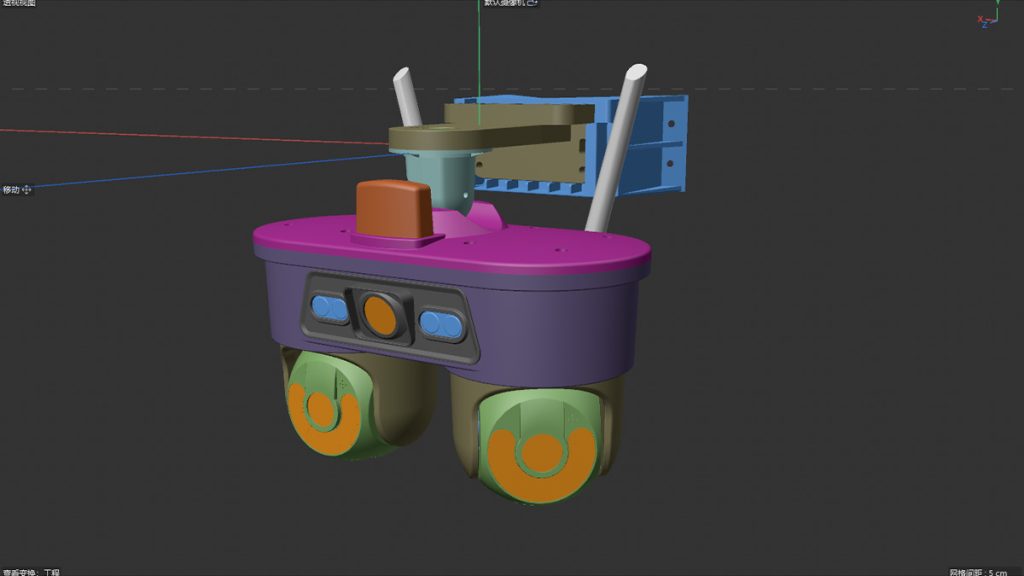
Personnalisation de l'apparence, du boîtier, de la couleur et du moule du produit
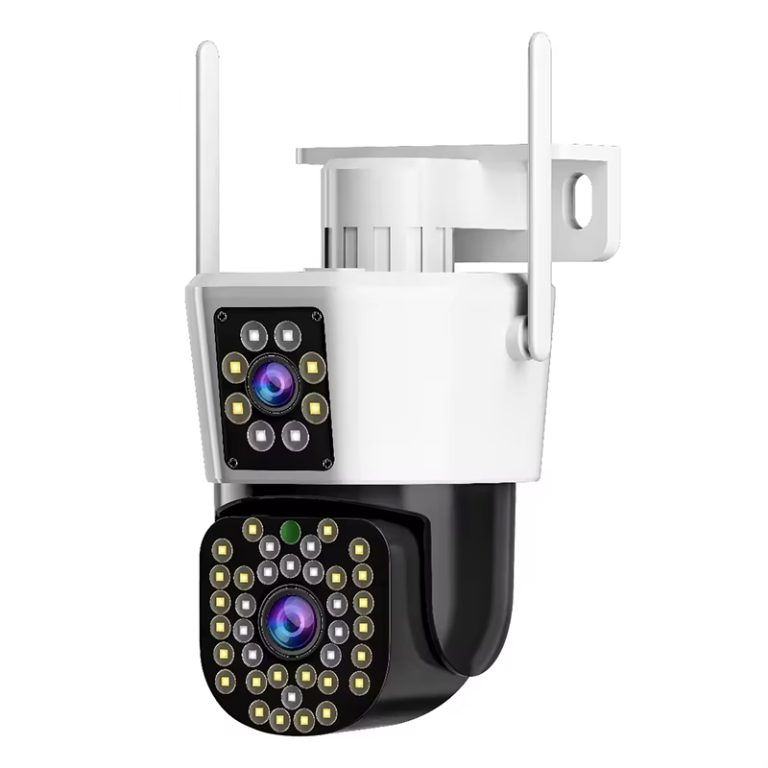
L'ODM devient intéressant lorsque les modèles grand public ne suffisent plus. Si de nombreux fournisseurs proposent des appareils photo avec des boîtiers, des objectifs et des photos marketing similaires, les acheteurs peuvent avoir du mal à maintenir des prix compétitifs. Un boîtier sur mesure ou un moule privé peut contribuer à renforcer l'indépendance de la marque.
C’est là que la maîtrise des opérations de production prend tout son sens. Jortan met en avant une chaîne de production complète, incluant le moulage par injection, le traitement des puces, l’assemblage des caméras, le conditionnement et le transport. Pour les acheteurs, la maîtrise du moulage par injection et des moules en interne permet une plus grande flexibilité dans les modifications d’apparence et une meilleure homogénéité des lots.
Le travail sur les moules privés ne doit pas se limiter à l'esthétique. Les acheteurs doivent également prendre en compte la solidité du support, l'étanchéité, la dissipation thermique, la position de l'objectif, l'angle d'installation et les dimensions de l'emballage. Une caméra esthétiquement réussie, mais difficile à installer, risque de poser problème aux clients.
Convient aux marques établies, aux acheteurs de projets et aux gammes de produits à long terme.
L'ODM est plus avantageux pour les acheteurs réguliers. Si une marque vend déjà des milliers d'appareils photo par an, la conception d'un produit sur mesure peut s'avérer judicieuse. De même, si un fournisseur intervient régulièrement sur des sites similaires, un modèle personnalisé peut faciliter l'établissement des devis et garantir un approvisionnement à long terme.
Cette option est moins adaptée aux acheteurs encore incertains quant au marché. Se lancer trop tôt dans la fabrication à façon (ODM) peut entraîner des délais d'approbation longs, des coûts supplémentaires et des invendus. Dans la plupart des cas, il est préférable pour les acheteurs de commencer par la fabrication à façon (OEM), d'évaluer les réactions du marché, puis de recourir à l'ODM pour les produits présentant un réel potentiel.
Comment choisir entre OEM et ODM pour votre plan de marché 2026
Adapter la stratégie au budget, au calendrier et au canal de vente
La première question n'est pas technique, mais commerciale. Dans quel délai l'acheteur doit-il lancer le produit ? Quel est son budget ? Le produit est-il destiné à la vente en ligne, aux revendeurs locaux, aux installateurs ou à des projets spécifiques ?
Si l'acheteur a besoin d'un démarrage rapide, l'OEM est généralement plus sûr. Si la demande est stable et qu'il souhaite une image de marque plus forte, l'ODM peut être une option intéressante. Une approche mixte est également possible : utiliser l'OEM pour les modèles d'entrée de gamme et l'ODM pour un ou deux modèles plus haut de gamme.
Vérifiez si le marché a besoin de modèles standard ou d'une conception de produit unique.
Certains marchés n'ont pas besoin de conceptions personnalisées au départ. Une caméra extérieure éprouvée avec une application performante, image nocturne claireUn emballage stable pourrait bien se vendre. D'autres marchés regorgent déjà de produits similaires ; l'acheteur a donc besoin d'un design plus distinctif pour préserver sa marge.
La décision devrait émaner des circuits de distribution, et non des préférences personnelles. Si les revendeurs locaux déplorent l'uniformité des appareils photo, le développement de moules propriétaires pourrait s'avérer utile. Si les clients privilégient le prix et les fonctionnalités de base, la fabrication sur mesure (OEM) peut suffire dans un premier temps.
Évaluer les capacités du fournisseur en matière d'ouverture de moule, de moulage par injection, d'assemblage et de tests.
Un fournisseur qui prend en charge les projets ODM doit proposer bien plus qu'un simple catalogue. Les acheteurs doivent s'informer sur la capacité d'ouverture des moules, le processus de moulage par injection, la chaîne d'assemblage, les étapes de test, le support en matière d'emballage et la réactivité lors des modifications.
Le service OEM/ODM de Jortan propose une production intégrée complète, incluant le moulage par injection, le traitement des puces, l'assemblage des caméras, le conditionnement et le transport. Il décrit également de multiples processus d'inspection, du contrôle des matières premières à l'inspection des produits finis, en passant par l'échantillonnage des produits semi-finis. Ces points sont essentiels pour les acheteurs soucieux de la personnalisation des lots et des livraisons régulières.
Ce que les acheteurs B2B doivent vérifier avant de passer des commandes OEM ou ODM
Quantité minimale de commande, politique d'échantillonnage, délai de livraison et stabilité des commandes en gros
Avant de confirmer un projet, les acheteurs doivent se renseigner sur la quantité minimale de commande (MOQ), le coût et le délai d'échantillonnage, le délai de livraison pour les commandes en gros, le délai de livraison pour l'emballage et les options de commande de modèles mixtes. Les fabricants ODM peuvent exiger une MOQ plus élevée que les fabricants OEM, notamment en cas de nouveaux moules ou de modifications spécifiques du boîtier.
La stabilité des commandes en gros est importante. Les acheteurs doivent s'assurer que le même modèle, le même emballage et les mêmes composants clés pourront être fournis pour les lots futurs.
Détails de la marque, fichiers d'emballage, exigences de l'application et documents techniques
L'identité visuelle doit être validée en détail. L'emplacement du logo, la méthode d'impression, le visuel de la boîte, la langue du manuel d'utilisation, le format des étiquettes, le code-barres, le nom de l'application et les photos du produit doivent tous être vérifiés avant la production en série.
La documentation technique est également importante pour les distributeurs et les installateurs. Elle peut comprendre les manuels d'utilisation, les guides d'installation, les spécifications du produit, les conditions de garantie et les notes de dépannage. Une documentation claire permet de réduire la pression sur le service après-vente sur le marché local.
Conditions de garantie, service après-vente et assistance pour les commandes répétées
La garantie ne doit pas être vague. Les acheteurs doivent se renseigner sur la prise en charge des unités défectueuses, les preuves nécessaires, la disponibilité des pièces détachées et la rapidité de réponse du fournisseur aux questions concernant l'application ou la configuration.
Pour les caméras de sécurité, service après-vente La qualité d'image est étroitement liée à la stabilité de l'application, à la configuration Wi-Fi, au stockage, à la qualité des photos nocturnes et aux erreurs d'installation. Un fournisseur capable de répondre rapidement à ces questions est plus précieux qu'un fournisseur proposant uniquement un prix unitaire plus bas.
FAQ
Q1 : Pour une nouvelle marque de caméras de sécurité en marque blanche, vaut-il mieux opter pour un modèle OEM ou ODM ?
A1 : Pour une nouvelle marque, l’OEM est généralement préférable car il utilise des modèles d’appareils photo éprouvés et permet un lancement plus rapide avec logo, emballage, manuel et personnalisation de base. L’ODM est plus adapté une fois que l’acheteur dispose de données de vente et souhaite des modifications plus importantes, comme le boîtier, la couleur, la structure de l’objectif, la conception du support, la configuration solaire ou des ajustements liés à l’application.
Q2 : Quels détails les acheteurs doivent-ils vérifier avant de personnaliser leurs caméras de sécurité ?
A2 : Les acheteurs doivent clarifier tous les détails concernant la quantité minimale de commande (MOQ), la politique d’échantillonnage, les délais de livraison, l’emplacement du logo, la conception de l’emballage, la langue du manuel d’utilisation, les spécifications d’application et le service après-vente. Pour les caméras de projet, ils doivent confirmer les informations relatives à l’installation, l’alimentation, le réseau, la mémoire, la vision nocturne et la résistance aux intempéries.
Q3 : Comment les fournisseurs peuvent-ils soutenir les commandes à long terme de caméras de sécurité OEM et ODM ?
A3 : Un fournisseur idéal doit assurer un flux constant de modèles, des services de test produit, une assistance à l’emballage, des données techniques, un service après-vente réactif et un réapprovisionnement régulier. Pour les ODM plus spécialisés, il convient de rechercher des services tels que l’ouverture de moules, le moulage par injection, l’assemblage, le contrôle qualité et la communication tout au long du projet.