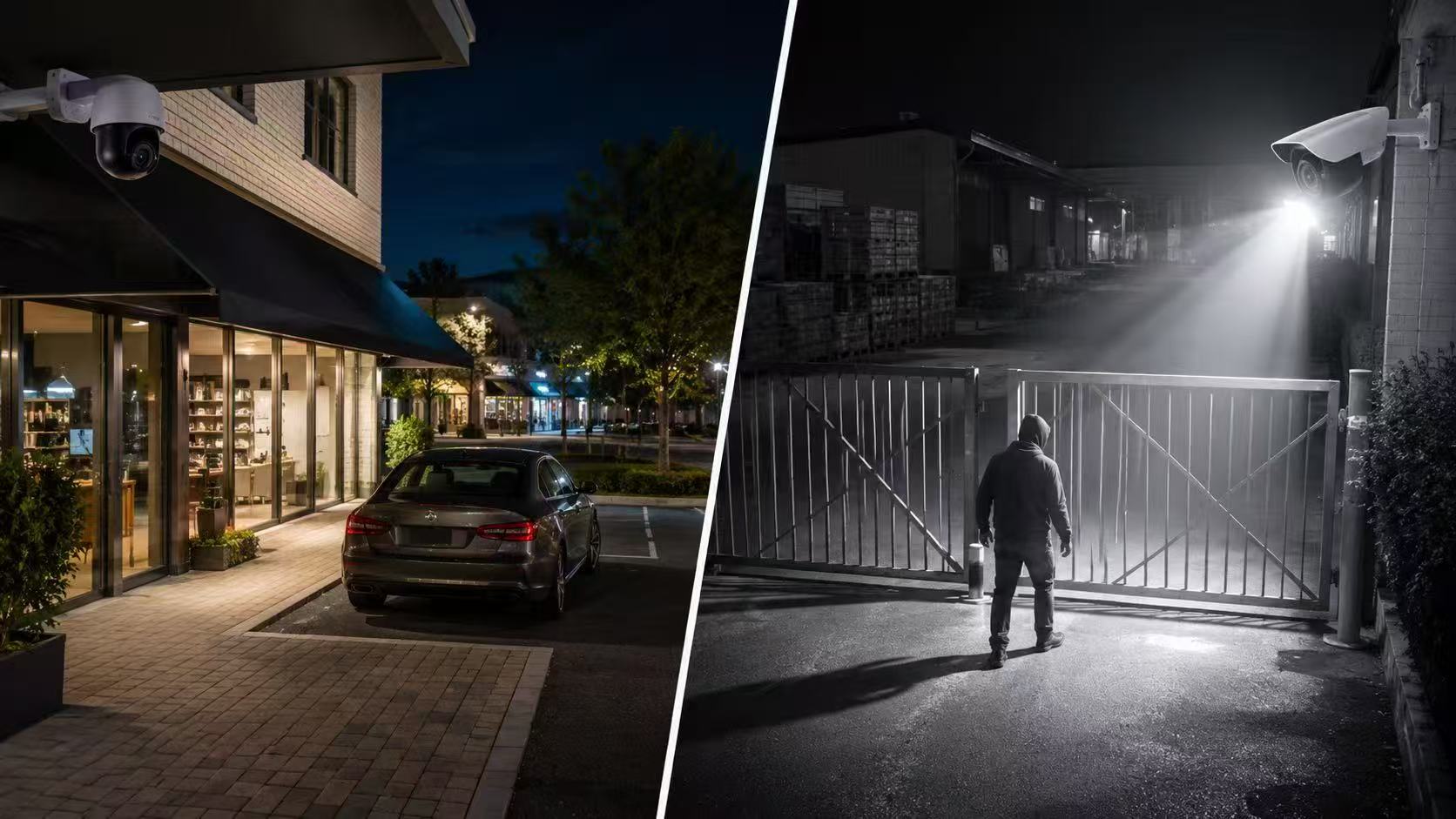
Night performance is where many security camera projects get judged after installation. Daytime video may appear great, but low night time picture quality, over exposure to white light, or poor detection may soon become a complaint. In terms of B2B purchases, night-time color vision and dual-light warning are two different things. One is for night vision, the other is for added warning.
Defining Full-Color Night Vision and Dual-Light Warning
What Full-Color Night Vision Means in Security Projects
A full-color night vision camera is designed to keep color information in low-light environments. Instead of showing only black-and-white infrared footage, it uses image sensors, lens design, low-light processing, and sometimes supplemental white light to restore more of the real scene.
This matters in commercial projects because color detail helps event review. Clothing color, vehicle color, goods, signs, and background details may all matter after an incident. If the recording is only grayscale, some details are harder to confirm.
What Dual-Light Warning Means in Surveillance Systems
Dual-light warning is different. It usually combines infrared monitoring with visible white light activation. Under normal nighttime conditions, the camera can monitor quietly with infrared. When motion, human activity, or another target is detected, white light turns on and makes the camera more visible.
That visible response works as a basic deterrent. It does not replace alarms or access control, but it helps the camera move from passive recording to active site response.
Core Functional Differences Between the Two Technologies
Full color focuses on image detail. Dual-light warning focuses on both monitoring and intervention.
For evidence-focused projects, full-color night vision can be the better choice. It gives buyers stronger footage for entrances, loading zones, reception areas, and retail surroundings. For risk-prevention projects, dual-light warning often feels more practical because it can make unwanted activity more noticeable before the event develops.
Key Value Advantages in Project Deployment
Value of Full-Color Imaging for Monitoring Quality
Full-color imaging improves the usefulness of night footage. In a storefront, it can help staff check what happened near the entrance. In a logistics site, it can help identify vehicle color or goods movement. In property management, it can reduce the confusion caused by black-and-white images.
The trade-off is lighting. Some full-color cameras need white light support. If the site is close to homes, public paths, or customer-facing areas, buyers need to check whether the lighting is acceptable at night.
Value of Dual-Light Warning for Risk Prevention
Dual-light warning adds a visible reaction. This is useful in warehouses, factory perimeters, material yards, service roads, and fenced outdoor zones. If the white light turns on only when activity appears, the system can avoid constant lighting while still creating a warning effect.
For buyers, the trigger logic matters a lot. A camera that turns on white light too often may create complaints. A camera that reacts too late may not be useful. Sample testing should include target distance, movement speed, false triggers, and night image results.
Full-Color Night Vision Product Types and Suitable Scenarios
Always-On Full-Color Cameras
Always-on full-color cameras fit sites that need continuous color monitoring at night. Commercial storefronts, campus roads, parks, and public-facing areas may benefit, especially when ambient light already exists.
Buyers should check energy use, light pollution, heat management, and whether the camera still performs well in rain, fog, or weak ambient light.
Low-Light Full-Color Cameras
Some cameras focus more on low-light performance and do not depend heavily on strong visible lighting. These are useful when the site has residual light from street lamps, shop lights, or facility lighting.
For this type, sensor performance, image noise control, lens aperture, and color stability matter more than a simple product title. A night sample from the real project scene is much more useful than a studio photo.
Evidence-Focused Full-Color Cameras
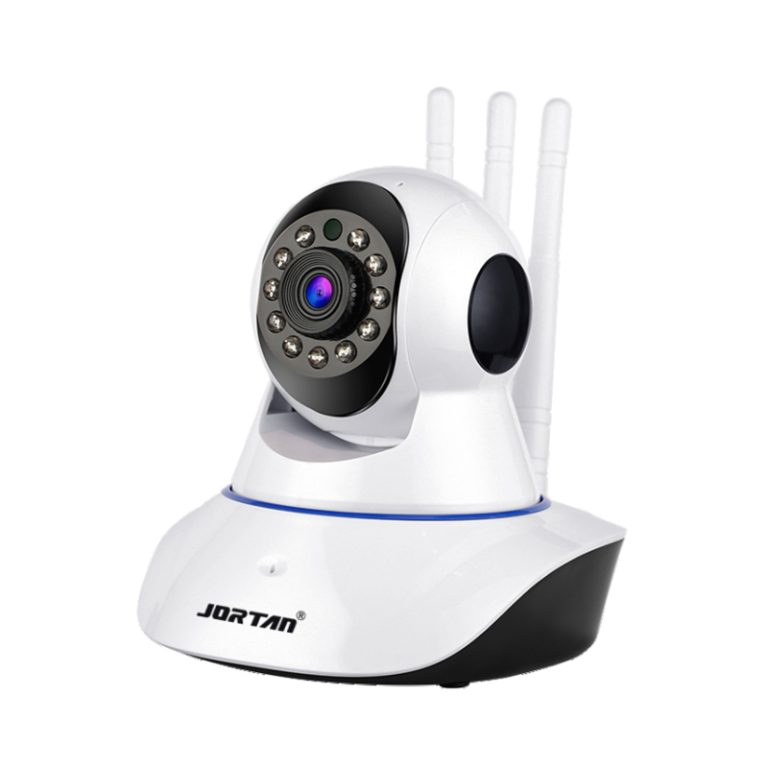
Evidence-focused projects need usable detail after something happens. Entrances, delivery zones, cash-handling perimeters, vehicle access points, and loading docks fit this direction. A buyer choosing from the Jortan product range can compare IP Camera, Monitoring Package, Solar Camera, and dual-lens directions by site role rather than only by model name.
Dual-Light Warning Product Types and Suitable Scenarios
Infrared Plus White Light Switching Cameras
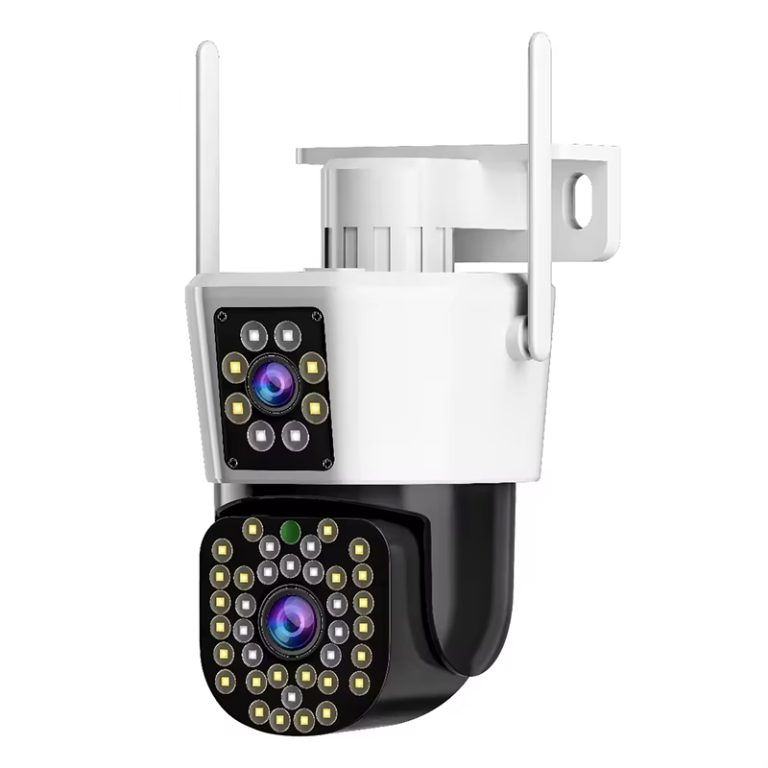
This is the most common dual-light logic. The camera watches in infrared under normal conditions, then turns on white light after detection. It fits warehouses, small factories, construction sites, fenced yards, and outdoor back entrances.
This type is useful when the project needs both lower-profile monitoring and event-triggered warning.
Dual-Light Warning with Smart Detection
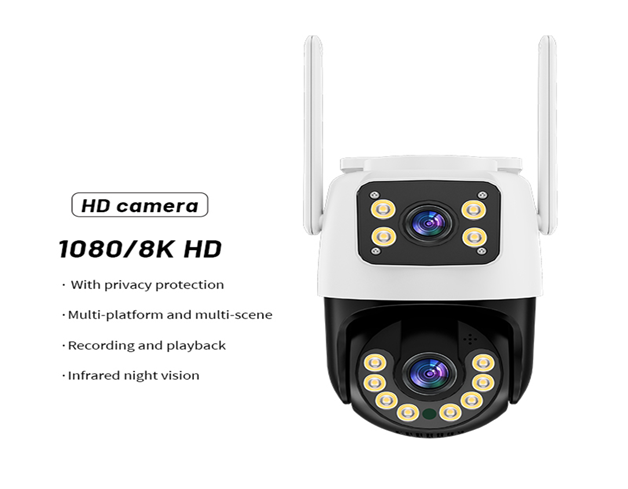
Smart detection can reduce unnecessary white light activation. Human or vehicle detection is more useful than basic motion detection in places with moving trees, insects, rain, small animals, or passing shadows.
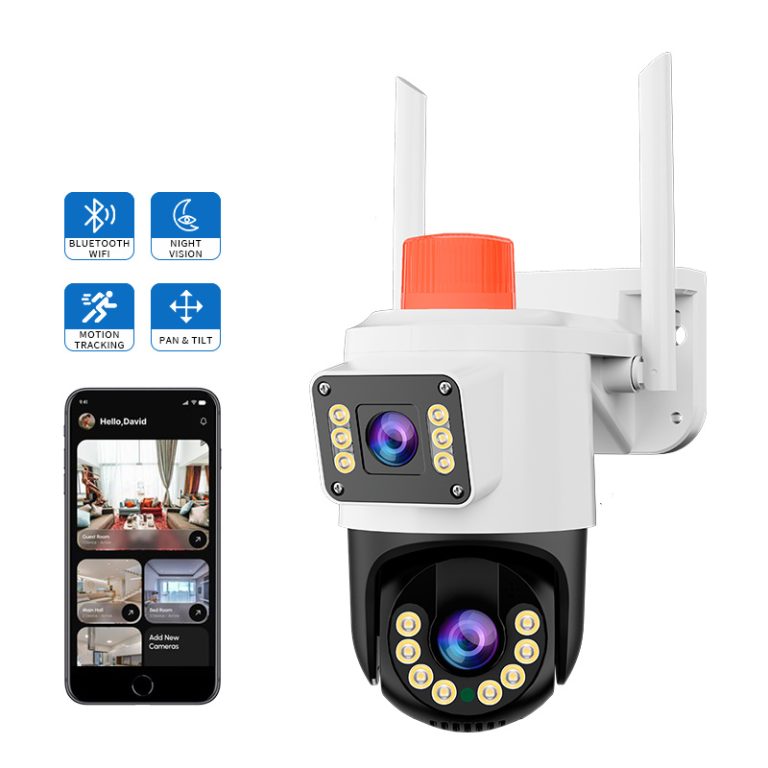
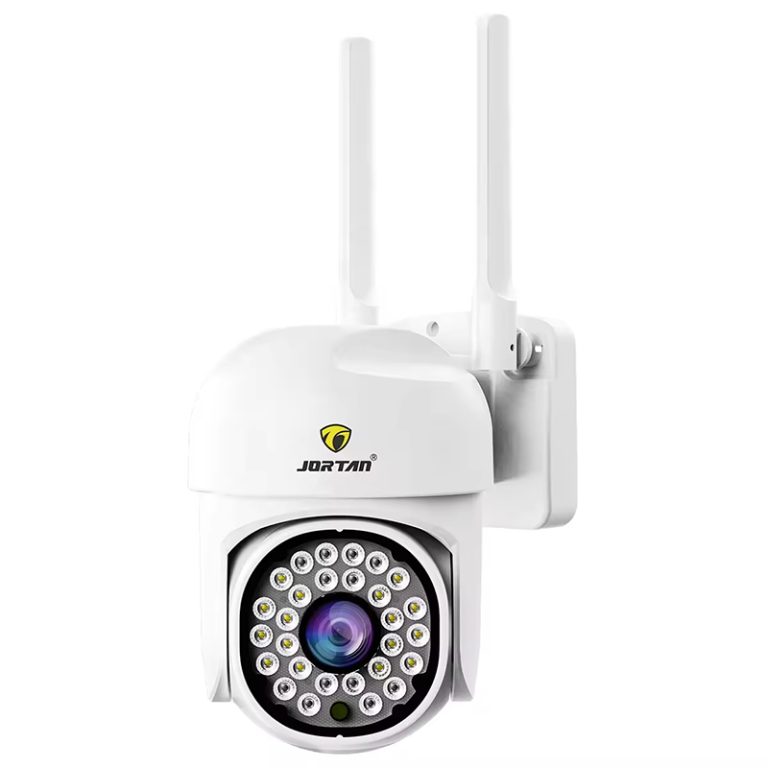
Jortan’s JT-8698PRO is a suitable example for starlight full color, infrared night vision, dual light warning, human shape detection, and AI tracking in one outdoor camera direction.
Deterrence-Oriented Dual-Light Cameras
Some sites need the camera to be noticed. Material yards, unmanned facilities, service roads, back doors, and lower-traffic perimeters are common examples. JT-9689UQJ can fit buyers comparing sound and light alarm, full-color night performance, pan/tilt viewing, and outdoor warning needs.
Project-Based Comparison: Which Adds More Value?
For retail and commercial properties, full color often gives more value in customer-facing areas. It supports better incident review without making the space feel too aggressive. Dual-light warning can still work at back doors, delivery points, and after-hours perimeters.
For warehouses and logistics sites, mixed deployment often makes more sense. Full color can be placed at loading docks and entry points where identification matters. Dual-light warning can protect fence lines, storage yards, and quieter outdoor edges.
For residential compounds or mixed-use projects, buyers should be more careful with dual-light activation. Too much white light can annoy residents. Full color may be more acceptable in shared spaces, while dual-light warning can be limited to restricted or lower-traffic areas.
Procurement Evaluation Criteria for B2B Buyers
Buyers should check more than the phrase “full color” or “dual light.” For full-color models, review low-light samples, color accuracy, noise control, and whether the footage remains usable under rain or weak ambient light. For dual-light warning, check detection accuracy, white light trigger distance, response time, and whether the warning behavior can be adjusted.
The supplier should also support batch consistency. If the sensor, lens, light board, firmware, or app behavior changes between orders, the same product line may perform differently. That is a real problem for distributors and private label buyers.
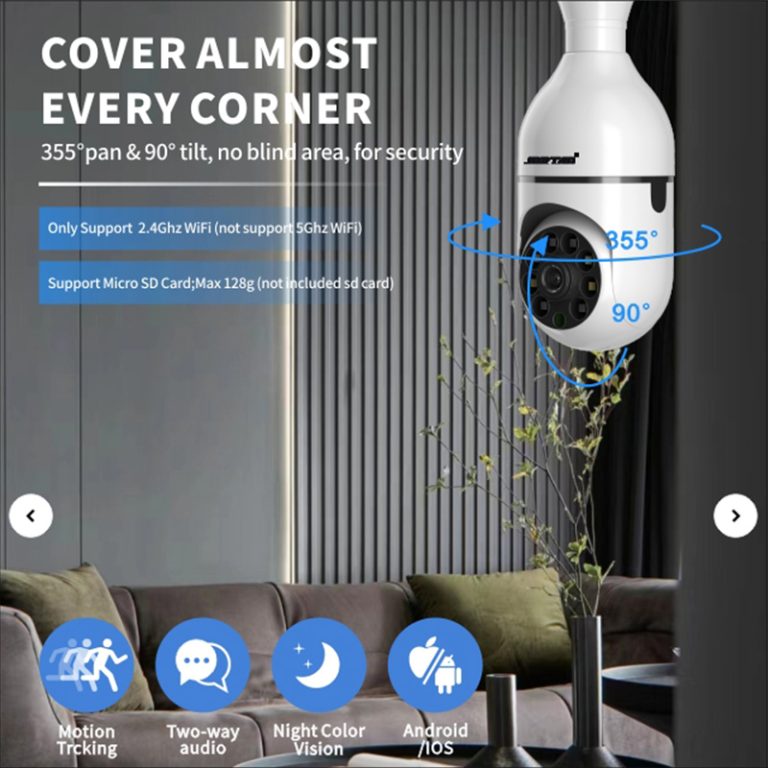
Jortan works as a security camera supplier covering IP Camera, Monitoring Package, Solar Camera, DVR, NVR, and app-based camera directions, so buyers can compare full-color and warning functions across different project roles.
Supplier Selection and Bulk Purchasing Recommendations
Choose full-color night vision when the project values detailed nighttime evidence and scene realism. It is a better fit for retail, hospitality, property management, entrances, and access-control-related areas where identification is more important than warning.
Choose dual-light warning when the project needs active deterrence at night. It is a stronger fit for industrial, logistics, perimeter, low-traffic, and unmanned sites where visible response can reduce risk.
For many 2026 projects, the best answer is not one technology only. Use full color at key identification points and dual-light warning at outer defense lines. Before volume orders, confirm project scenes, lighting conditions, warning behavior, sample validation, integration compatibility, lead time, MOQ, OEM packaging, firmware support, and after-sales handling.
FAQ
Q1: Which is better for B2B projects, full-color night vision or dual-light warning?
A1: Full-color night vision is better when buyers need detailed evidence and clearer scene review. Dual-light warning is better when the project needs visible intervention at night. Many sites use both: full color for entrances and dual-light warning for perimeters.
Q2: What parameters should buyers test before bulk orders?
A2: Buyers should test low-light image quality, color accuracy, IR distance, white light trigger distance, detection accuracy, response logic, waterproof housing, storage playback, app settings, installation height, and whether the same configuration can stay stable in repeat orders.
Q3: Can these cameras support OEM or private label orders?
A3: Yes, but buyers should confirm MOQ, logo printing, packaging design, manual language, carton marks, app requirements, lead time, warranty terms, spare parts, firmware support, and defect handling before mass production. Sample approval should cover both image effect and warning behavior.