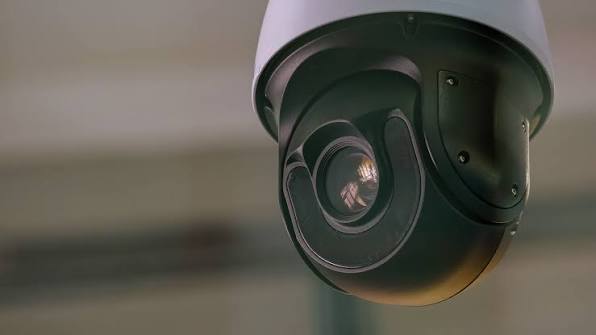
An IP camera that can function in a sample room setting could still be inappropriate in an application like a warehouse aisle, shop entryway, or distant gate. The issues of light, distance, network connectivity, and recording patterns vary from one application to another. In 2026, the issue will not be about having the best equipment but about fitting the camera for its environment.
Start With the Site, Not the Camera Catalog
A good shortlist begins with a simple site map. Mark areas needing continuous recording, points where a person or vehicle must be identified, and places where general movement is enough. A wide entrance may need a broad field of view, while a loading door may need a narrower lens that keeps faces and labels larger in the frame.
Define the monitoring area and distance
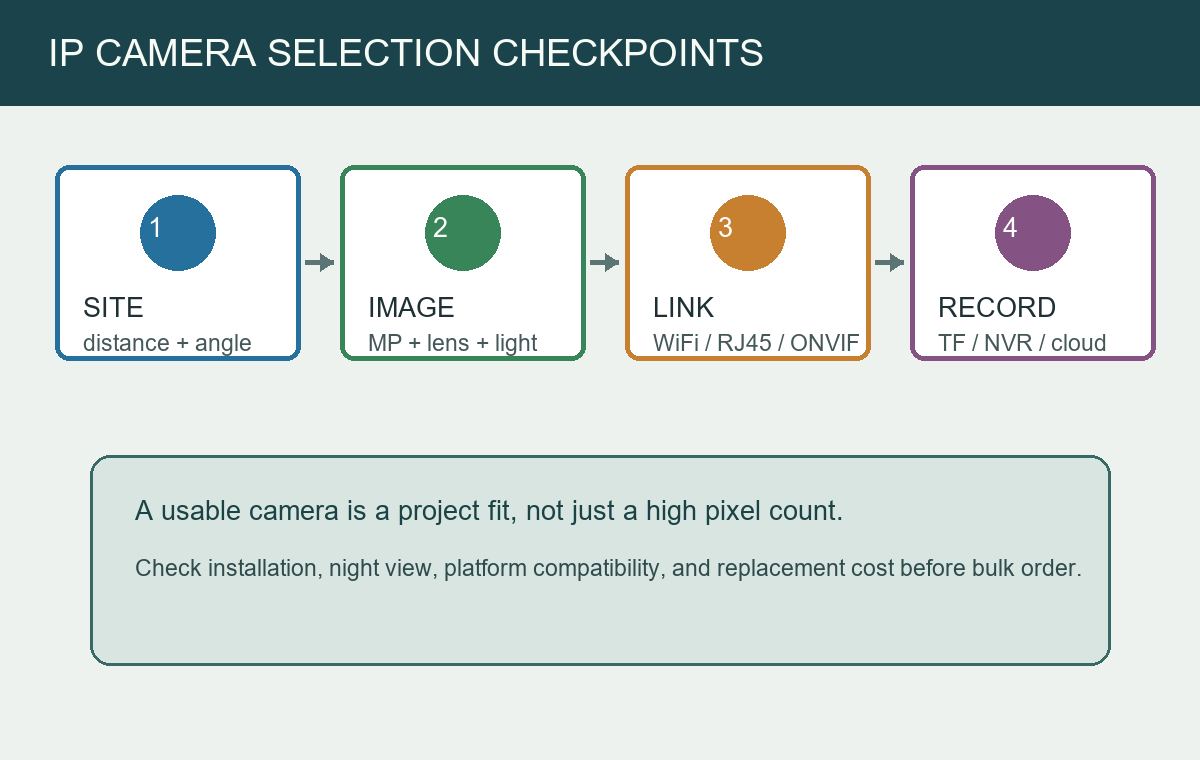
Installation height matters as much as advertised resolution. A camera mounted too high can produce a clean overhead view but weak facial detail. A bright glass door may create silhouettes by day and reflections at night. Confirm target distance, viewing angle, lighting changes, and bracket adjustment before discussing quantity.
Check power and network conditions
Wired connections are usually easier to manage across a fixed warehouse or commercial building. WiFi can save installation time in a finished property, but concrete walls may weaken the signal. Battery or solar units help at remote points, yet charging, battery replacement, wake-up delay, and limited continuous recording can affect the service promise made by a distributor. A camera that loses its link every evening creates more support tickets than a simpler model with a stable connection.
Compare the Features That Affect Project Results
Resolution and lens choice
A 2MP camera can be sensible for a small room or a basic monitoring point. Four megapixels give more room for cropping and identification, while 6 MP is more useful when the scene is wider or the target is farther away. Still, a higher pixel count does not fix a poor angle, a dirty dome, or a lens that is too wide for the distance. The shortlist should record pixel level, focal length, expected target size, frame rate, and the bandwidth required by the chosen codec.
Night vision and weather protection
Indoor projects often need balanced low-light performance, sensible IR-CUT switching, and limited glare near walls. Outdoor projects add rain, dust, insects, heat, and cable sealing. IP66 is a useful baseline for many fixed outdoor jobs because it covers dust protection and powerful water jets, but the rating does not replace a proper mounting angle or a sealed connector. Full-color night vision can help at a gate or shop entrance when identifying clothing or vehicle color matters. Infrared remains practical where visible light would disturb the site or attract attention.
Storage and system compatibility
A single camera can often use a TF or micro SD card, keeping installation simple. Larger sites may need an NVR or DVR for centralized playback and longer retention. Cloud storage adds off-site backup but also brings subscription and network considerations. Check H.265 on both the camera and recorder, test mobile replay, and verify ONVIF or third-party integration before a platform change becomes expensive.
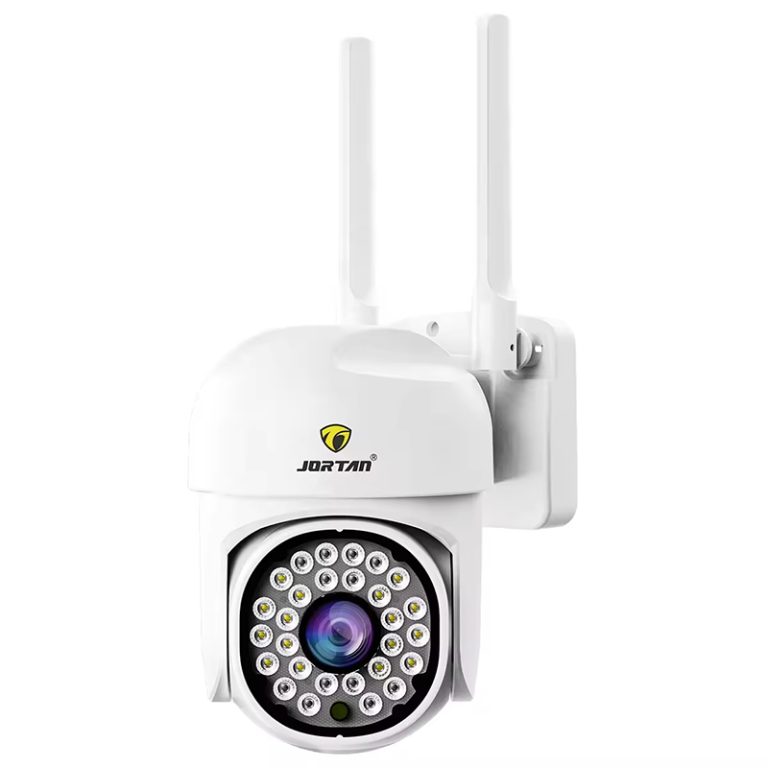
This is where Jortan outdoor camera options can help a distributor compare more than one installation pattern. Different projects can share a familiar accessory family while still using different housings, lens options, storage methods, and network connections.
Match the IP Camera Type to the Project
The right model depends on the job after installation.
Indoor rooms and small commercial sites
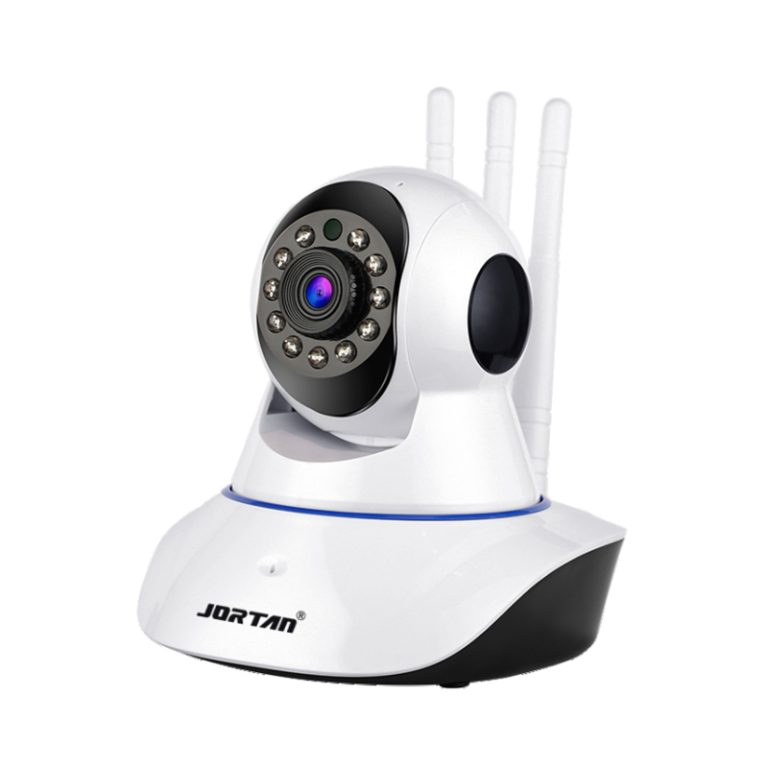
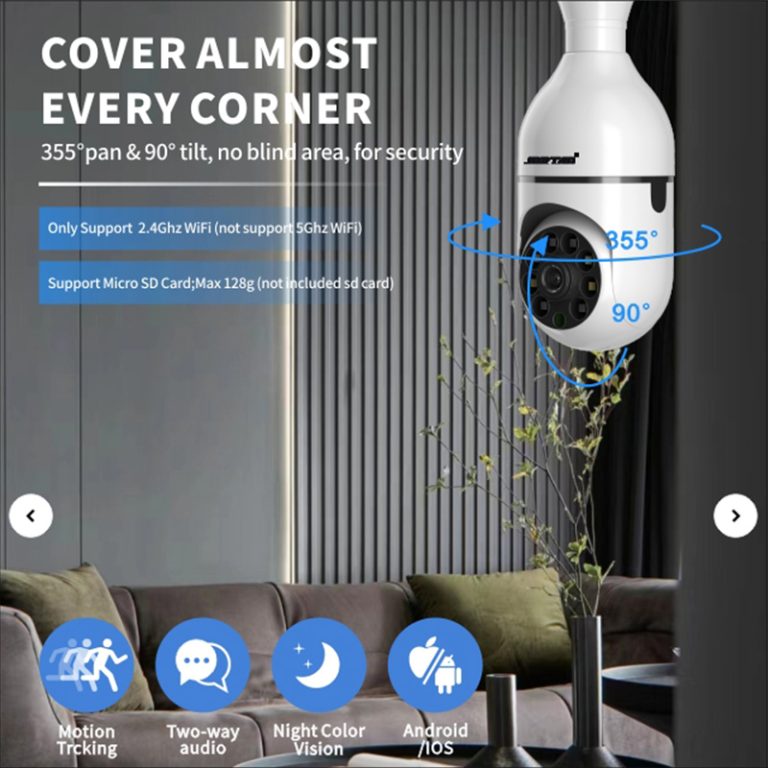
For offices, reception areas, corridors, and small stores, a compact WiFi camera with app access, two-way audio, night vision, and local plus cloud storage is often easier to sell than a full recorder system. The key question is whether the app, adapter, instructions, and reset process can be repeated across a batch. Indoor buyers usually gain more from quick setup and dependable playback than from paying for outdoor housing they will never use.
Warehouses, entrances, and outdoor perimeters
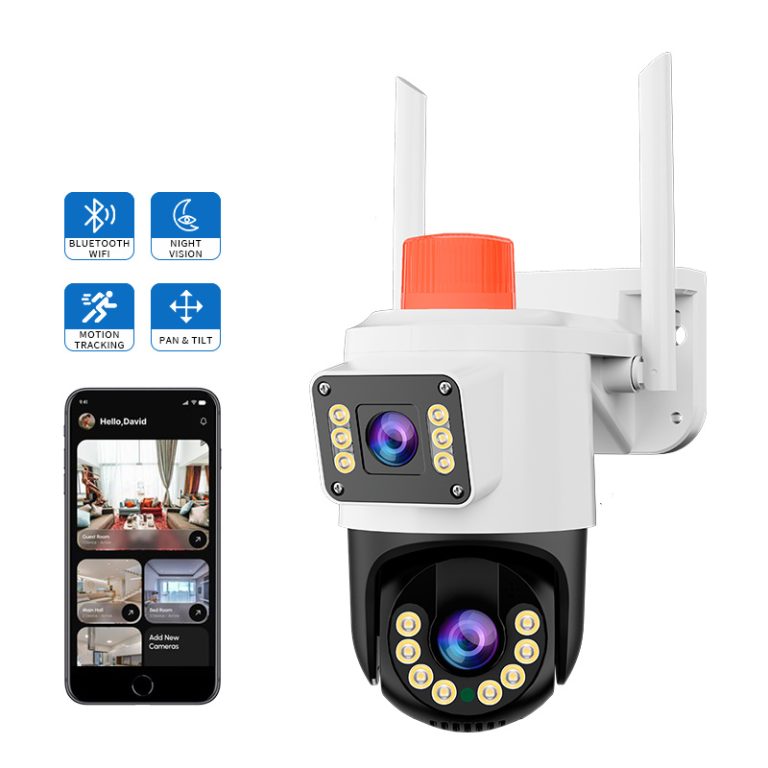
A warehouse door or shop frontage usually needs more than a basic indoor unit. Look for weather protection, a stable wired option, night coverage, and a storage method that can be handed over to an installer without extra work. JT-9689UQJ fits this type of discussion as a 4MP outdoor PTZ camera with 3.6mm and 6mm lens options, 355-degree pan, 90-degree tilt, Yoosee APP access, and up to 30m infrared or full-color night vision. That combination gives an installer more room to match viewing distance and night conditions at a shop entrance or warehouse yard.
Wide areas and remote monitoring points
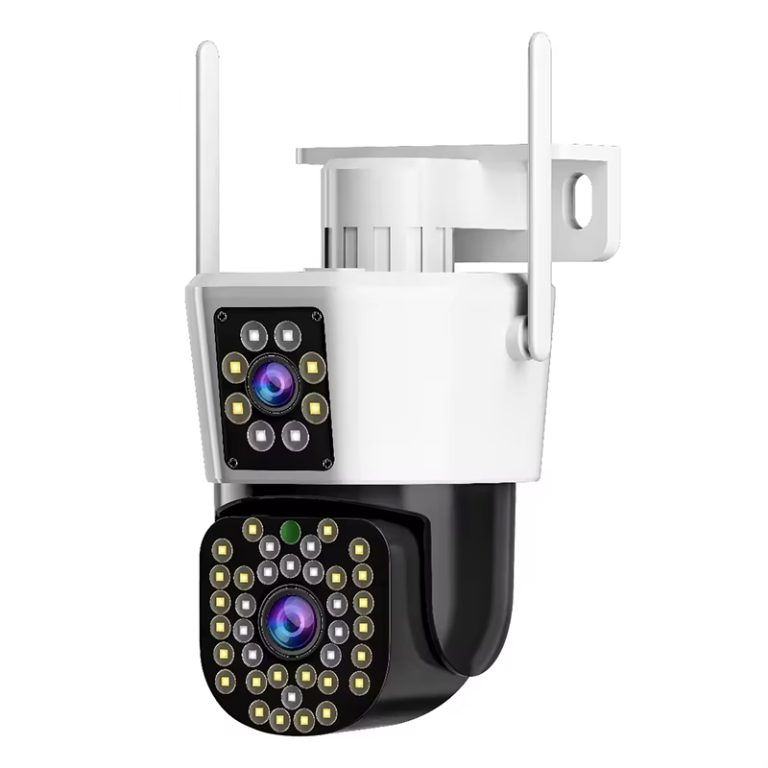
For a yard, farm entrance, parking area, or construction perimeter, fixed coverage may leave gaps as vehicles or people move across the site. A PTZ model can add remote positioning and wider observation, provided the network and mounting point are reliable. Jortan4 outdoor PTZ is an example with 6MP imaging, IP66 protection, automatic IR-CUT, 355-degree pan, 90-degree tilt, cloud and Micro SD storage, and up to 30m infrared night vision. Its value is the balance between wide-area viewing, day/night switching, and storage choices.
Before deciding whether one model should serve every channel, compare installation tools, spare housings, app language, packaging, and the cost of replacing a unit after the warranty period. A mixed line is often easier to support than one camera forced into indoor rooms, loading doors, and open yards alike.
Make the Supplier Check Part of Camera Selection
For distribution or repeated installation, treat the sample as a small production audit. Run daytime and nighttime tests, check WiFi range at the mounting distance, review playback, and confirm that the camera, recorder, app, and cloud service use the same settings. Jortan can be part of that comparison when the buyer needs several camera types under one supply discussion. This catches expensive problems after shipment: missing accessories, different firmware, changed image tuning, or an app that cannot support the promised workflow.
MOQ, lead time, packaging, warranty terms, certifications, and replacement parts belong in the same discussion. If a supplier can provide OEM/ODM camera service, ask how the customized logo, carton, firmware, accessory list, and inspection standard will be recorded for every batch. A low unit price does not help when a distributor has to relabel cartons, retrain installers, or replace missing waterproof kits.
For a project with several camera types, a short sample plan is usually more useful than testing one flagship model. Test the indoor WiFi model, the outdoor IP66 model, and the recorder or cloud workflow that will actually be sold. Then confirm support for installation questions, firmware changes, spare parts, and after-sales communication. When the final specification is clear, contact Jortan with the site conditions, target quantity, preferred storage, and packaging requirements so the quotation can be tied to a real configuration.
FAQ
Q1: What should be checked first when selecting an IP camera?
A1: Start with the monitoring area, target distance, lighting, power, network, and recording method. Choosing a model before checking these points can cause blind spots, unstable connections, or storage costs that were not included in the project budget.
Q2: Is a higher megapixel IP camera always better?
A2: No. Resolution must match the lens, distance, lighting, frame rate, compression, and storage capacity. A 4MP camera with a suitable lens can produce more useful evidence than a higher-pixel model aimed at the wrong angle or installed in poor light.
Q3: Can Jortan support customized IP camera projects?
A3: Jortan can discuss OEM/ODM configurations, packaging, sample testing, MOQ, app requirements, accessories, and after-sales arrangements. The purchase team should put the approved model, firmware, carton artwork, included parts, inspection method, and replacement process into the order documents so later batches do not drift from the tested sample.