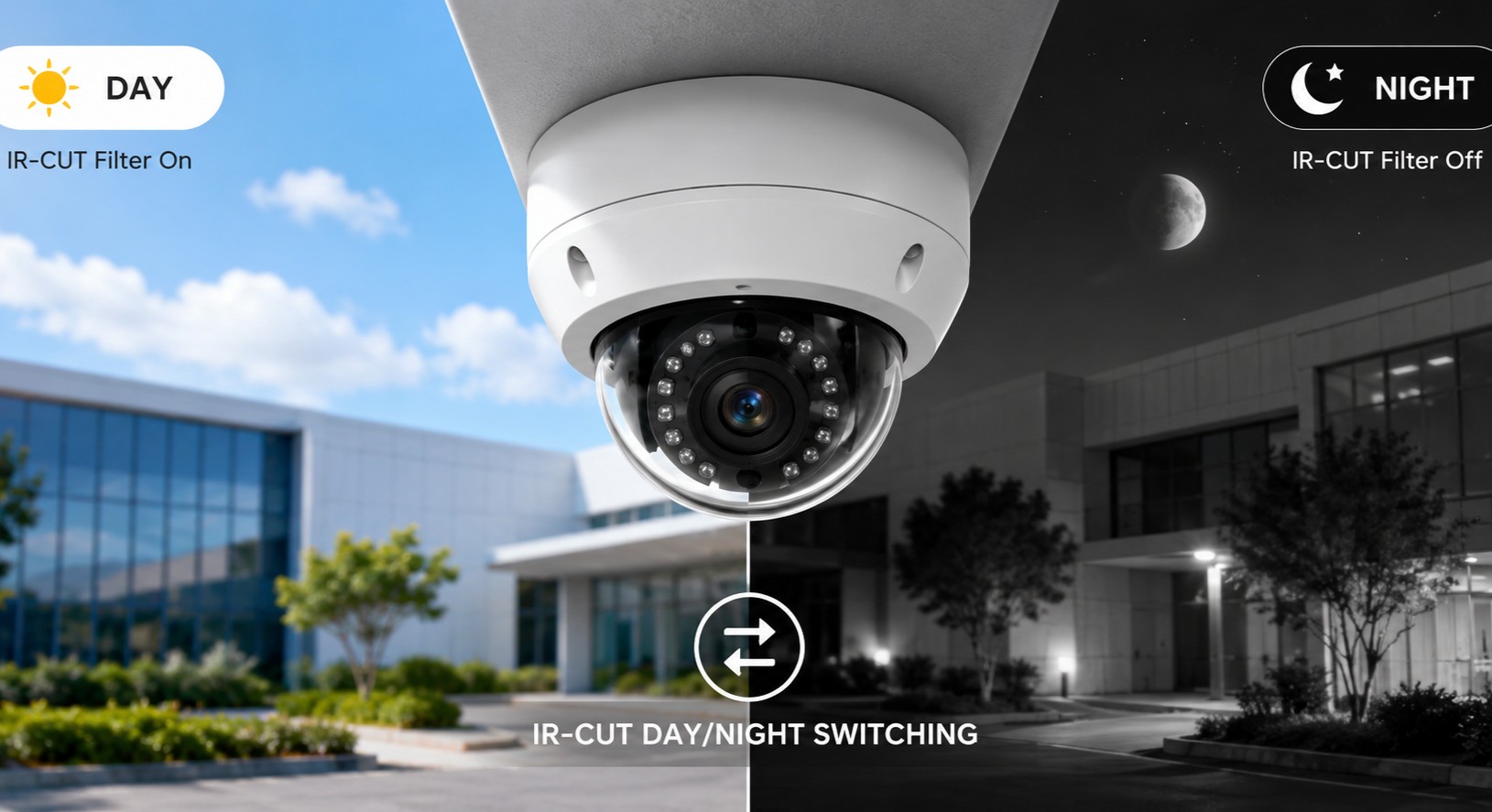
IR-CUT sounds like a small part inside a camera, but it decides whether the same unit still makes sense when the light changes. A gate camera that looks fine at noon can turn flat and noisy after sunset. A yard camera may keep recording all night, yet still fail the real job if the switch between color and infrared is slow or unstable.
Why IR-CUT Still Matters in Real Camera Projects
IR-CUT is one of those functions buyers only notice after a site starts working. During the day, the camera needs true color and clean edges. At night, it needs to let infrared light do the job without leaving the image washed out or permanently tinted. That transition is what makes a camera usable across a full day, not just in a sample room.
The value is practical. When the switch works properly, faces stay readable, vehicle colors stay believable, and playback is easier to trust. When it fails, the footage often looks like a mix of gray haze, dull colors, or over-bright reflections. In project work, that kind of clip is hard to defend to an end user. This is why IR-CUT often sits closer to the center of the buying decision than many spec sheets suggest. The label itself is not the whole product, but without it, day and night performance can drift in ways that are hard to fix later.
How IR-CUT Day/Night Switching Works
What the filter is doing
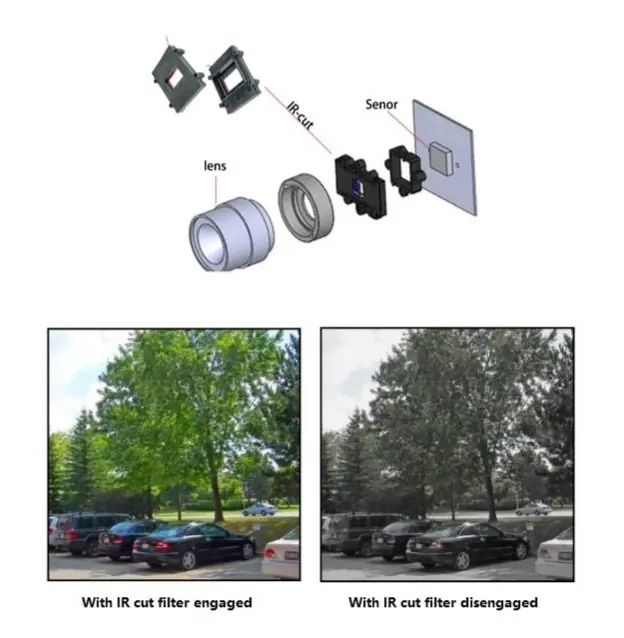
The infrared cut filter blocks infrared light during the day so the sensor can keep color balance under control. Once the light level drops, the filter moves away or shifts position so infrared can enter the sensor path. That is how the same camera can move from color daylight images to infrared night vision without a manual setting every time.
In a real camera project, this is not a theory exercise. The filter has to work with the sensor, lens, and light source together. If one part lags behind, the scene may turn strange at dawn or dusk, when the lighting is changing fast and the customer is usually watching most closely.
Why the switch has to be quick
A slow switch creates the ugly moments buyers remember. Daytime color can hang on too long after the sun goes down, or the camera can jump too early into black-and-white mode and lose useful color detail. The best result is a clean handoff that does not keep hunting back and forth.
That is also where installers feel the pain. If the camera flutters at sunset every day, the complaint may look like a software issue, a sensor issue, or a lens problem. In practice, the switch timing is often the first thing that needs checking.
What weak switching looks like
Weak IR-CUT behavior usually shows up as color cast, ghostly dark footage, or a scene that looks fine at noon but turns poor around the first low-light period. In outdoor projects, reflective walls, wet pavement, or glass nearby can make the failure even more obvious. Buyers do not just lose image quality; they lose trust in the whole camera line.
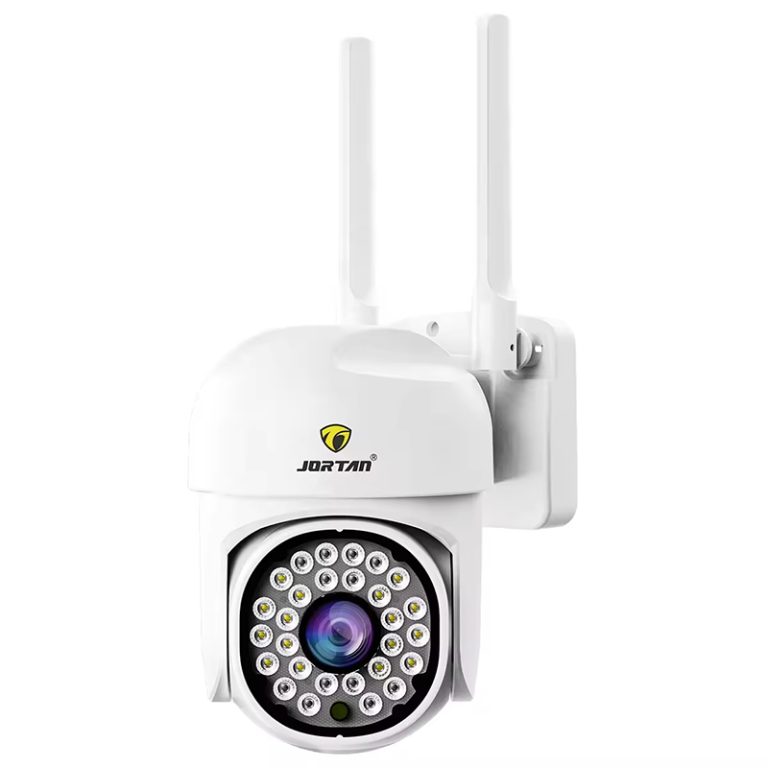
A product like Jortan’s Jortan4 is a useful example here. Its product page lists automatic IR-CUT switching, 6MP outdoor use, and up to 30m IR distance. That is the kind of package buyers usually expect when day and night both matter.
What Buyers Should Compare Beyond the IR-CUT Label
Daytime color accuracy and white balance
A camera can have IR-CUT and still look weak if the lens or sensor side is not well matched. Daytime color should stay believable, not oversaturated or washed out. Skin tones, product colors, and vehicle paint all matter in shop fronts, entrances, and customer-facing positions.
Night infrared clarity and reflection control
At night, IR-CUT has to work with the infrared LEDs and the housing design. Strong night performance is not only about power. Reflection from glass, shiny surfaces, wet ground, or poor installation angles can ruin the frame even when the switch itself is fine.
A higher-end outdoor model such as JT-8698PRO shows why the rest of the package matters. It combines 4MP resolution, 0.01 Lux low-light performance, H.265AI, and starlight full-color / infrared night modes. For buyers, the lesson is simple: IR-CUT should be judged together with the whole night path, not in isolation.
Where IR-CUT Cameras Fit Better in B2B Projects
IR-CUT cameras make the most sense where the scene changes all day and the buyer still expects evidence after dark. That includes entrance gates, parking lots, farm roads, perimeter fences, loading doors, and shop fronts. These are the places where daylight color and night infrared both matter and where a weak transition causes the fastest complaints.
For a distributor building a wider outdoor line, Jortan security camera products give a quick way to compare outdoor PTZ, dual-lens, and other monitoring categories besides IR-CUT-focused models. If the market needs a simpler daily-use line, the seller can keep the switching behavior consistent and move the rest of the configuration around it.
If the buyer needs repeated sample control, packaging changes, or market-specific customization, Jortan OEM/ODM camera customization is the more relevant part of the conversation. Switching behavior should stay stable from sample to bulk order; otherwise, the first shipment can look different from the approved unit.
When the product line needs a clearer home base, Jortan can be used as the starting point for comparing the broader camera range and deciding which outdoor models deserve to carry the IR-CUT story first.
Conclusion
IR-CUT is crucial because real camera projects live through both daylight and darkness. It helps preserve daytime color, make infrared night recording usable, and keep the same device from feeling like two different cameras across one day.
For buyers, the clean way to judge it is not to stop at the label. Check the sensor, lens, night light, weather exposure, and switching speed together. If those parts work as one unit, IR-CUT becomes a practical feature.
FAQ
Q1: Is IR-CUT necessary for every security camera project?
A1: Not every project needs it, but most day-and-night outdoor jobs do. If the camera only works in a stable indoor lighting environment, the buyer may care more about lens and sensor balance. Once the scene moves between bright and dark, IR-CUT becomes much more important.
Q2: Why do some cameras still look weak even with IR-CUT?
A2: Because IR-CUT is only one part of the image path. A weak sensor, poor lens, bad mounting angle, or strong reflection can still ruin the result. The switch may be correct while the final picture is still poor.
Q3: Can Jortan support IR-CUT-related OEM or ODM orders?
A3: Yes. For buyers who need logo work, packaging changes, sample alignment, or stable bulk configuration, contacting Jortan is the right next step. The switching behavior and the rest of the camera setup should be confirmed on the sample before mass production.