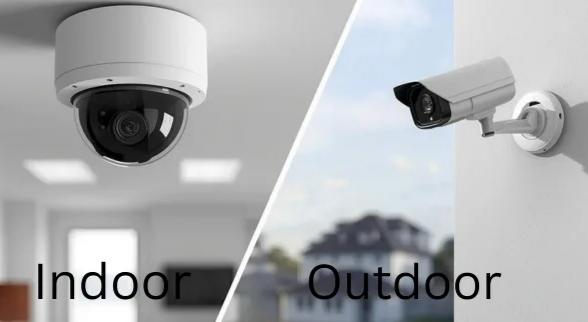
The demand for security cameras in 2026 is not headed down only one path. Some areas still require basic indoor cameras suitable for homes, shops, and light retailing. There are others who require outdoor cameras that can withstand rain, dust, extended night vision capabilities, and harsh environments.
What Indoor Cameras and Outdoor Cameras Mean
Indoor cameras have been designed for indoor settings. The shop counter, the living room in the house, a small office, a childcare room, or a small light commercial reception space generally doesn’t require a rugged and waterproof body. In terms of purchasing considerations, customers prefer ease of WiFi connectivity, appealing aesthetics, quality sound, mobile phone integration, room-level night vision, and appropriate packaging for retail sales.
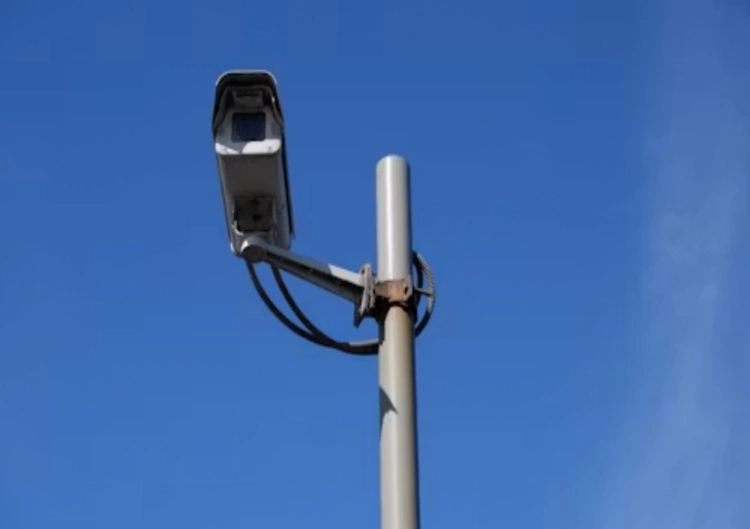
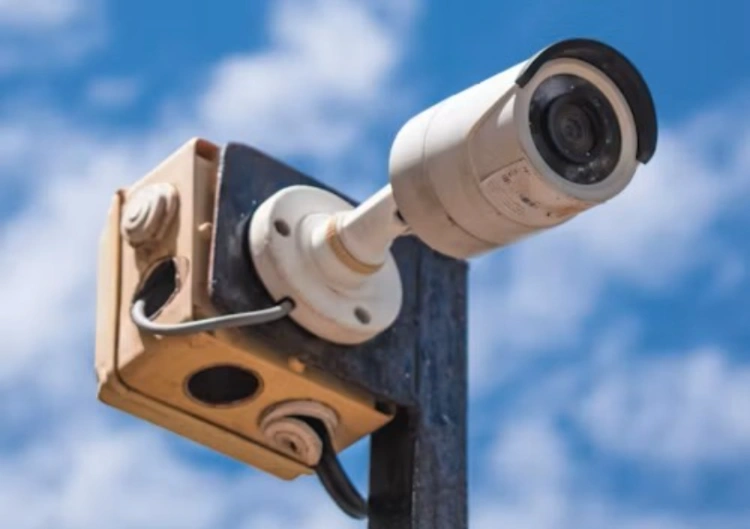
Outdoor cameras follow a completely different purchasing rationale. Outdoor cameras get used in gateways, parking spaces, warehouses, farmhouses, small factories, villas, stores, and temporary construction projects. Housing design, mounting system, night vision capabilities, power source connection, pan-tilt movement, and environmental protection are very important factors.
Where the Two Product Types Overlap
Indoor and outdoor cameras share more features than many catalogs suggest. Both need stable video, clear night viewing, motion detection, two-way audio in common models, remote app viewing, and a setup process that does not make dealers lose patience. Even when the shell and installation method are different, the distributor still has to sell a product that can be explained quickly and supported after delivery.
That overlap matters in mixed product lines. Retail dealers and installers still ask similar first questions: Is the image clear? Does the app work in the local market? Can the box carry a private label? Are the accessories complete? These ordinary checks decide whether a product can stay in the catalog.
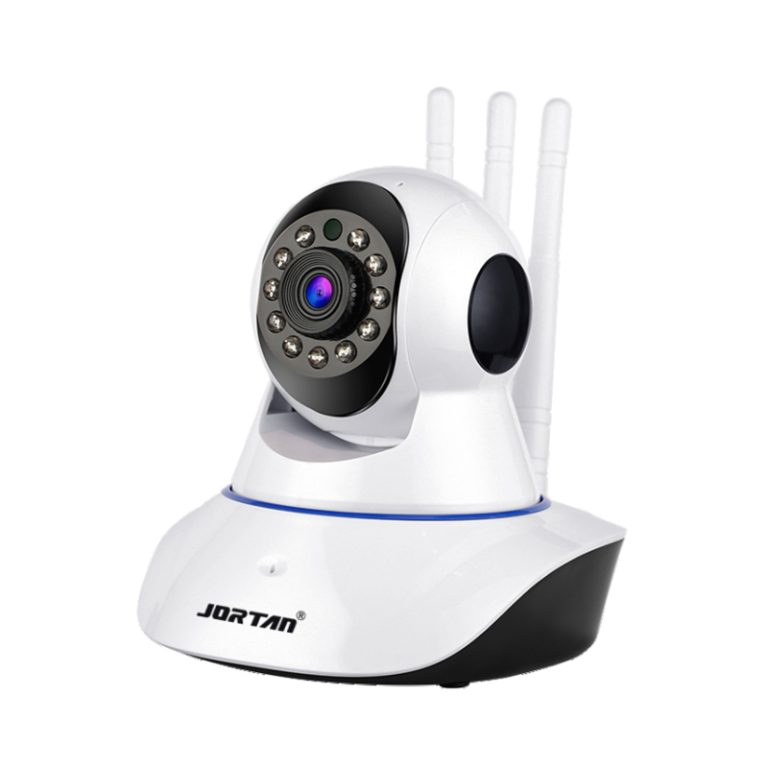
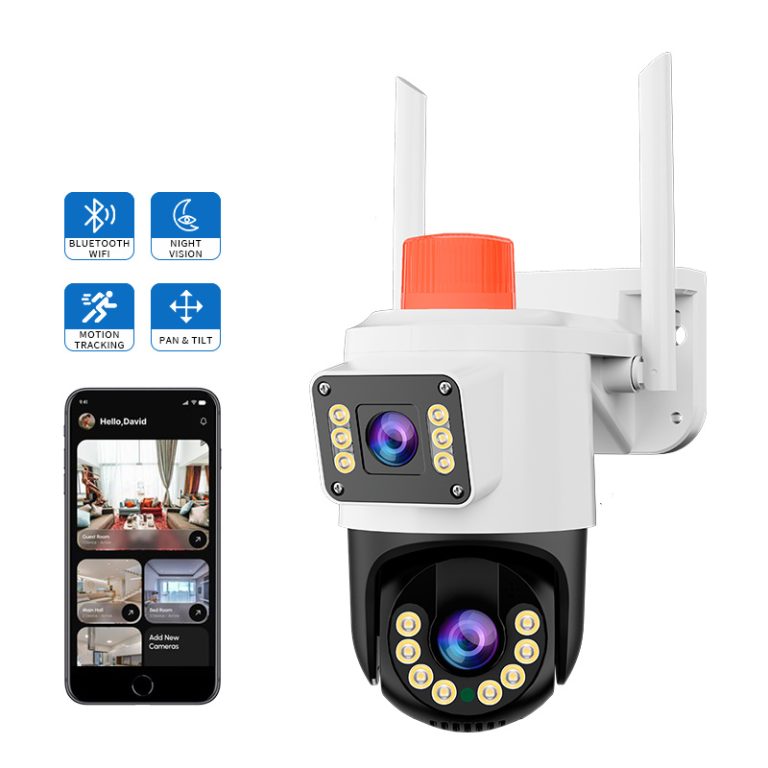
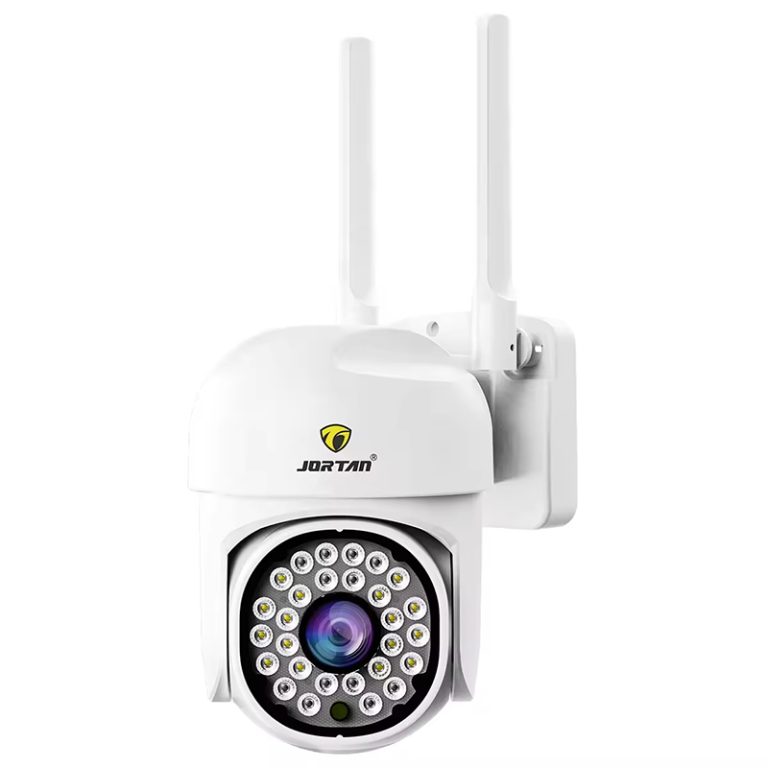
For example, JT-9696PRO is closer to the indoor and light-installation side, while JT-9697QJ is built around outdoor PTZ use. They do not serve the same site, yet both reflect the features distributors keep seeing in real orders: visual monitoring, app access, night work, and a product form that can be explained without a long training session.
Where Indoor and Outdoor Cameras Differ
Installation Environment Changes the Product Requirement
Indoor cameras live in cleaner air and more stable temperatures. They may sit on a shelf, plug into a wall socket, or screw into a lamp holder. A smaller body and a friendlier shape can help sales, especially in retail channels where customers compare products by appearance before they check specifications.
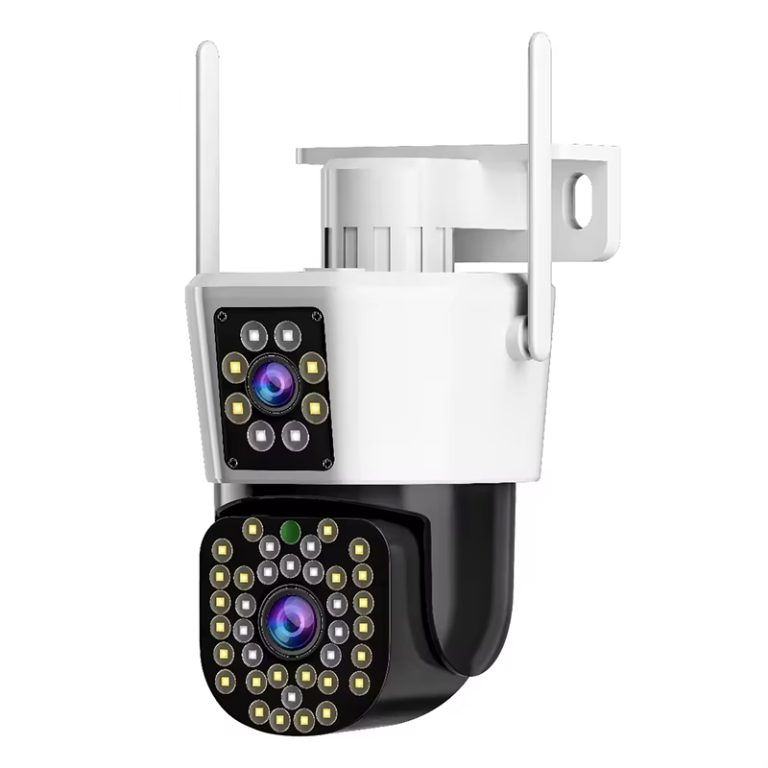
Outdoor cameras need a tougher body. IP rating, sealed cable points, sun exposure, bracket strength, and lens protection become part of the buying decision. A model like Jortan6 fits this side of the discussion because multi-lens outdoor monitoring is not bought only for appearances. It is bought when one position needs a wider view, stronger coverage, or fewer blind spots.
Channel Selling Points Are Not the Same
Indoor cameras are easier to sell in volume when the target market has apartments, small shops, home users, and online retail channels. The buyer may care about compact cartons, quick user guides, language on the box, and whether the product can be positioned as a simple smart home item.
Outdoor cameras usually carry a stronger project angle. Installers ask about night distance, movement range, waterproof level, mounting accessories, and power stability.
After-Sales Pressure Comes From Different Places
Indoor camera complaints often start with setup. App pairing, WiFi signal, sound quality, SD card support, or a user not reading the guide can all come back to the distributor. For channels with many first-time buyers, the product needs a clean setup flow and packaging that reduces basic questions.
Outdoor camera problems are more physical. Rain, dust, insects, heat, cable exposure, and poor mounting angles all create pressure after installation. This is why outdoor models cannot be judged by resolution alone. The shell, bracket, lens angle, night vision behavior, and batch consistency deserve the same attention as the headline pixel count.
How Distributors Should Build the Product Mix
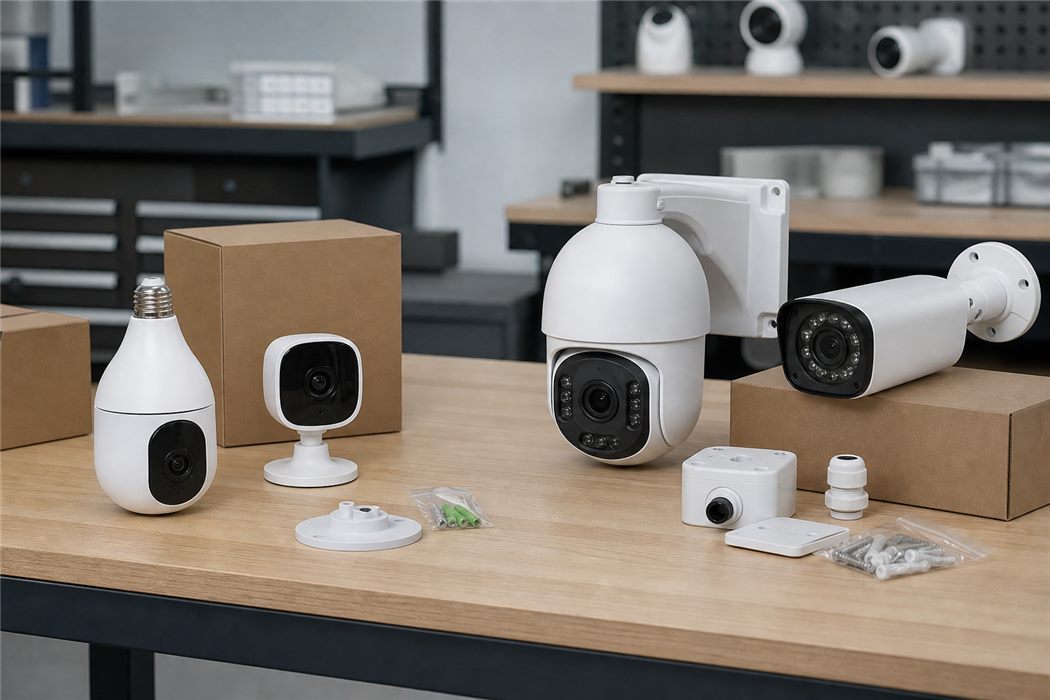
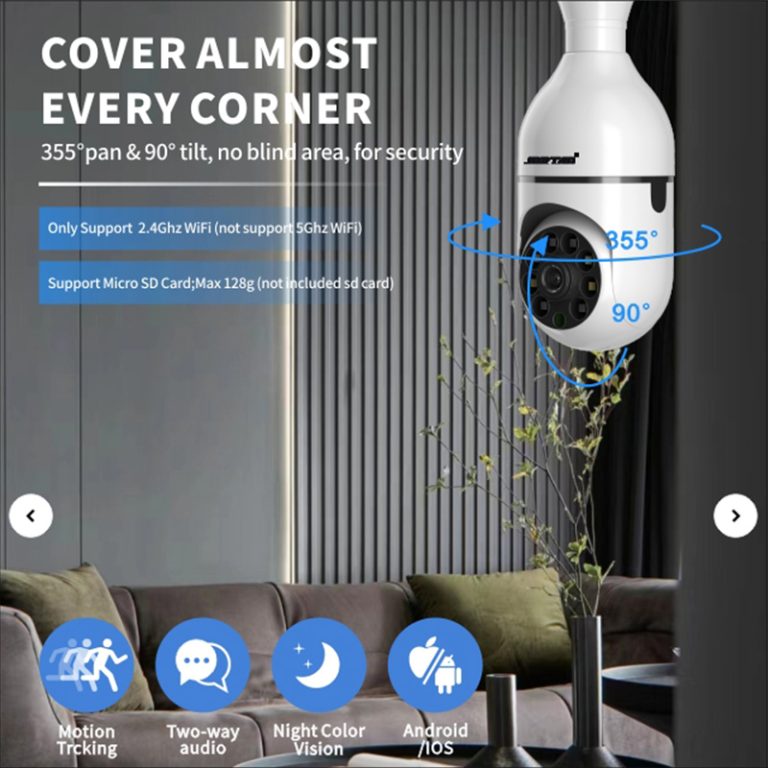
A distributor serving home retail channels can start with indoor cameras, bulb cameras, and simple WiFi models. These products are easier to demonstrate, easier to ship in smaller cartons, and easier for dealers to explain. They also help build brand visibility because the packaging is seen by end users more often.
A distributor serving installers, farms, warehouses, parking lots, and small commercial projects needs outdoor cameras in a serious way. IP66 weatherproof models, PTZ cameras, multi-lens designs, and stronger night vision become more useful than a wide list of indoor styles. In wet or dusty markets, outdoor reliability is not a premium feature. It is the basic reason the product stays accepted.
Many markets need both. A shop owner may install an indoor camera near the cashier and an outdoor camera at the entrance. A villa customer may need indoor monitoring for common rooms and outdoor coverage around the gate. A small warehouse may use indoor cameras for aisles and outdoor cameras for loading areas.
OEM and ODM Choices Need to Match the Channel
Private-label buyers should look beyond the model list. Indoor cameras often need better retail packaging, clean manuals, app language support, and stable accessory kits. Outdoor cameras need a stronger match between housing, bracket, waterproof level, night vision, and project packaging. The same logo can sit on both types, but the product planning should not be copied without adjustment.
Jortan supports this kind of mixed line planning through OEM/ODM camera customization, including logo work, packaging, appearance changes, app-related customization, assembly, testing, and shipping support. The useful point is keeping indoor and outdoor SKUs organized so dealers can sell them as one camera line instead of scattered models.
For a distributor building a 2026 catalog, Jortan can be considered when the plan includes both fast-moving indoor cameras and outdoor models for project demand. The better discussion usually starts with market position: retail, installer, online channel, project supply, or private label. Once that is clear, model selection becomes much easier.
Purchasing Advice for 2026
Do not choose indoor or outdoor cameras only by unit price. A low price helps the first order, but repeat orders depend on fewer complaints, stable batches, clear packaging, and products that fit the real selling channel. Indoor cameras should be checked for setup, app flow, audio, low-light image, carton design, and accessory completeness. Outdoor cameras should be checked outdoors, not only on a desk.
Sample testing should include rainy or humid conditions where possible, night viewing, WiFi distance, bracket strength, cable protection, and how the product behaves after several days of continuous work. For mixed orders, compare sample units with planned mass-production specifications. A small change in lens, adapter, app version, or packaging can create confusion later.
The safer product line for 2026 is not indoor only or outdoor only. It is a balanced range built around the target market. Indoor cameras cover quick retail demand. Outdoor cameras cover higher-value projects and harsher sites. Together, they help distributors serve homes, shops, warehouses, farms, and small engineering jobs.
If more details about samples, ODM planning, packaging, or project-specific camera combinations are needed, buyers can contact Jortan with the target market and expected sales channel. A focused request is usually more useful than asking for every model in the catalog.
FAQ
Q1: Should distributors buy indoor cameras or outdoor cameras first in 2026?
A1: It depends on the target market. Retail and online channels can start with indoor cameras because they are easier to explain and ship. Installer and project markets should keep outdoor cameras in the first purchase plan, especially where gates, shops, farms, and warehouses are common.
Q2: What outdoor camera specs matter most for project buyers?
A2: IP rating, night vision, PTZ movement, lens coverage, bracket strength, power stability, and accessory completeness matter most. Resolution is important, but it should not be checked alone.
Q3: Can Jortan support both indoor and outdoor camera product lines?
A3: Yes. Jortan can support indoor and outdoor camera supply with OEM/ODM work, packaging, logo customization, app-related options, assembly, testing, and shipment support. For distributors, this helps keep the product line more consistent across different sales channels.
Q4: How should samples be tested before a bulk order?
A4: Test app setup, image quality, audio, night vision, WiFi range, mounting accessories, packaging, and continuous operation. Outdoor samples should also be checked in real outdoor conditions, especially rain, dust, heat, and installation angle.