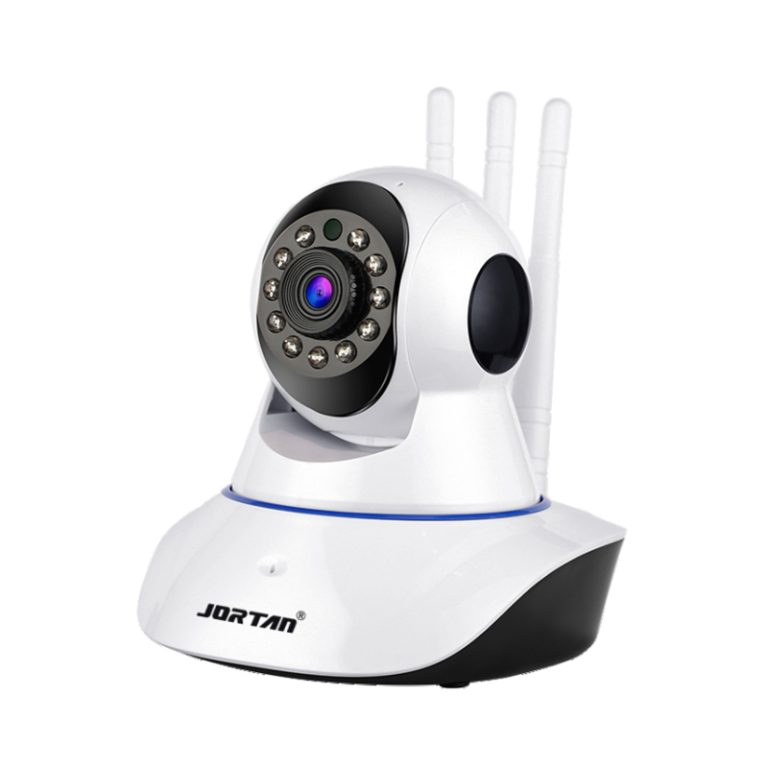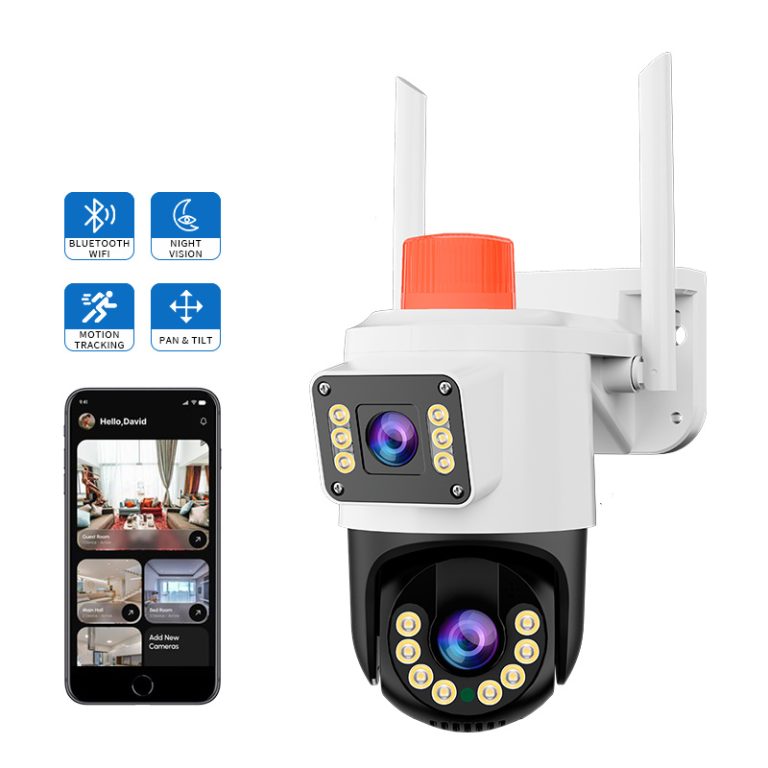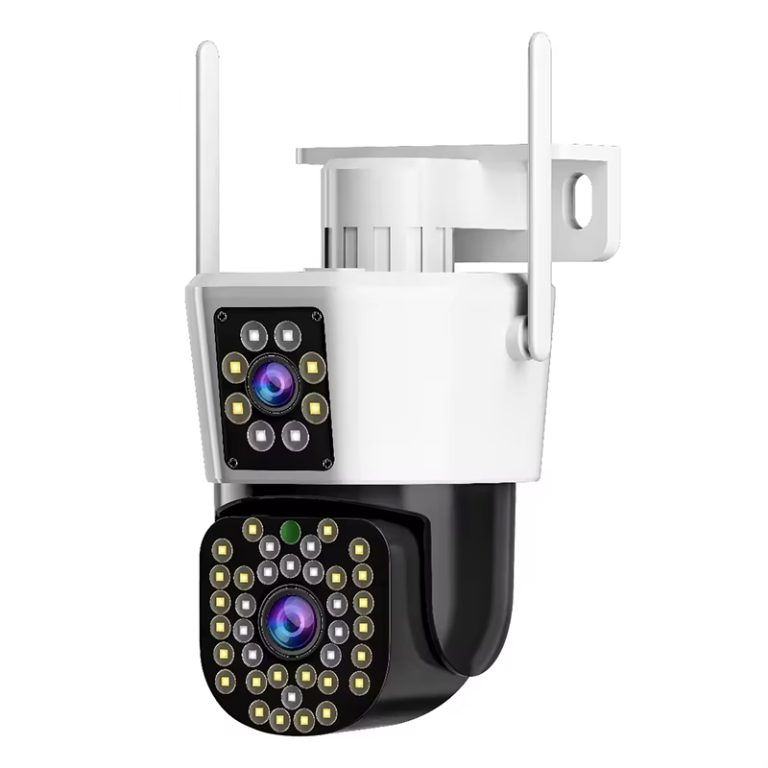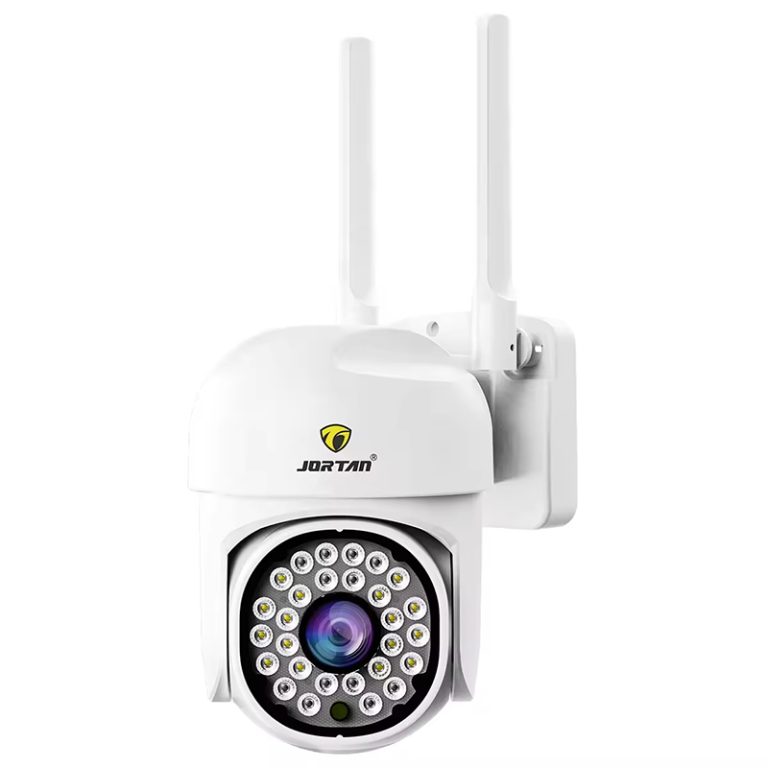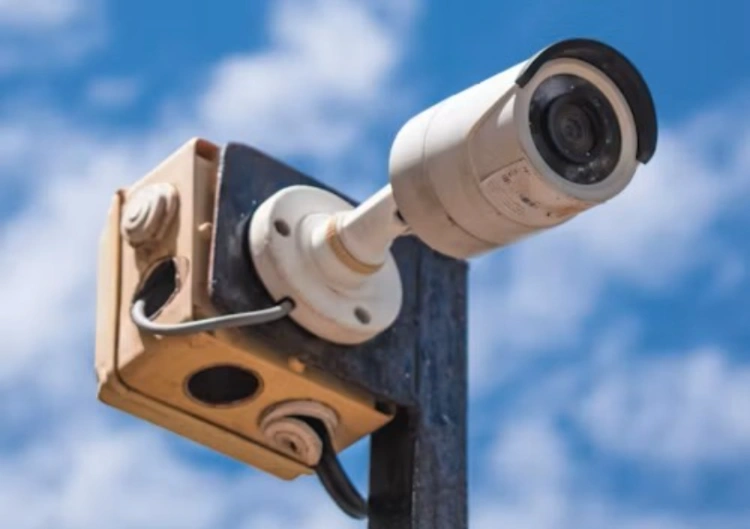

In contemporary applications, the network video recorder (NVR) serves as a coordination level that regulates IP cameras’ transmission, compression, storage, indexing, and retrieval of video streams. Once properly set up, the NVR assumes the role of the system’s operational center, as opposed to a mere storage container. This paper explores the interaction between NVRs and IP cameras on the protocol, transport, processing, and management levels.
How does an NVR receive and manage IP camera video streams?
IP cameras do not transmit raw video data. Instead, they encode the frames of the video into packets and transmit the data over a network via Ethernet cables or wireless communication to the NVR, which acts as a sink for the multi-channel data streams.
At the physical layer, connectivity is facilitated through standard Ethernet interfaces, which are often extended with Power over Ethernet (PoE) options for easier deployment. At the protocol layer, most devices rely on ONVIF profiles for standardization in device discovery and stream management. Support for ONVIF profiles allows recorders to connect to third-party network cameras and control them in network mode.
After establishing the connection, the NVR manages the session, allocates the channels, and monitors the stream in real-time.
How are camera streams discovered and authenticated?
Discovery usually relies on broadcast or multicast probing through ONVIF services. After discovery, the recorder authenticates the device, registers stream parameters, and assigns decoding resources.
How is bandwidth controlled during transmission?
Bitrate ceilings, variable bitrate modes, and stream prioritization are enforced at the recorder level to prevent congestion when dozens of cameras transmit simultaneously.
How does video encoding influence NVR processing efficiency?
Encoding controls the amount of data entering the system and the processing required to decode the data.
The majority of modern NVR systems include H.265 compression code to minimize bandwidth and storage demand without sacrificing H.264 compatibility. H.265, in comparison to previous video compression codes, reduces storage usage by an average of half for the same level of quality.
Why does codec selection affect long-term storage planning?
Lower bitrates extend retention windows without increasing disk arrays. In multi-site environments, this translates into fewer disk replacements and lower thermal stress inside the recorder chassis.
How does decoding capacity limit camera count?
Each decoding channel consumes CPU or hardware accelerator resources. Recorder specifications, therefore, define maximum simultaneous streams at given resolutions and frame rates.
How does an NVR coordinate recording, indexing, and playback?
Recording is not a single operation but a sequence of write, index, and metadata tagging tasks.
Modern NVRs support multiple recording triggers, including manual activation, scheduled recording, motion detection, and alarm events. Video data is written either to local hard drives or redirected to network storage arrays, with backup methods such as USB export or network replication available for redundancy.
How is video indexed for fast retrieval?
Time stamps, channel identifiers, and event flags are stored in parallel with video files. This enables time-point, calendar, and event-based searches during forensic review.
How does multi-screen monitoring work?
The recorder renders multiple live streams into composite layouts such as 1, 4, 8, or 9-channel views for local HDMI or VGA output.
How do NVRs support remote access and system control?
An NVR is also a network server. Most platforms provide browser access, video management software (VMS) integration, and mobile client support for Android and iOS devices. Remote access is commonly implemented through built-in domain name services and network penetration mechanisms, enabling one-click configuration without complex port forwarding.
How are alarms pushed to operators?
When motion or analytic triggers occur, the recorder relays alerts to mobile clients through cloud or direct socket channels.
How is user permission enforced?
Role-based access control limits who can view, export, or modify camera configurations, reducing operational risk in shared environments.
How does PoE integration change camera deployment?
With PoE expansion boards, NVRs can provide power and data through a single Ethernet cable, thereby reducing cabling, installation time, and dependence on local power outlets near camera locations. PoE-enabled network interfaces are explicitly supported on recorder designs that integrate expansion boards.
Why does PoE matter in large facilities?
It centralizes power management and allows UPS-supported operation in the event of an outage, ensuring cameras remain online even when local circuits fail.
How does system architecture scale from small sites to multi-building networks?
Scalability depends on three parameters: decoding throughput, network bandwidth, and storage I/O.
Recorders support multimodal inputs, combining coaxial and IP sources, and can ingest up to eight network channels alongside analog inputs in hybrid configurations.
How is the load distributed across storage?
Single SATA bays commonly support drives up to 14 TB, allowing continuous retention without external arrays for mid-scale installations.
How does cloud storage complement local disks?
Some camera models and recorders also integrate cloud storage as a redundancy layer, ensuring recordings remain available even if on-site hardware is damaged.
Which NVR-camera combinations simplify installation in mixed environments?
Certain recorder–camera bundles are designed for rapid deployment in distributed sites such as retail chains, warehouses, or campuses.
The JT-8276-8PXM NVR IP camera integrates multi-channel network input, ONVIF compatibility, H.265 compression, and mobile management into a compact platform, supporting multi-screen monitoring, remote access, and alarm-driven recording without external middleware.
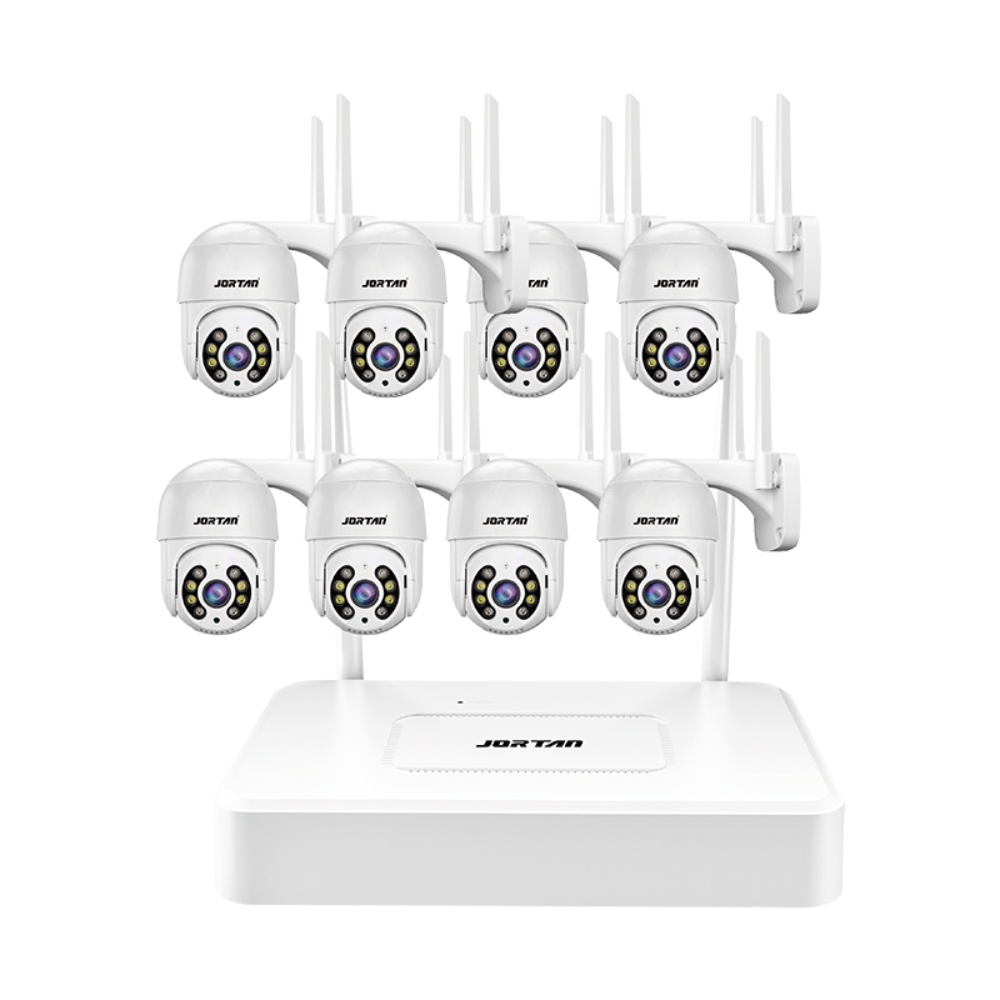
How does hardware design affect reliability over continuous operation?
Thermal design, power regulation, and interface stability are the factors that define the capability of the recorder to operate 24/7. Industrial designs are subjected to rigorous testing for continuous operation at higher temperatures, with lightning protection and voltage regulation to minimize failure rates in unstable grid conditions.
Why does interface density matter?
Multiple USB ports, SATA interfaces, and Ethernet controllers increase serviceability during disk replacement or system expansion.
Who provides integrated NVR and IP camera system engineering?
At this stage, system performance becomes inseparable from the manufacturer’s capability.
Jortan develops network surveillance equipment covering IP cameras, NVR platforms, and intelligent monitoring modules. Our product line integrates ONVIF-based interoperability, H.265 video encoding, mobile monitoring support, cloud and local storage architectures, and multi-channel decoding designs suitable for residential, commercial, and industrial scenarios.
Besides hardware, we also offer support for protocol integration, firmware customization, and client software for various platforms, which allows the integrator to implement systems that range from small installations to geographically dispersed networks with unified management of devices, as well as alarm management.
How does intelligent analytics change the NVR–camera relationship?
Modern cameras increasingly perform pre-processing, such as human detection and object tracking, and forward metadata alongside video frames to the recorder. Supported features include human-shape recognition, motion area segmentation, and event tagging, which are exposed to the NVR through standardized network interfaces.
How does this reduce recorder load?
Filtering false positives at the camera level reduces unnecessary recording and indexing tasks.
How does this improve search accuracy?
Metadata-driven queries allow operators to locate events without scanning full timelines.
How can compact NVR solutions fit edge deployments?
For sites with limited space, compact NVR–camera bundles reduce cabinet size while retaining network management features.
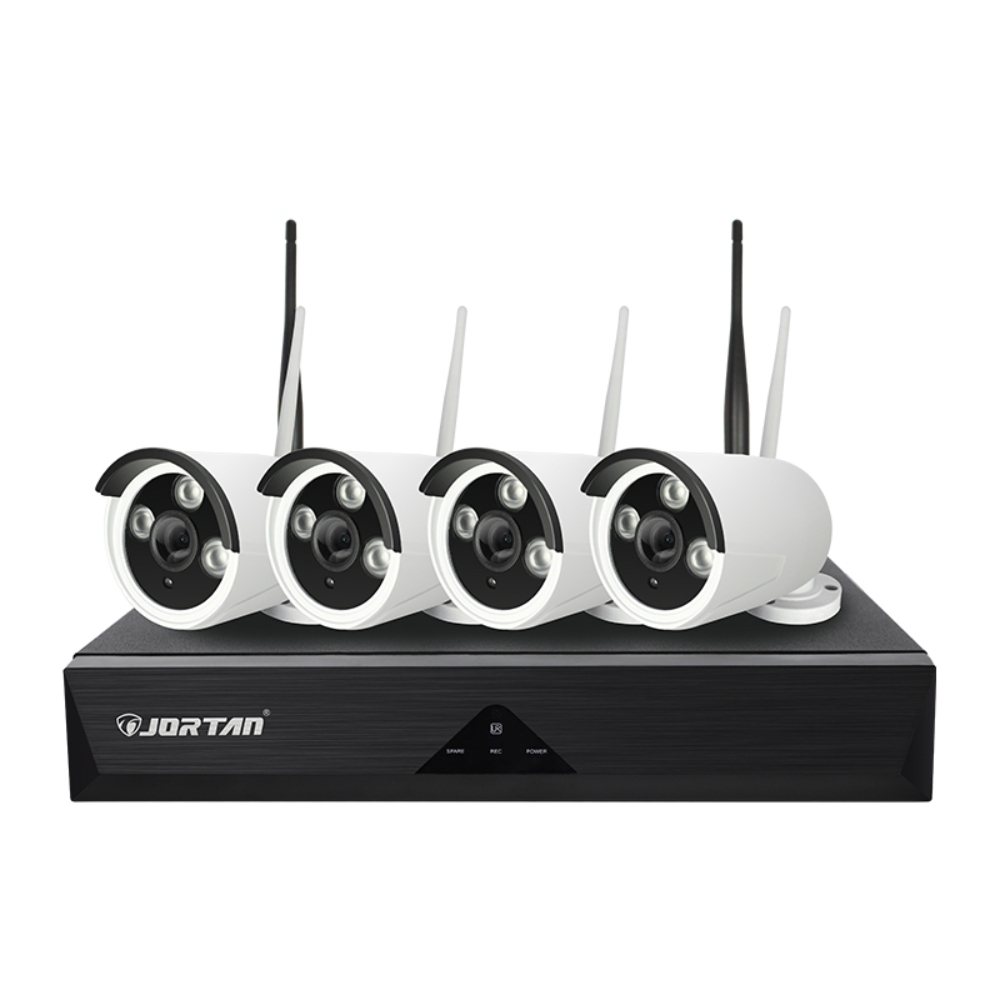
The 8906ZL3-4 NVR IP camera is designed for small facilities requiring multi-channel recording with mobile access and cloud synchronization. Such platforms balance decoding capacity with low power consumption, making them suitable for edge deployments such as retail outlets and branch offices.
How should NVR–camera systems be validated before full rollout?
Pre-deployment testing prevents systemic failure after scaling.
Should continuous recording be simulated?
Long-duration tests expose thermal throttling, memory leaks, and stream desynchronization issues.
Should network congestion be emulated?
Artificial packet loss and latency reveal how well reconnection logic and buffer control operate.
Should storage endurance be verified?
Write-intensive workloads uncover disk controller limitations and fragmentation behavior.
FAQs
Q1: Can an NVR operate with cameras from different manufacturers?
A: Yes, when both sides support ONVIF. Protocol compliance enables discovery, stream negotiation, and basic control across vendors.
Q2: Does higher camera resolution always improve surveillance results?
A: Only if decoding capacity, bandwidth, and storage throughput scale accordingly. Otherwise, dropped frames and latency offset the benefits.
Q3: Is cloud storage a replacement for local recording?
A: No. It functions best as redundancy. Local disks remain the primary storage layer for continuous recording.