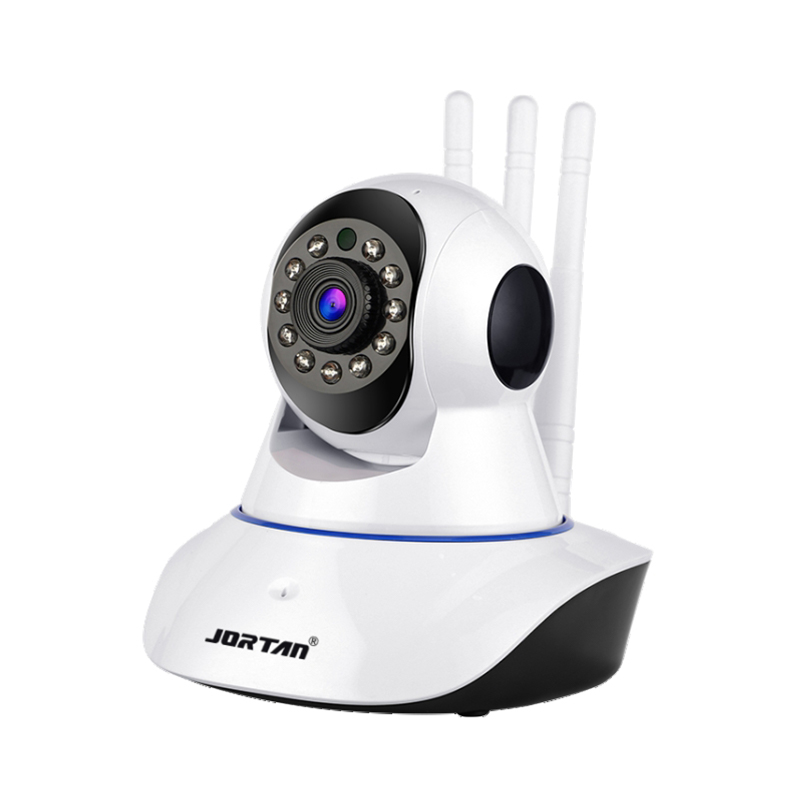
Have you ever attempted to set up a security camera along a backyard fence or against a far-off warehouse wall, just to discover there isn’t even one power outlet nearby? This situation represents a frequent frustration for both homeowners and business managers. Over the previous year, there has been a significant change in the way individuals approach safety concerns. As package theft has increased by almost 20% in certain city regions and discussions about eco-friendly energy continue to grow, the need for more intelligent options has surged dramatically. Many folks are weary of coping with tangled cables and the steep expenses involved in hiring experts for setup. Here comes the solar transformation into focus. Today’s security measures go beyond simply capturing footage; they emphasize creating protection that is straightforward, environmentally sound, and dependable, even in isolated areas. No matter if you are securing a quiet suburban driveway or overseeing a vast construction site, adopting solar-powered technology is no longer merely a choice—it is evolving into the norm for 2026.
Real World Benefits of Going Wire-Free
The primary obstacle in any surveillance effort has traditionally been the final stretch of electricity supply. Conventional setups demand that you bore through sturdy walls or hire an electrician to spend hundreds of dollars laying out pipes and wires. However, when you opt for a wireless IP camera, those tangible obstacles vanish entirely. Consequently, the discussion shifts from questioning “where can I access electricity?” to pondering “where do I truly need visibility?”
Transitioning from outdated wired configurations to contemporary wireless versions represents far more than a minor adjustment; it constitutes a thorough reevaluation of our methods for overseeing spaces. This approach enables users to prioritize what they can see first, instead of dealing with power-related complications. Now, let us examine how this newfound liberty alters the daily protection of our properties in practical ways.
Total Freedom with Battery-Powered Camera Tech
A contemporary battery-powered camera forms the core of this enhanced independence. Such devices rely on robust lithium-ion batteries with substantial capacity, which can sustain operations for several weeks after just one recharge. Pairing this with a compact yet effective solar panel essentially produces a self-sustaining security mechanism. For numerous users, this setup implies they rarely need to scale a ladder to remove the camera for recharging purposes.
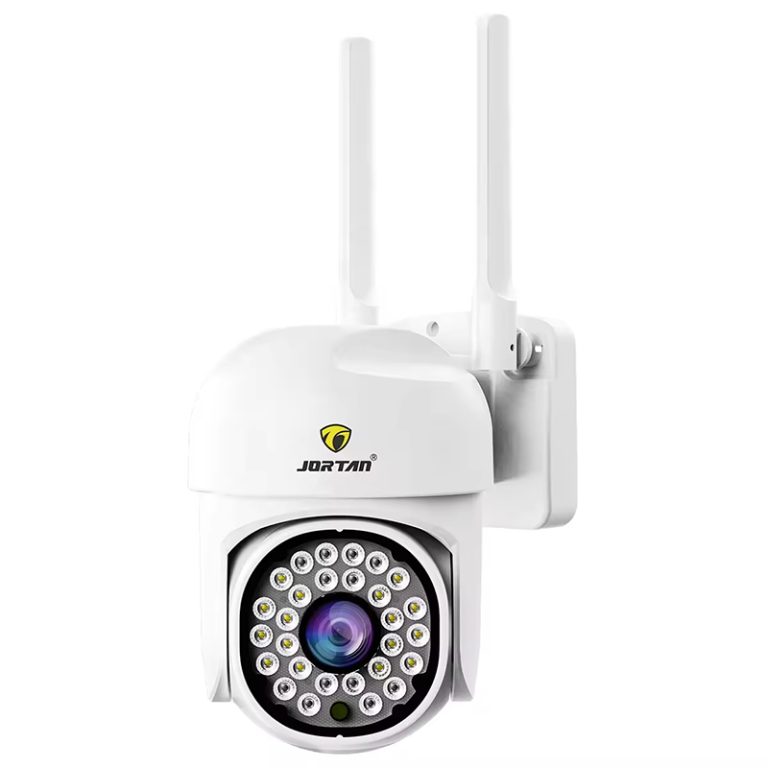
In a standard residential arrangement, these cameras operate in a low-energy “sleep” state, drawing minimal power until motion is sensed. Thanks to this intelligent energy control, they manage to process dozens upon dozens of daily incidents without failing. Particular units, such as the JTZ-160B, have been crafted to optimize battery performance, guaranteeing that the equipment stays alert during prolonged stretches of dim sunlight. If you serve as a property overseer handling various rental properties, the relief of not fretting over tenants who might unwittingly disconnect a camera proves invaluable. Thus, you achieve steady functionality without the necessity of inspecting the device on a weekly basis.
Lowering Costs with a No-Wire Camera
Financial considerations remain a key factor, regardless of whether you are a private homeowner or a corporate purchaser. Although the initial cost of a no-wire camera may exceed that of a simple USB-dependent model, the concealed advantages in savings are substantial. Typically, engaging a professional for security installation runs between $150 and $500 per camera solely for the effort and cabling involved. In contrast, with a solar-powered device, those expenses plummet to nothing at all.
You can simply unpack the item, connect it to your mobile device, and fasten it to a tree or wall within fewer than 10 minutes. This user-friendly “do-it-yourself” aspect does not indicate reduced standards; rather, it reflects more ingenious design. Jortan’s recent offerings are tailored precisely for such rapid implementation, allowing enterprises to expand their security measures from a single unit to as many as fifty without assembling a large crew of specialists.
High Performance in Remote Locations
Among the most pressing challenges for business customers is keeping watch over zones that lie entirely beyond the electrical grid. Consider expansive farms, ongoing building endeavors, or open storage areas. These locations seldom possess Wi-Fi access or consistent power sources. Under such conditions, standard cameras prove ineffective unless one invests thousands in building foundational infrastructure. This is precisely where advanced equipment demonstrates its true value.
To ensure security functions effectively in these demanding environments, more is required than a mere power source; an integrated system built to withstand harsh conditions becomes essential. Essentially, it establishes a secure zone in places where protection previously did not exist. The details below illustrate how current technology manages the demands of distant oversight effortlessly and without complications.
Reliability in Off-Grid Surveillance Projects
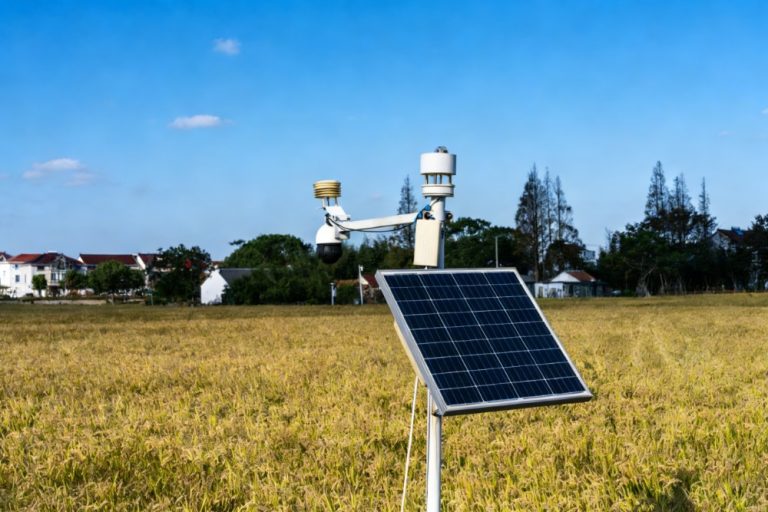
For individuals managing off-grid surveillance operations, dependability stands as the sole crucial measure of success. Should a camera lose power due to a handful of overcast days, the entire arrangement collapses. That is why the newest models of outdoor solar cameras incorporate 5W or even 7W solar panels that respond keenly to available light. Remarkably, even during a cloudy afternoon, these panels manage to provide a steady trickle of charge to the battery, sufficient to maintain the PIR sensors in working order.
Currently, we observe corporate clients within the building sector employing setups like the JT-9697QJ to prevent unauthorized nighttime scavenging at work sites. By utilizing cameras independent of grid connections, they possess the flexibility to relocate units as the initiative advances. For instance, if the stack of timber shifts to the northern portion of the property, the camera accompanies it without issue. There arises no requirement to reorganize wiring, which ultimately conserves both time and resources across each undertaking.
Staying Connected with 4G and Wireless IP Camera Tech
A wireless IP camera does not necessarily depend on a household router for operation. Numerous high-end solar cameras nowadays feature built-in 4G LTE capabilities. As a result, you gain access to live video streams from a remote cabin deep in the forest or from a pier situated kilometers from your residence. Provided there exists a cellular signal in the area, you maintain constant surveillance over your assets.
This level of linkage revolutionizes operations for business-to-business clients who must oversee various locations through a unified interface. From your smartphone, you can review the condition of ten separate venues spread throughout the region. Moreover, the option to obtain immediate notifications upon detecting a person—distinguishing them from mere animals like wandering cats—ensures you avoid reviewing pointless recordings. In this manner, what was once a device for mere documentation evolves into a proactive sentinel for protection.
Technical Features that Define Quality
It proves simple to become overwhelmed amid the array of technical details when selecting security equipment. You encounter terms such as 1080p, 4K, IP66, and PIR, yet what significance do they hold for your actual protection? A professional outdoor solar camera transcends being a basic lens attached to a panel; it embodies a precisely engineered component intended to endure intense sunlight, heavy rain, and snowfall while minimizing energy consumption.
True excellence extends beyond delivering sharp images under bright daylight; it encompasses how the system operates reliably at 3 AM amid a fierce storm. Without the depth to address such challenging scenarios, it fails to qualify as a genuine safeguard. Let us dissect the essential technical elements that genuinely impact your ability to identify intruders or track activities effectively.
Night Vision and Smart Detection
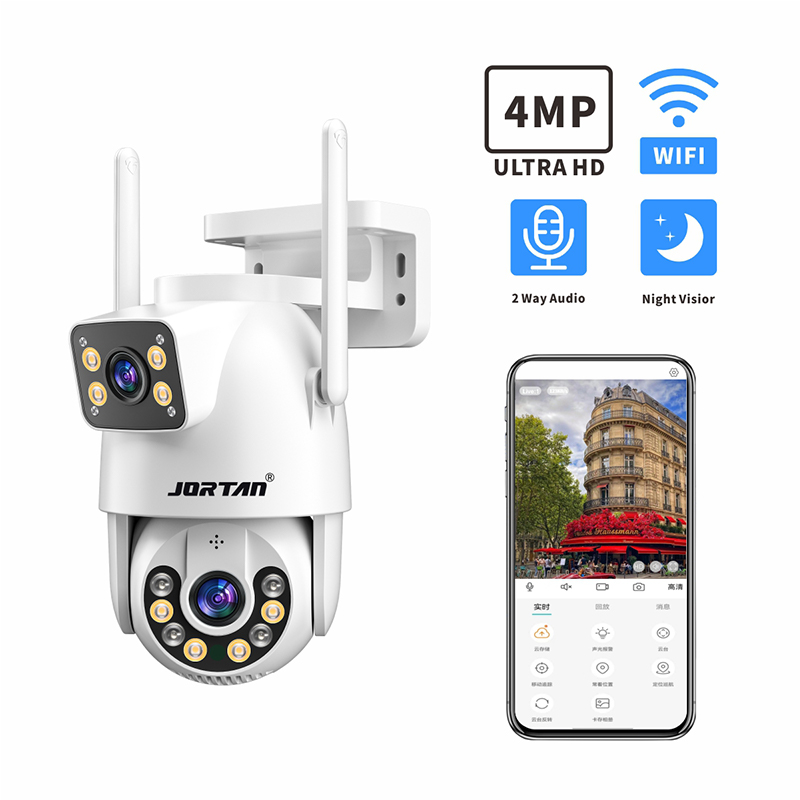
The majority of criminal acts occur during nighttime hours, rendering night vision an indispensable capability. Nevertheless, a clear distinction exists between rudimentary infrared functionality and the advanced “Full Color Night Vision” integrated into Jortan’s premium offerings. Rather than producing a blurry, shadowy monochrome view, these provide vivid details, such as the hue of an escaping vehicle or the attire of an individual.
Additionally, for a battery-powered camera to function optimally, it must intelligently decide when to initiate recording. Earlier models employed basic motion sensors that activated for every swaying branch in the breeze. In contrast, present-day systems combine PIR (Passive Infrared) technology with artificial intelligence for human recognition. This combination reduces erroneous alerts by as much as 90%. Consequently, when your phone alerts you in the early morning hours, you can trust it signals a real presence on your doorstep, not a gust of wind disturbing the surroundings.
Weatherproofing and Durability
When installing a camera in an external setting, robustness becomes imperative. Seek out an IP66 certification as the benchmark—it signifies the unit is impervious to dust and capable of withstanding strong water streams. This feature proves critical for any outdoor solar camera exposed to prolonged sunlight for 10 hours daily, followed by potential torrential rain in the evening.
Furthermore, the construction quality directly influences battery longevity. Harsh cold can rapidly deplete an inexpensive power cell. Superior models incorporate specialized casings for batteries that regulate internal temperatures more effectively, thereby ensuring continuous operation even as outdoor conditions fall below freezing levels. Such rigorous “industrial-grade” design principles differentiate reliable professional tools from the inferior gadgets available on bargain platforms.
Why Businesses are Choosing Jortan for Scale
For business-to-business clients, security constitutes an investment rather than a mere outlay. When directing an apartment building or a network of storage facilities, one requires a collaborator who comprehends the importance of expansion. Implementing a no-wire camera framework permits a company to commence modestly and extend its protective reach in line with available funds. It emerges as the most adaptable security approach for contemporary demands.
Within commercial security landscapes, attention moves away from isolated functionalities toward enduring assistance and overall system vitality. Enterprises demand assurance that their information remains protected and that the devices will endure for years rather than mere months. The following explains the reasons behind the strong inclination of the professional sector toward solar-powered wireless alternatives at this time.
Streamlining Management for B2B Clients
Overseeing a collection of cameras simplifies greatly when they integrate seamlessly with a single application. Regarding a wireless IP camera system, this entails a central platform where a security coordinator can assign viewing permissions to various staff members. For example, a depot supervisor might access only the footage from loading areas, whereas the proprietor views the complete array.
This degree of oversight, coupled with the absence of any need for underlying infrastructure, renders them ideal for short-term installations. Firms in construction, those organizing events, and operators of temporary retail outlets can establish a comprehensive security layer in mere minutes and dismantle it effortlessly upon completion. No cables require extraction from structures, and no harm comes to the premises involved.
Sustainability and Brand Image
Embracing eco-friendly practices benefits not only the environment but also commercial interests. Increasingly, business-to-business entities face mandates to fulfill specific “ESG” (Environmental, Social, and Governance) objectives. Selecting solar-powered security solutions diminishes the environmental impact of your activities. Although it appears as a modest alteration, deploying 50 cameras powered by solar energy in place of grid electricity yields notable reductions in energy use accumulated over time.
Jortan has led this initiative by supplying superior outdoor solar camera choices that maintain high standards of operation. This decision conveys to customers and associates that your organization embodies modernity, productivity, and progressive values. Ultimately, it transcends mere prevention of break-ins; it contributes to forging a more intelligent and sustainable path forward for your enterprise.
Conclusion
The move toward solar-powered security surpasses being a fad; it serves as a sensible reaction to the shortcomings of legacy systems. By selecting a wireless IP camera fueled by sunlight, you eliminate the two primary annoyances in security setups: cumbersome wires and recurring electricity charges. Whether requiring an outdoor solar camera for residential use or an extensive off-grid surveillance array for business ventures, the advantages of wire-free implementation are irrefutable. It is high time to cease fretting over electrical sockets and to concentrate instead on the core priority—the protection of your assets and the individuals associated with them. Should you aim to enhance your security arrangements or seek expert solutions tailored to your company, reach out to us without delay at kingjin@safejortan.com.cn to discover the ideal match for your requirements.