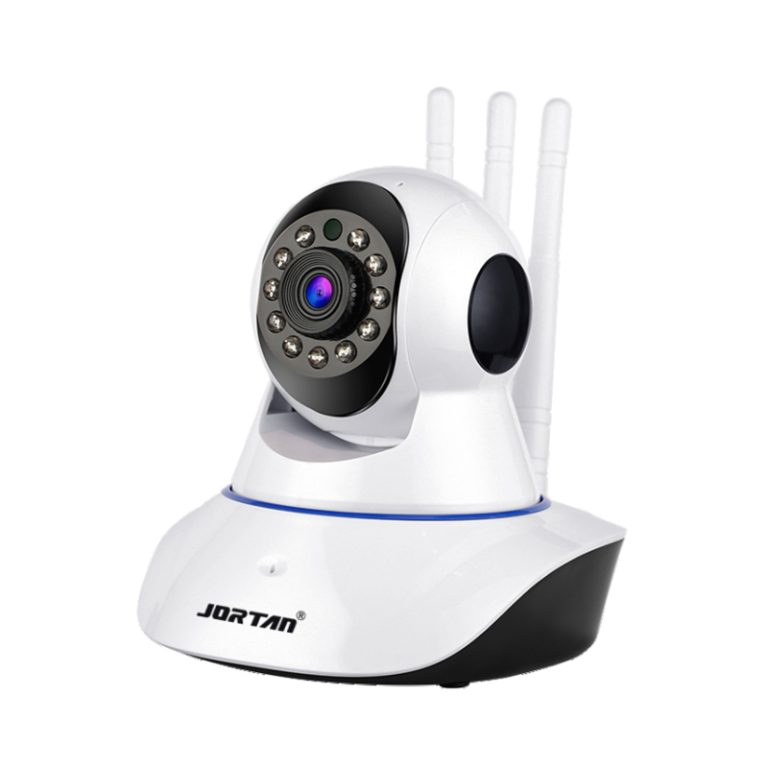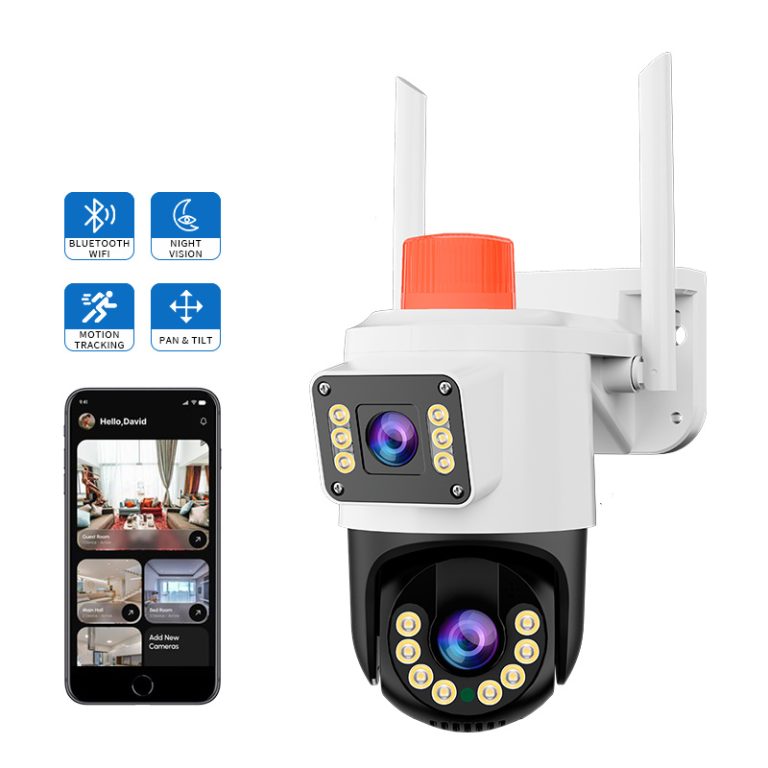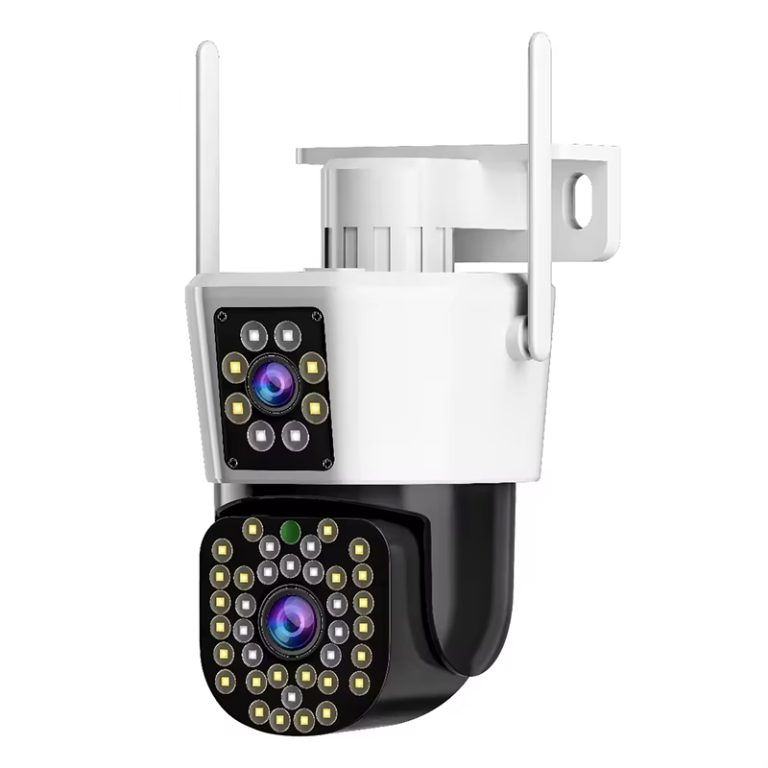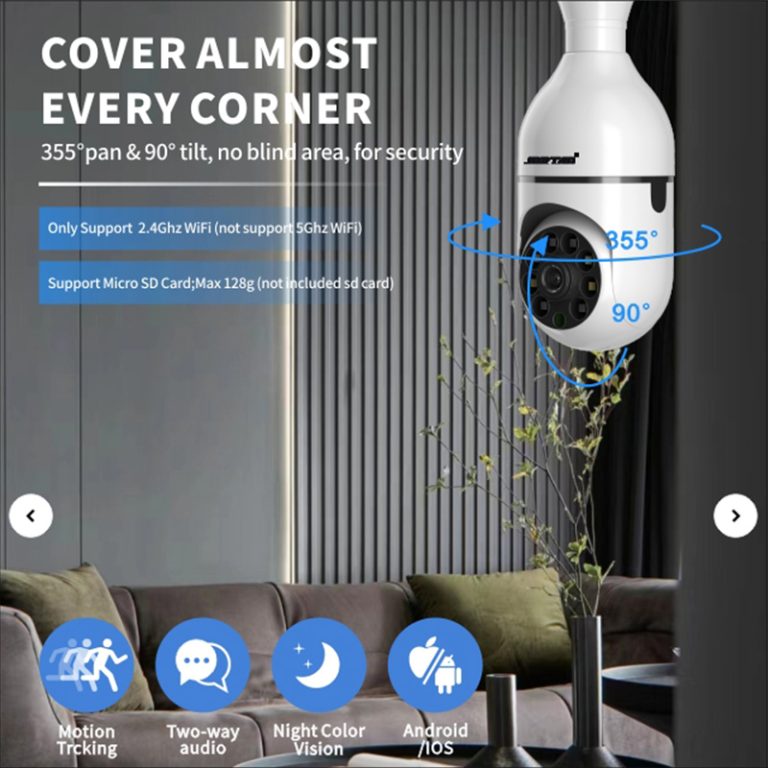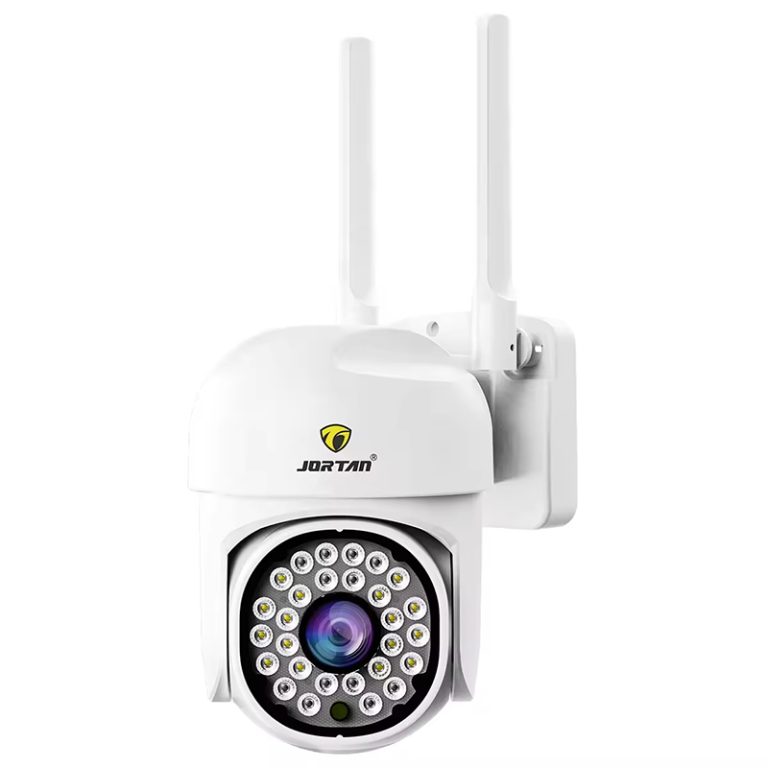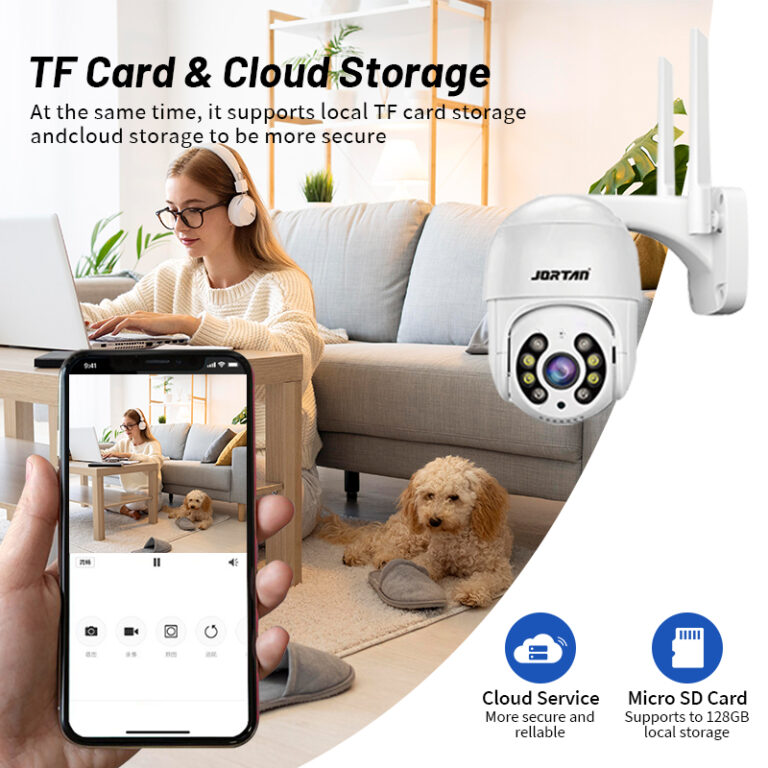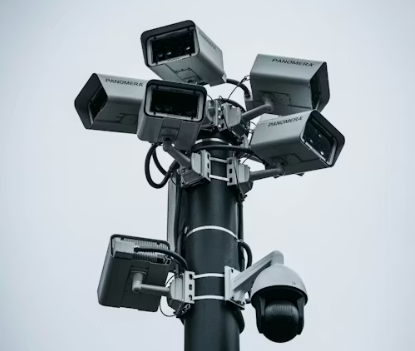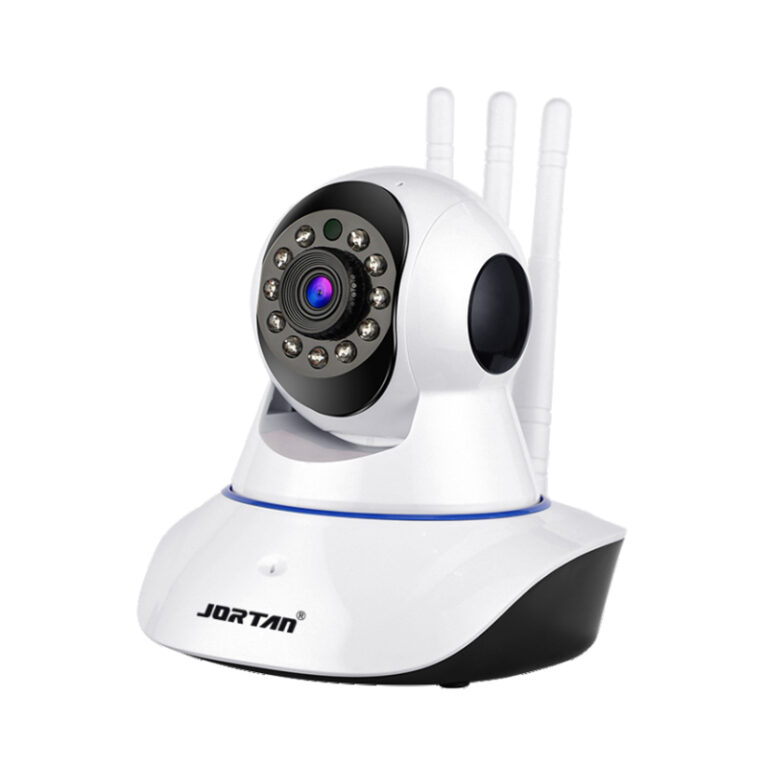
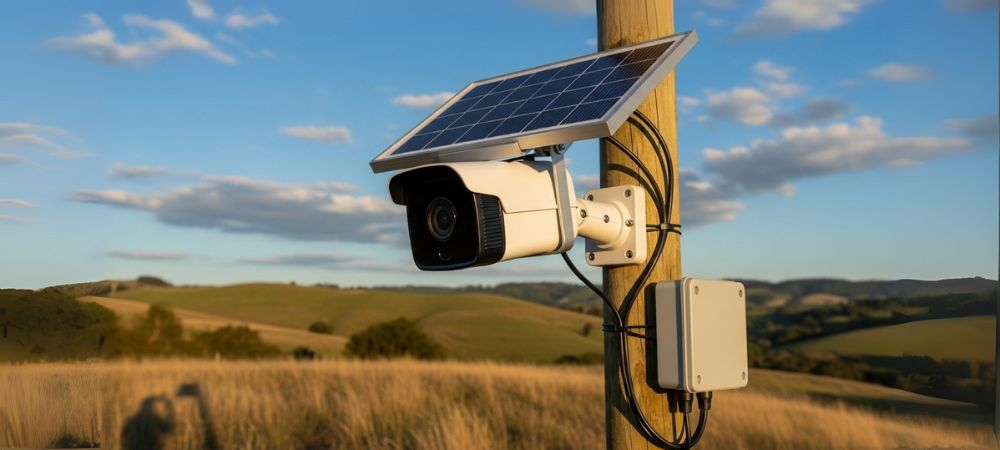
Have you ever struggled to secure a remote construction site, a long fence line, or a temporary event area where laying power or fiber is costly or impossible? Securing these locations often feels like a constant battle, plagued by the twin challenges of no electricity and no network access. Traditional security cameras, dependent on fixed power lines and complex wiring, fall short here, leaving costly assets vulnerable. All-in-one solar cameras — devices that combine solar power, wireless links and smart sensing in a single unit — are closing that gap. These systems remove the need for mains power and fixed network drops, cut installation time, and put advanced features like PTZ control, two-way audio and instant app alerts into fields where traditional CCTV can’t reach. For installers and end users, the advanced all-in-one solar camera demonstrates how modern solar-powered security cameras can balance current practicality with future scalability.
Breaking Free from Grid Limitations
Before we dig into features, let’s be clear about the core shift: moving from wired, power-dependent CCTV to self-powered, always-online devices changes how sites are secured. This section explains why the grid-free design matters in real deployments. Solar and wireless cameras solve two linked headaches: no mains electricity and no fixed broadband. That combination is crucial on farms, temporary sites, and remote perimeters. In these places, an off-grid, cellular-connected unit keeps monitoring continuously with minimal civil works and a fast payback on labor and cabling costs.
Overcoming Power and Network Challenges
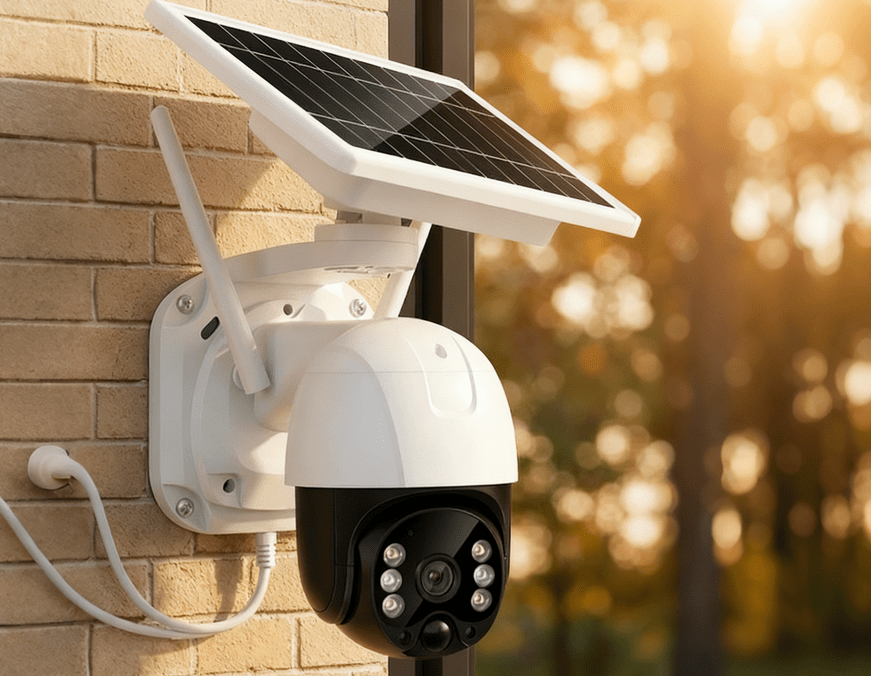
A practical 4G outdoor security camera like the Jortan 8181XM pairs a solar panel and battery pack with cellular radios so the camera stays online even where fibre or wired data are absent. This reduces downtime caused by local power outages and removes the need for trenching or expensive power runs—common pain points in rural and temporary projects. The 8181XM supports global 4G coverage, making it suitable for cross-border deployments and rental fleets.
Core Advantages of Integrated Solar Power
Integrated solar designs deliver real operational benefits. They provide energy independence—systems remain active through cloudy days with properly sized batteries—and they are plug-and-play at installation. For users, this means one tech visit rather than repeated wiring work; for operators, it translates to predictable uptime and simpler logistics.
Reduction in Installation and Maintenance Costs
Because an integrated system removes separate panels, mounting frames, mains wiring and long network drops, installation time often falls by more than half compared with conventional CCTV setups. Routine maintenance is also simpler: remote firmware upgrades, app-based status checks and battery health alerts reduce site visits and lower lifetime operational cost.
Smarter Detection and Efficient Operation
All-in-one solar cameras are more than “wireless cameras”—they are smart endpoints. They combine PTZ optics, low-power AI routines, and app-based management to make surveillance less manual and more precise. The next three subsections show how intelligent detection, conservative power use, and remote controls work together to create an efficient, low-touch security platform that is ideal for remote or high-density deployments.
AI-Powered Human and Vehicle Recognition
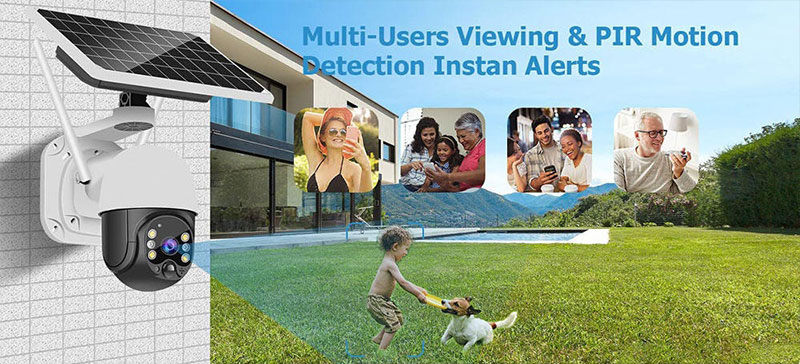
Modern solar PTZ camera systems apply simple on-device analytics to distinguish people from animals and vehicles from foliage. This reduces false alarms and focuses human attention on real events. If you are using Joran security cameras, when a confirmed alarm occurs, multi-user notifications will push an instant alert to all relevant personnel via the Jortan CCTV app, helping the team react and coordinate their response more quickly.
Low Power Consumption for Extended Endurance
Battery-friendly design is key for any cctv solar camera. Efficient codecs, sleep/wake motion detection and scheduled monitoring modes extend operation during low-sun periods. Good systems can run multiple days without sun under conservative settings, and they return to full performance automatically when the panel recharges the battery.
Convenient Remote Management and Maintenance
Remote access is now the default. With a Jortan wireless camera, administrators can change patrol presets, call up live PTZ views, listen through two-way audio, and review event clips from anywhere using the Jortan CCTV app. This reduces the need for on-site visits and lets managers reconfigure cameras in under a minute.
Meeting Diverse Market Needs and Applications
Solar, cellular and smart features make these cameras useful in many sectors. Here we outline typical use-cases and why this solution fits them better than older options. Below are the main sectors that are already adopting solar security camera solutions and why they benefit.
Broad Applications Across Multiple Industries
Construction sites: Temporary, frequently changing layouts need cameras that can be moved and reinstalled without electricians. A 360 solar security camera with pan capability reduces blind spots and replaces multiple fixed cameras.
- Agriculture and large estates: Long boundaries and low-density assets benefit from 4G outdoor security camera units that avoid running cable over hundreds of meters.
- Logistics and yards: Quick deployment and immediate coverage make solar PTZ systems attractive for seasonal storage and overflow parking.
- Events and temporary venues: Fast setup/time-limited need—solar CCTV can be installed same day and removed without leaving a trace.
Clear Market Growth Potential
Adoption is rising because fixed infrastructure is costly and time-consuming to extend. As cellular bandwidth and battery tech improve, more remote and semi-permanent sites will choose off-grid solutions. Manufacturers offering Jortan full color smart camera options with clear product certification and global 4G support will capture that demand.
Continuous Innovation and Future Trends
The technology road ahead will push capabilities farther: better chips, lower power draw, faster networks, and smarter integrations. Several technical advances will shape where the market goes next. These are already visible in products that combine PTZ precision, full-color night vision, and cellular links into a single housing.
- Breakthroughs in Core Chips and Algorithms: Low-power AI chips let cameras run simple recognition tasks locally, which saves bandwidth by sending only event clips rather than full streams. Combined with improved codecs, this keeps cellular data bills predictable while delivering accurate alerts.
- Integration with 5G and Satellite Networks: As 5G coverage expands and low-cost satellite internet becomes practical, the role of the Jortan wireless camera will broaden. Faster uplinks will permit higher-resolution event uploads and real-time remote control—even multiple simultaneous viewers via the Jortan cctv app—without sacrificing battery life.
- Evolution Towards Comprehensive Solutions: The end state is a platform—solar PTZ hardware, a device management cloud, mobile apps, and edge analytics working together. That’s where a product like the 8181XM fits—hardware designed for field conditions with software controls for fleet management, multi-user viewing, and instant PIR motion detection alerts.
Conclusion
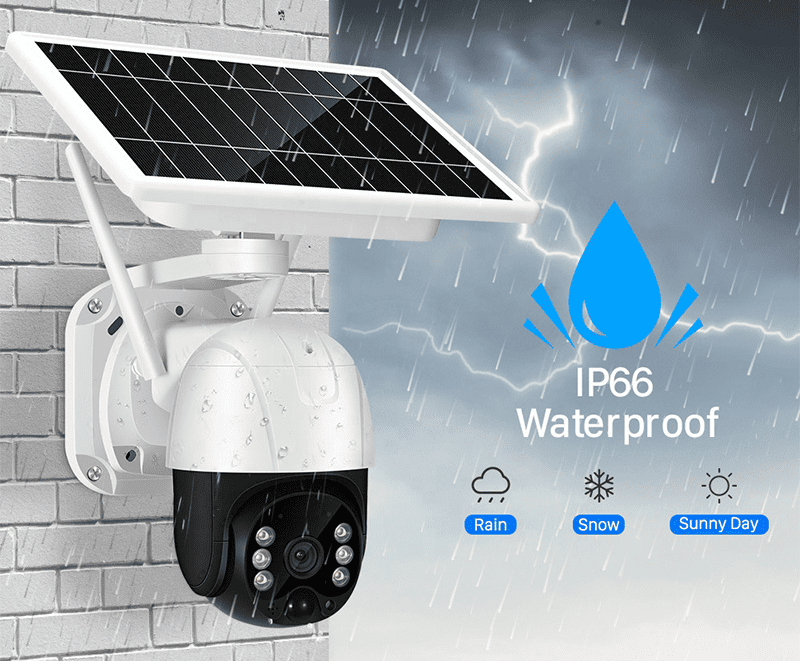
All-in-one solar cameras are not a niche curiosity any longer; they are a practical, cost-effective answer to monitoring when power and wired data are absent. Their strengths are clear: energy independence, intelligent local processing, rapid deployment, and simple remote management through tools like the Jortan CCTV app (ICSEE). For integrators and operators seeking a robust solar PTZ camera or a field-ready Jortan full color smart camera, products such as the Jortan 8181XM demonstrate how manufacturers are packing IP66 housings, 3MP PTZ optics, PIR alerts, two-way audio and global 4G into one deployable unit.
If your project requires rapid deployment, reduced on-site inspections, and effective deterrence in off-grid environments, consider evaluating solar solutions and request OEM/ODM details from your supplier. For large orders or pilot projects, contact Jortan directly at kingjin@safejortan.com.cn to discuss specifications, testing, and bulk pricing; we will provide a tailored solution.