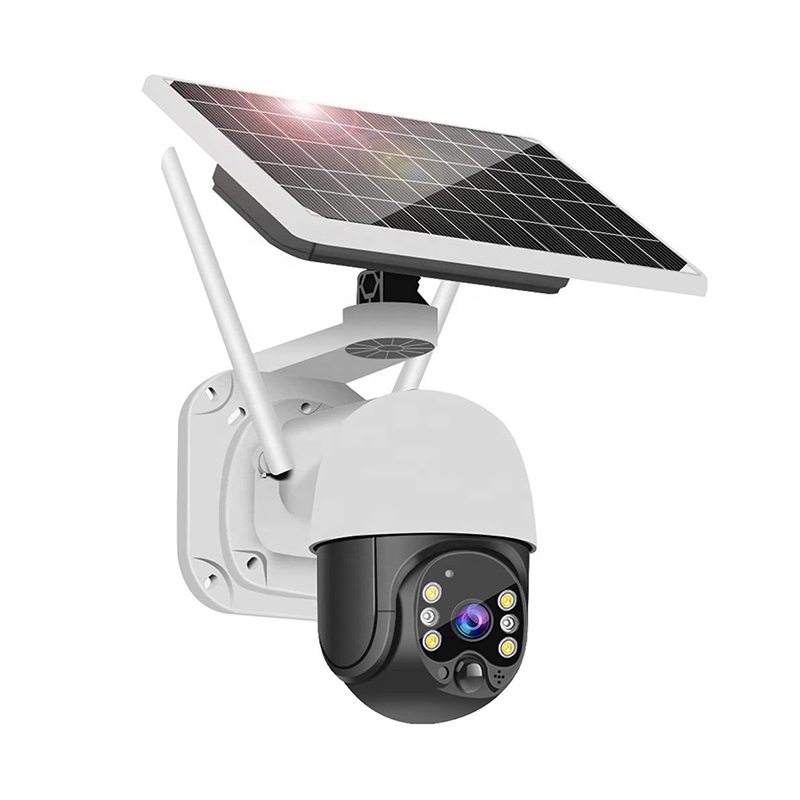
Contemporary residential security systems are no longer determined by cable density and proximity to fiber cable, but by flexibility of deployment, power autonomy, and communication integrity. Because living spaces are extending beyond the closely packed urban infrastructure into the suburbs, countryside, and semi-industrial zones, the architecture of surveillance will have to follow suit. A solar security camera equipped with a SIM card represents one of the most practical outcomes of this shift—a self-powered, network-independent monitoring terminal designed for continuous operation under real-world constraints.
Why does home security increasingly depend on network-independent surveillance?
The traditional model of residential monitoring works well based on fixed broadband connectivity and stable grid electricity supply, but it is difficult to apply to places in rural areas or those in vacation homes, farmland homes, detached garages, or utility buildings.
Currently, the progress of security cameras has evolved from being passive recorders to intelligent terminals, which now incorporate optical imaging, artificial intelligence, mobile communication, and cloud access as an overall system architecture. This is made possible by the merging of artificial intelligence, IoT platforms, and edge computing on consumer-level hardware platforms. This aims to create a set of surveillance tools able to run in a standalone manner rather than simply as peripheral devices.
What risks arise when fixed broadband or grid power is unavailable?
When security systems completely depend on wired electricity and local routers, several structural risks will appear:
- Power interruptions disable monitoring at the exact moment security is most critical
- New buildings and remote properties remain unprotected for months during infrastructure rollout
- Wireless routers introduce single points of failure and configuration complexity
- Cable installation increases deployment cost and delays
In these scenarios, the absence of physical connectivity becomes a security vulnerability rather than a logistical inconvenience.
How does a solar plus SIM architecture solve deployment constraints?
A solar-powered camera with cellular communication eliminates the dependence on grid electricity and fixed internet access. Its operation depends on solar power and carrier-class mobile communications.
Solar and battery-powered cameras have been recognized as a distinct and rapidly expanding power-supply category within modern surveillance systems, alongside AC and DC architectures. Likewise, signal transmission standards now formally include 4G networks alongside fiber, Wi-Fi, coaxial cable, and twisted-pair transport.
Why is cellular transmission more resilient than Wi-Fi in property protection?
Cellular transmission provides several structural advantages over home Wi-Fi. For example, it can bypass consumer-grade routers, which can reduce configuration errors and firmware vulnerabilities, operate independently of local ISP outages and cable damage, and offer predictable uplink stability for alerts and remote viewing.
In practice, this allows you to treat each camera as a self-contained security endpoint rather than part of a fragile local network topology.
Can low-power solar cameras maintain professional-grade reliability?
Autonomy is not enough. A surveillance device has to keep imaging quality, detection accuracy, and system stability while it’s supposed to work under rigorous energy constraints.
In general, low-power camera platforms are designed around three technical pillars:
- Hardware optimization: reduced standby consumption, efficient sensors, and adaptive encoding.
- Firmware scheduling: intelligent sleep-wake cycles aligned with motion detection events.
- Energy harvesting balance: photovoltaic input matched to battery capacity and daily load.
Recent solar camera platforms introduced for “no network, no electricity” environments rely on ultra-low-power circuit design combined with software-level optimization to sustain continuous operation in remote locations, while maintaining real-time data transmission through integrated 4G modules.
How does low-power design affect long-term performance?
When properly engineered, low-power operation does not degrade system capability, but reshapes design priorities:
- Motion detection algorithms filter irrelevant activity to minimize recording cycles
- Image encoding standards such as H.265 reduce bandwidth and processing load
- Night-vision modes switch dynamically between infrared and full-color illumination to conserve energy
- Battery health is preserved through controlled charging and discharge profiles
The outcome is a stable, multi-year field operation with minimal maintenance intervention.
What security capabilities matter most for unattended properties?
Unattended residential sites face different threat models than urban apartments. The emphasis shifts from deterrence by presence to early detection, evidence integrity, and remote intervention.
Modern home camera selection frameworks consistently highlight the same functional priorities, including motion detection, intelligent filtering, two-way audio, cloud and local storage redundancy, and night-time visibility.
Which functions directly reduce intrusion risk?
For isolated properties, the most effective capabilities include:
- AI-based human detection to avoid vegetation or animal false alarms
- Instant mobile alerts over cellular networks
- Two-way audio to issue real-time warnings
- Color imaging or enhanced infrared performance after dark
- Dual storage (local SD + cloud) to protect evidence
- IP-rated weather resistance for year-round exposure
Together, these functions convert a camera from a passive recorder into an active risk-management tool.
Where does a purpose-built solar SIM camera fit into this ecosystem?
System architecture defines potential, and manufacturing quality determines reliability. At this point, it becomes relevant to consider the producer behind the hardware.
Zhejiang Jortan Electronic Technology Co., Ltd., based in Yiwu, operates as an integrated manufacturer combining design, development, production, and technical service within a 30,000-square-meter facility. Our product lines include wireless and cellular surveillance equipment developed using standardized production processes and international manufacturing protocols. Beside, we offer our clients a one-stop customization service including LOGO customization, packaging box design and customization, product appearance customization mold opening, and APP customization, enabling them to solve all problems at once.
Unlike assemblers that adapt generic boards, our company’s engineering approach centers on power efficiency, communication stability, and environmental durability—three attributes that directly affect long-term deployment success in off-grid environments.
What distinguishes mature manufacturing from generic assembly?
Key indicators include dedicated hardware validation for temperature and voltage tolerance, consistent quality control across optical modules and batteries, firmware integration aligned with mobile network protocols, and structured after-sales support models.
These elements reduce the operational uncertainty often associated with remote installations.
How does the JT-9687 Pro address real-world property protection challenges?
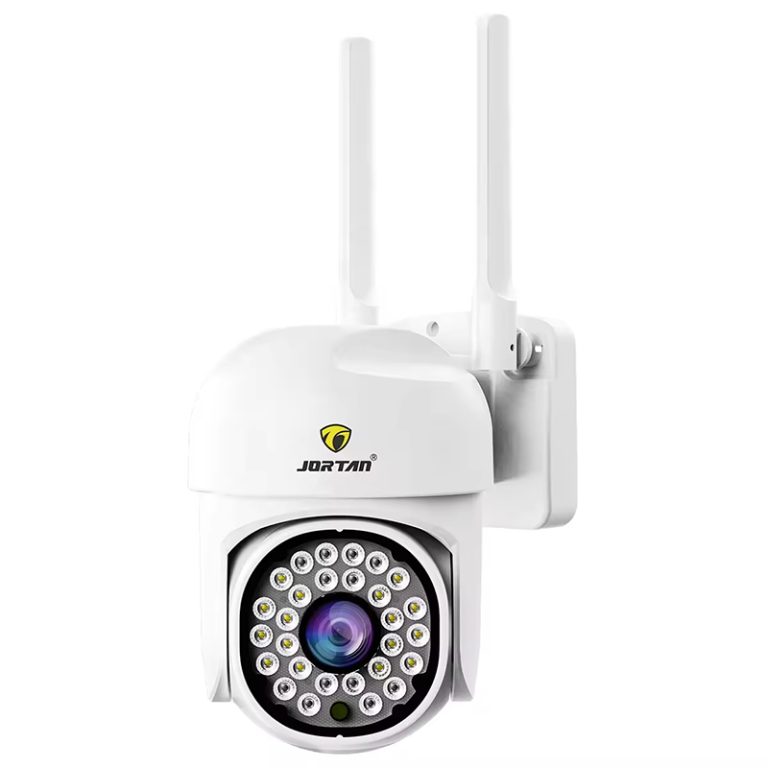
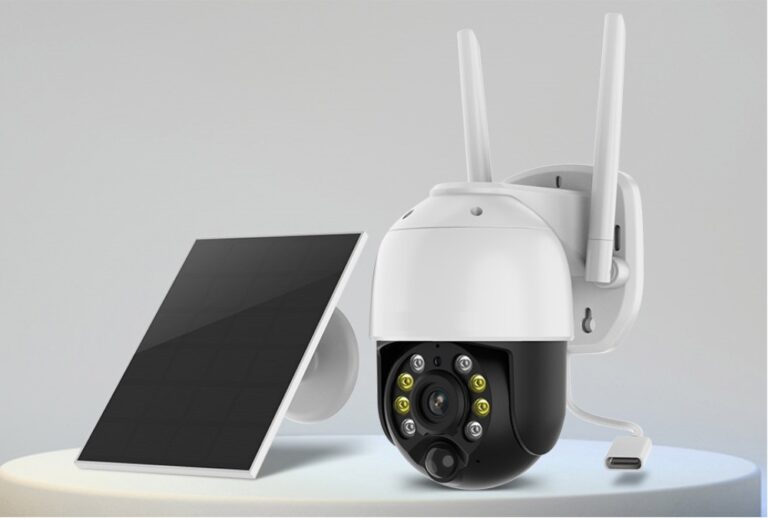
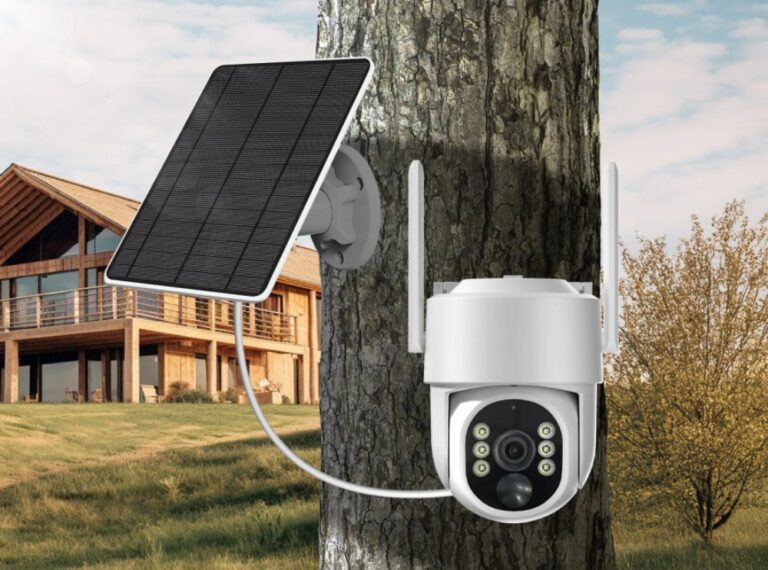
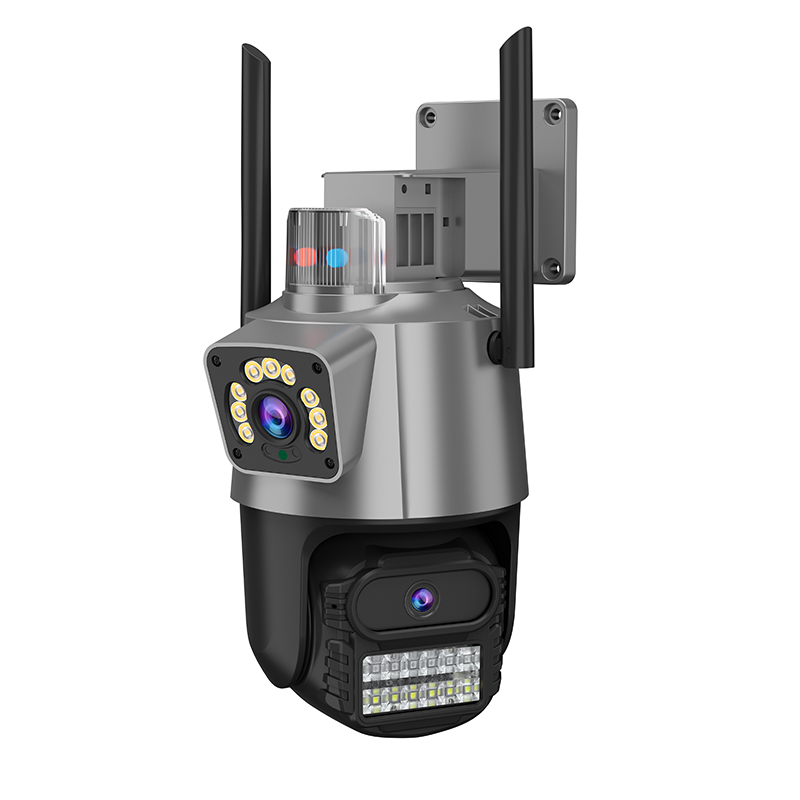
Theory becomes relevant only when hardware survives field conditions. The JT-9687 Pro solar camera with SIM card is designed for properties without permanent electricity or broadband, combining photovoltaic charging, low-power system design, and cellular transmission in a single enclosure.
What practical advantages does this model deliver?
From a deployment perspective, it offers an integrated solar charging system, built-in 4G SIM communication module, low-power architecture for extended autonomy, AI-assisted human motion detection, multi-mode night vision (infrared / color / smart switching), remote management via mobile terminals, and weather-sealed enclosure suitable for outdoor installation.
These attributes align with the functional standards defined across modern wireless surveillance platforms, which integrate image sensors, encoders, communication modules, and alarm interfaces into compact, self-contained devices.
Is a solar SIM camera suitable for long-term residential security planning?
Security systems should be evaluated over a multi-year horizon rather than as short-term hardware purchases.
How does the total cost of ownership compare with wired systems?
When installation and operation are considered together, solar cellular cameras often present many structural advantages, including no trenching or electrical rewiring, no router procurement or configuration, minimal service visits, predictable data usage costs, and easy relocation if property layouts change.
The broader security camera industry already reflects this trend toward autonomous smart terminals that integrate local intelligence with cloud connectivity, rather than relying on centralized infrastructure.
What type of homeowner benefits most from this architecture?
Solar SIM-based surveillance is not universal, but it is decisive in specific scenarios.
Which scenarios justify solar + SIM deployment?
You gain the most value if your property fits one or more of the following profiles:
- Rural or semi-rural housing
- Villas under construction
- Farms and agricultural compounds
- Detached garages or storage buildings
- Warehouses without fixed connectivity
- Vacation homes with seasonal occupancy
- Properties near infrastructure projects
In such cases, energy autonomy and communication independence are not premium features, but foundational requirements.
FAQs
Q: Can a solar SIM camera operate reliably during extended cloudy weather?
A: Modern low-power platforms combine optimized hardware, adaptive firmware scheduling, and battery buffering. Under typical conditions, multi-day autonomy is achievable without sunlight, and normal operation resumes once solar input returns.
Q: Does cellular transmission introduce high latency for alerts or live viewing?
A: Integrated 4G modules provide stable uplink speeds sufficient for motion alerts, audio interaction, and remote video access, even in moderately remote regions.
Q: Is data security weaker on mobile networks than on home Wi-Fi?
A: Cellular transmission benefits from operator-level encryption and avoids common router misconfigurations. When combined with encrypted cloud storage, it often reduces exposure compared with consumer Wi-Fi environments.