Why wireless night-vision cameras must be evaluated as complete systems?
Wireless CCTV cameras with night vision are no longer simple home gadgets. They are now compact security systems that integrate imaging, AI-based detection, wireless networking, storage logic, and mobile interaction into one device. When you choose such a camera, you are effectively deciding how your security system will behave every night, how reliable your evidence will be, and how much operational effort will be required from you over time.
The key challenge is that many products seem to have similar features, such as high resolution, night vision, and mobile access. The real difference lies in system balance, which demonstrates that night imaging must cooperate with detection logic, wireless connectivity must remain stable under real conditions, and storage must continue working when the network fails. A device that excels in only one area but performs weakly in others hardly delivers dependable security.
This article helps you define what “best” actually means for a wireless CCTV camera with night vision recorder, using practical engineering criteria.
Who is Jortan, and why does its product design align with serious security needs?
Zhejiang Jortan Electronic Technology Co., Ltd. is a technology-oriented manufacturer that integrates product development, production, design, and service under one operational system. Based in Yiwu, Jortan operates a manufacturing facility exceeding 30,000 square meters and focuses on electronic products such as surveillance cameras and intelligent lighting equipment. Our development direction emphasizes long-term stability and functional reliability rather than short-term feature stacking.
From a system perspective, our cameras are designed as independent security terminals rather than passive video collectors. Typical configurations support AI-based human detection, dual storage (local and cloud), mobile and desktop monitoring, adaptive night imaging, and stable power operation. Many models also include practical details that solve real deployment problems, such as built-in AP hotspot operation for use without an external network, multi-user viewing controlled by an administrator, and simplified three-step installation.
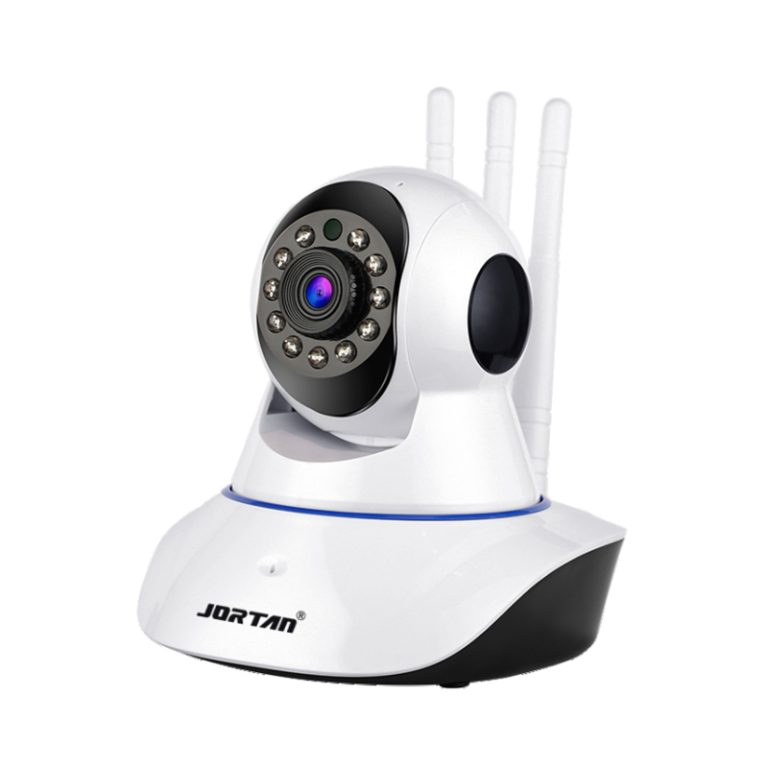
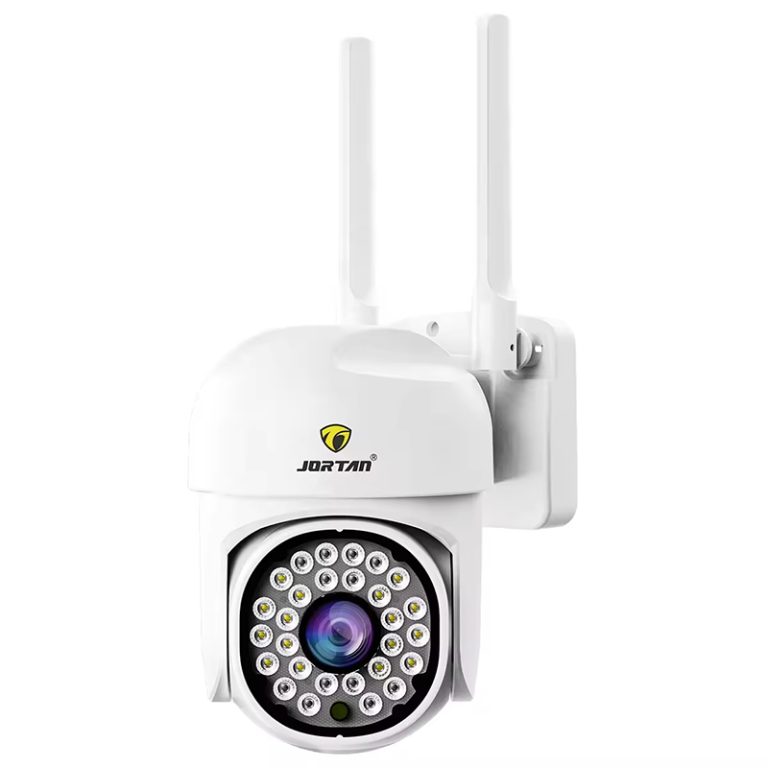
A practical example is the JT-9999 Pro wireless CCTV camera, which integrates AI motion filtering, intelligent night mode switching, dual storage architecture, two-way audio, and independent hotspot connectivity in one wireless unit. Instead of relying on one standout parameter, it is developed as a balanced system designed to operate consistently across different environments.
What actually defines a “best” wireless CCTV camera today?
Before comparing models, you need to clarify the evaluation criteria. “Best” does not mean the highest advertised resolution or the longest feature list.
Why reliability matters more than feature quantity
A reliable camera records continuously, does not reboot when night mode activates, maintains a stable Wi-Fi connection, and continues storing data when your network drops. In practice, long-term stability often provides more security value than advanced features that work only in ideal conditions.
Why system balance beats single-parameter superiority
Night vision quality, AI accuracy, storage stability, wireless performance, and power tolerance must work together. If any one of these layers is weak, the overall experience degrades. The strongest products are those that maintain consistency across all core functions rather than excelling in only one area.
How should you judge night vision performance beyond marketing claims?
Night monitoring is where many cameras fail, especially in outdoor or low-light indoor environments.
Infrared, full-color, and intelligent hybrid modes
Most modern cameras offer three night modes.
- Infrared mode delivers black-and-white images with low light disturbance
- Full-color mode uses white light to preserve color detail
- Intelligent hybrid mode: the camera stays in infrared by default and automatically switches to full color when movement appears.
This structure provides evidence clarity while avoiding unnecessary light pollution.
Why detection distance and illumination control must coexist
Full-color night vision distances of up to 40–50 meters are technically possible, but stronger light alone does not guarantee better footage. Excessive illumination can cause overexposure, reflections, and neighbor complaints. The more practical indicator is how smoothly the camera balances light output, image clarity, and switching logic in real scenes.
How does AI detection change the value of a night vision recorder?
Without intelligent detection, a night vision recorder simply collects hours of video that you may never review.
Human-shape filtering vs traditional motion triggers
Traditional motion detection reacts to any pixel change, including rain, insects, shadows, or moving branches. AI-based human filtering evaluates shape and behavior, which greatly reduces false alerts, which means notifications become meaningful rather than annoying.
Auto-tracking and evidence continuity
Advanced AI tracking allows the lens or PTZ module to follow a moving person while adjusting framing. Instead of recording small figures at the edge of the image, the system actively maintains useful visual detail, improving the practical value of recordings when reviewing events.
What storage architecture keeps your recordings truly reliable?
Recording reliability depends more on storage design than on camera resolution.
Local SD card loop recording and independence
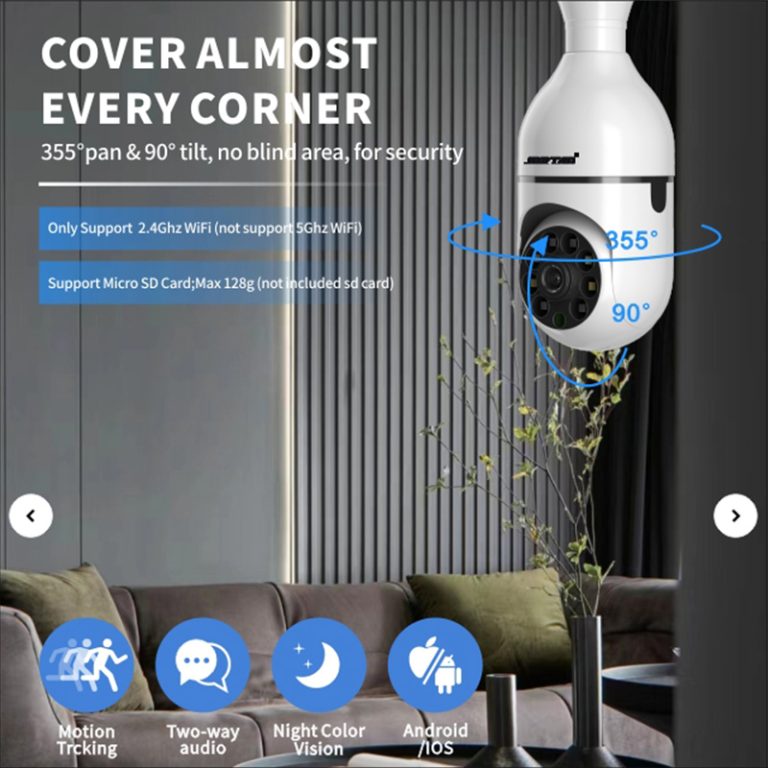
Local storage via TF or Micro SD card allows continuous loop recording. When storage fills up, older files are overwritten automatically, ensuring that the camera continues to record even if your internet connection fails.
Cloud backup as risk isolation
Cloud storage adds another layer of protection. If the device is damaged, stolen, or physically compromised, off-site recordings remain accessible. A dual approach — local plus cloud — protects you from both technical failures and physical loss.
How does wireless connectivity affect stability in real environments?
Wireless convenience often introduces hidden reliability challenges.
Wi-Fi signal limits and interference risks
Wi-Fi cameras depend heavily on signal strength, router quality, and environmental interference. Distance, walls, metal structures, and crowded frequency channels can all degrade performance. A stable wireless design requires both optimized hardware and intelligent connection logic.
Built-in AP hotspot as a fallback architecture
Some wireless cameras include a built-in AP hotspot that allows direct phone-to-camera connection without external internet, which is valuable during setup, troubleshooting, or temporary network outages. It also enables basic monitoring in locations without fixed connectivity, provided the device and phone remain within a reasonable distance.
Why do power stability and enclosure quality decide long-term success?
Many camera failures originate from basic hardware limitations rather than software logic.
Power supply tolerance and cable impact
When night mode activates or PTZ movement begins, power consumption increases. If the voltage drops due to weak adapters or thin cables, the device may reboot or become unstable. Therefore, cameras designed with higher tolerance for power fluctuation perform far more consistently in real deployments.
IP66 enclosure for outdoor reliability
Outdoor cameras must resist rain, dust, temperature changes, and long exposure to sunlight. IP66-rated enclosures help ensure that internal components remain protected. Without proper sealing, even strong internal electronics can fail prematurely.
When does a dual-mode or advanced wireless camera outperform standard models?
Simple environments, such as small indoor rooms, can be covered by basic cameras, but more complex spaces require more advanced structures.
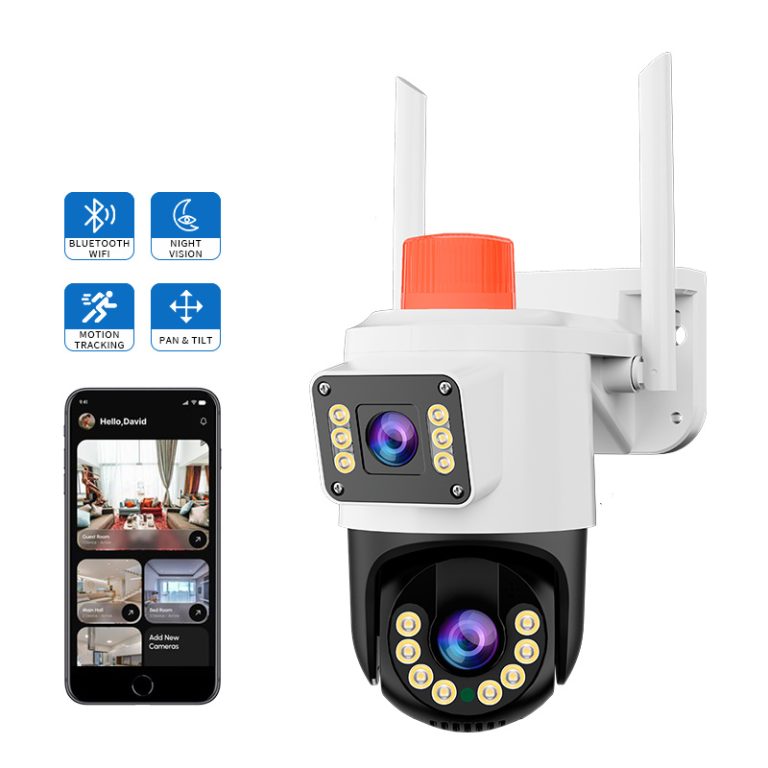
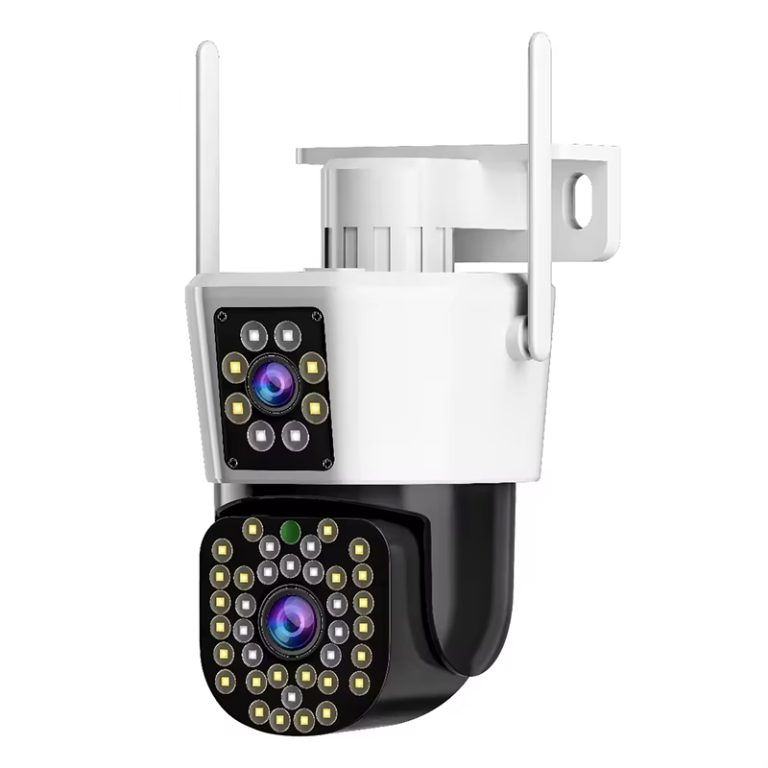
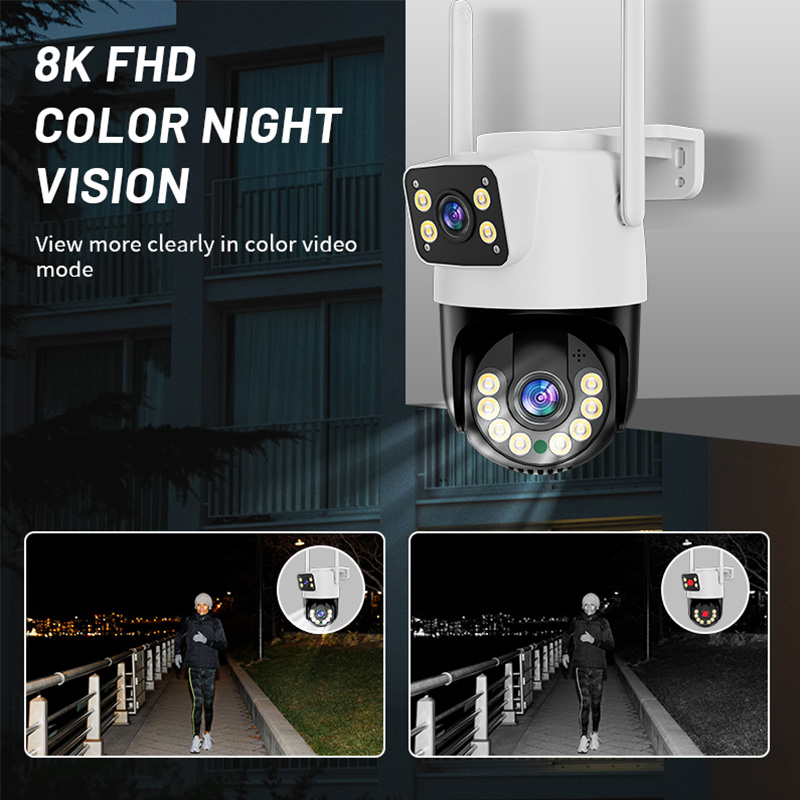
In larger yards, storefronts, warehouses, or multi-angle spaces, higher-configuration models offer clearer advantages. For example, the JT-8698 Pro wireless CCTV camera is designed to provide stronger night adaptation, more precise AI tracking, and more stable recording continuity within a wireless architecture, which makes it suitable for environments where a standard single-lens camera may struggle.
Coverage efficiency vs device count
Advanced designs often cover larger areas more effectively, which reduces the number of devices needed. Fewer cameras mean simpler wiring, easier management, and lower long-term maintenance effort.
Practical difference you can observe in daily operation
The difference becomes clear over time—fewer false alerts, clearer night footage, more dependable recordings, and less need for manual adjustment, all of which define real-world value more than technical labels.
How to define “best” for your real security environment?
The best wireless CCTV camera with night vision recorder is not the one with the highest advertised specifications, but the one that behaves consistently in your environment. Reliable night imaging, accurate AI detection, stable wireless connectivity, resilient storage, and durable hardware establish the true foundation of a strong system.
When you evaluate products through this lens, you move beyond surface features and begin selecting a camera that functions as dependable security infrastructure rather than just another connected device.
FAQs
Q: Is full-color night vision always better than infrared?
A: Not always. Full-color night vision provides richer detail, but only works well when illumination is controlled properly. Intelligent hybrid modes often deliver more balanced performance.
Q: Can wireless cameras really support continuous recording reliably?
A: Yes, when power stability, storage design, and signal quality are properly engineered. Reliability depends on system architecture, not on whether the device uses cables.
Q: Do you really need AI detection in a night vision camera?
A: If you want useful alerts instead of constant false notifications, AI-based human filtering becomes essential. It significantly improves the practical value of the system.