Why have network IP cameras become infrastructure rather than accessories?
Network IP cameras are no longer peripheral devices that simply stream video, but have evolved into intelligent security terminals that integrate optical imaging, AI inference, network communication, and cloud interaction. In today’s security industry, cameras operate as smart nodes inside larger systems that include data analysis, automated alerts, and remote control.
Industry research shows that modern security cameras are now categorized as smart terminals equipped with operating systems, AI detection, remote management, and cloud connectivity, driven by the dual forces of technological evolution and scenario expansion.
This shift changes how procurement decisions should be made. You are not choosing a “camera model” but defining part of your long-term security infrastructure.
Who is Jortan, and why is its product architecture relevant to your camera selection?
Zhejiang Jortan Electronic Technology Co., Ltd. is based in Yiwu, one of China’s major manufacturing centers. We integrate production, product development, industrial design, trade, and technical service under a single operational structure. Our facilities cover more than 30,000 square meters and support the manufacturing of multiple electronic product categories, including surveillance cameras and lighting equipment.
The product philosophy of Jortan emphasizes engineering stability rather than short-term feature stacking. Our cameras adopt standardized industrial production processes, dedicated quality control systems, and long-cycle reliability testing. Internally, our development teams focus on image sensors, video encoding efficiency, AI-based detection logic, surge protection, and cross-platform compatibility.
From a system perspective, our devices are designed to function as network endpoints rather than isolated hardware. Typical configurations support modern video compression, ONVIF access for third-party platforms, mobile and desktop monitoring, cloud plus local storage redundancy, and AI modules for human-shape recognition and behavior tracking.
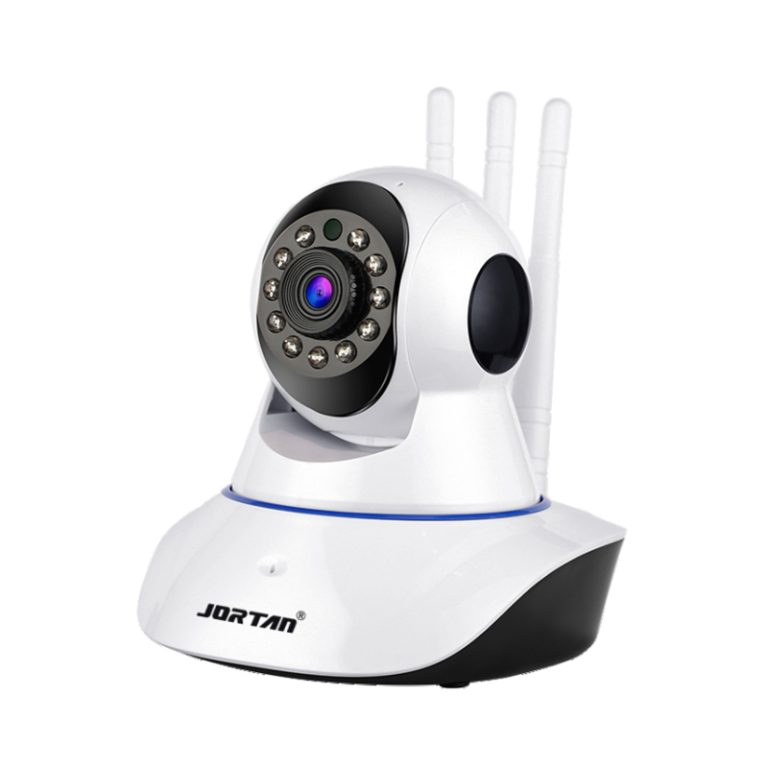
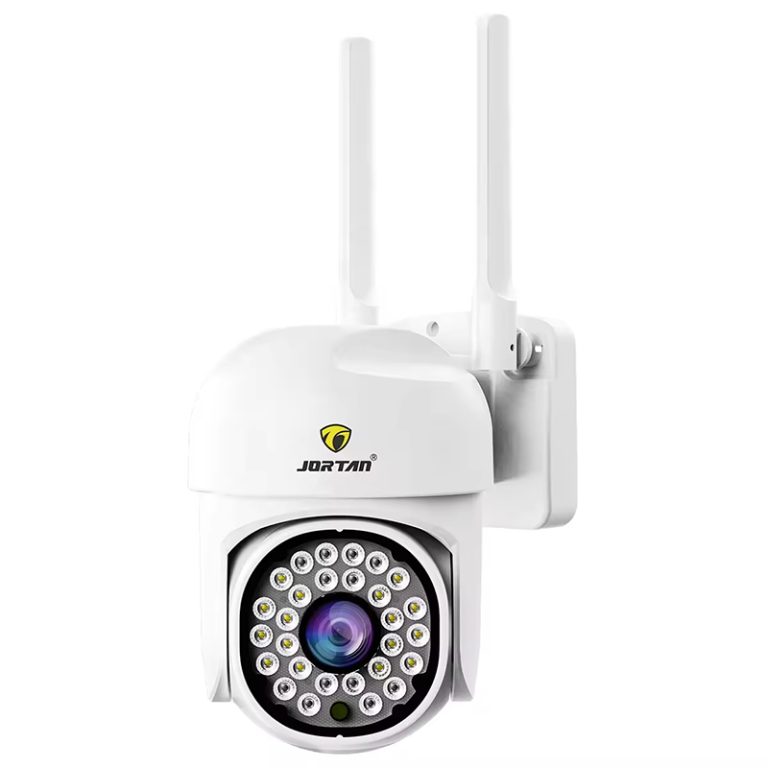
A practical example is the Jortan 5 IP camera, which combines AI motion filtering, adaptive night imaging, multi-stream encoding, and hybrid storage into a single network-ready device. Instead of being optimized only for image resolution, it is designed as a continuously operating system component capable of independent decision-making and remote coordination.
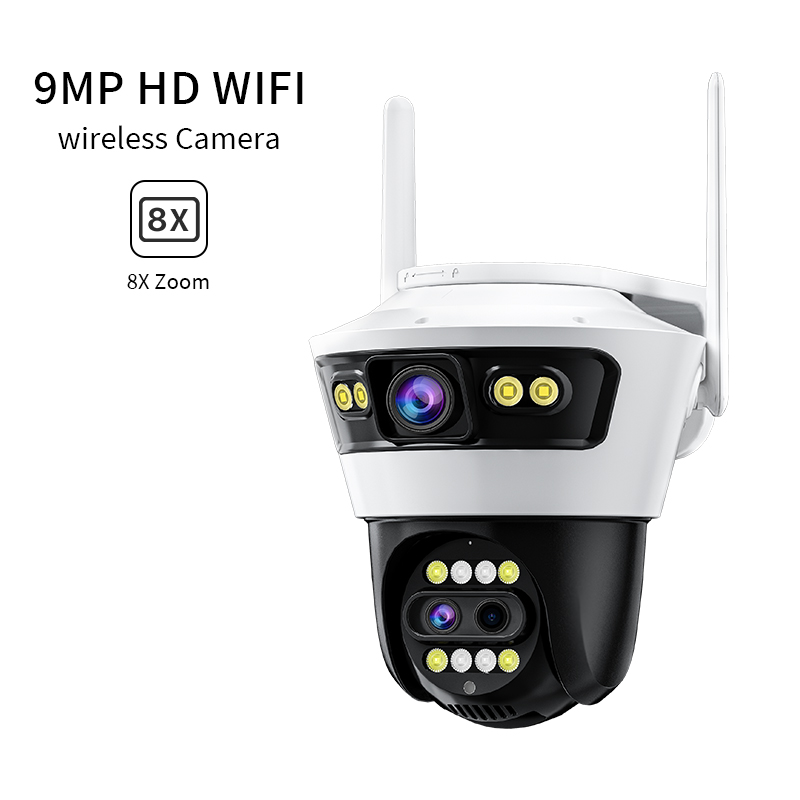
What system architecture should a network IP camera follow today?
Before evaluating lenses or night vision, you should confirm whether the camera’s internal architecture supports long-term scalability and integration.
How video encoding and bandwidth control affect system scalability
Modern network cameras rely on compressed digital video streams. H.265 and AI-optimized variants reduce bandwidth consumption while preserving detail, which directly affects storage cost, network congestion, and multi-camera deployment capacity.
Advanced systems allow adjustable bitrates (commonly 0.1–10 Mbps) and multi-stream output so that recording, mobile preview, and desktop monitoring can run simultaneously without overwhelming network resources. This design becomes critical when your system expands from one device to dozens.
Why ONVIF and platform compatibility reduce future integration cost
Protocol support determines whether your camera can coexist with other software platforms, NVRs, or management systems. Cameras that implement ONVIF standards allow future migration, system upgrades, and mixed-vendor deployments. Without protocol compatibility, even technically strong hardware can become isolated and expensive to replace when your backend architecture changes.
How to evaluate image quality beyond megapixel numbers?
Megapixels are easy to advertise but rarely define real-world surveillance performance.
Sensor size, minimum illumination, and color fidelity in low-light scenes
Professional camera modules specify minimum illumination levels such as 0.01 lux in color mode and near-zero lux in infrared conditions. These figures determine whether facial features, clothing color, and motion paths remain identifiable after sunset.
From a professional standpoint, sensor sensitivity, ISP processing, and noise-reduction algorithms influence clarity more than raw resolution.
Why lens structure matters more than nominal resolution
Lens design governs light intake, distortion control, depth of field, and focus stability. Multi-lens structures further expand this logic by separating wide-angle situational awareness from telephoto detail capture.
In practice, dual-lens systems allow you to monitor large areas while tracking specific movement paths simultaneously, reducing blind zones without adding extra devices.
What night-vision technologies should you prioritize for real environments?
Night monitoring introduces the highest failure rate in consumer deployments.
Infrared, white-light, and adaptive full-color modes
Current camera platforms typically support:
- Infrared black-and-white mode for low-disturbance monitoring
- Scheduled white-light mode for continuous color recording
- Smart hybrid mode that switches to color only when motion is detected
Hybrid pattern balances evidence quality and environmental impact, avoiding constant light pollution while preserving color detail when it matters.
Detection distance versus light pollution control
Full-color night vision distances of 40–50 meters are common in modern outdoor cameras, but excessive illumination causes reflection artifacts and neighbor complaints. Intelligent switching systems reduce these risks while maintaining usable evidence quality.
How does AI detection change the reliability of alarms?
False alerts remain one of the main reasons surveillance systems lose operational trust.
Human-shaped recognition and multi-target filtering logic
AI models trained on human contours distinguish between people, animals, shadows, rain, and vegetation movement. Product specifications in Jortan’s dual-sensor systems show human-shape detection ranges reaching approximately 15 meters with multi-target support, which significantly improves alert accuracy in complex outdoor scenes.
Auto-tracking and evidence preservation
AI tracking mechanisms automatically rotate PTZ modules and adjust zoom when movement is detected, ensuring that objects remain centered and identifiable, thus preserving usable evidence instead of wide-angle silhouettes.
From an operational standpoint, this reduces manual camera control and improves post-incident analysis efficiency.
What storage design prevents data loss and system downtime?
A camera without dependable storage becomes a temporary viewer rather than a security system.
Local TF card architecture and overwrite strategy
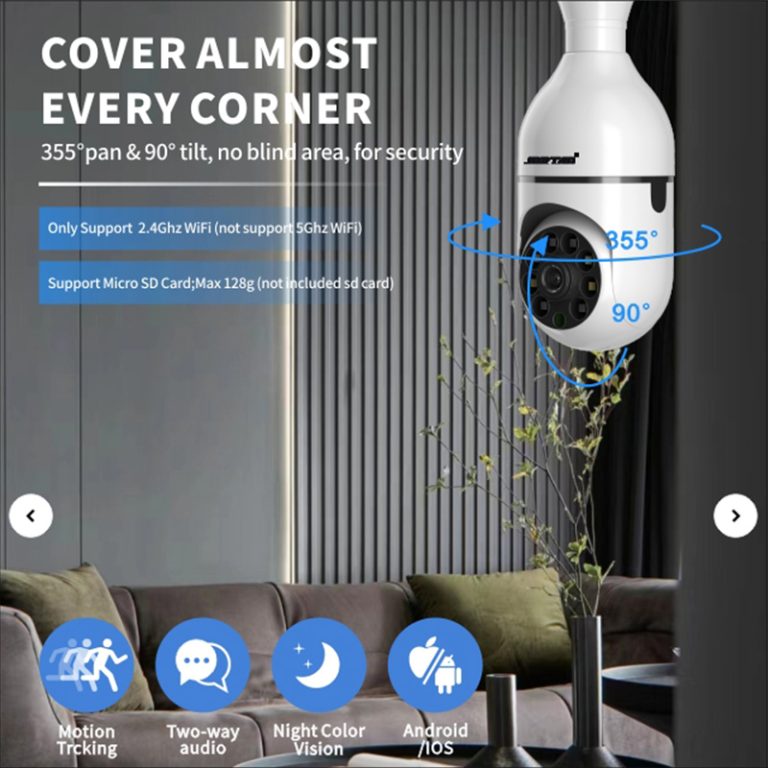
Local storage commonly supports TF cards up to 128 GB. Continuous loop recording automatically overwrites old files, ensuring uninterrupted operation without manual maintenance. Local storage also guarantees data capture during network outages.
Cloud storage as a disaster-recovery layer
Cloud platforms provide off-site backups that remain accessible if the device is stolen, damaged, or destroyed. Combined architectures distribute risk rather than concentrating it in a single physical location.
Which network connection methods suit different deployment scenarios?
Connectivity determines reliability more than convenience.
Wired Ethernet vs Wi-Fi vs 4G transmission
- Ethernet offers maximum stability and bandwidth
- Wi-Fi simplifies installation but suffers from interference and distance limits
- 4G modules enable deployment in locations without fixed infrastructure
Wireless network cameras are formally classified into Wi-Fi-based and cellular-based devices according to their transmission method. Your selection should match the physical environment, distance, and uptime requirements.
Power supply design and surge protection standards
Outdoor cameras typically operate on DC 12V supplies. Engineering specifications emphasize cable diameter and voltage stability to prevent reboot cycles during IR activation or PTZ movement. Compliance with lightning protection standards (GB/T17626.5 and IEC61000-4-5) further protects devices in unstable electrical environments.
When does a multi-lens network IP camera outperform traditional designs?
Coverage efficiency becomes more important as monitoring areas expand.
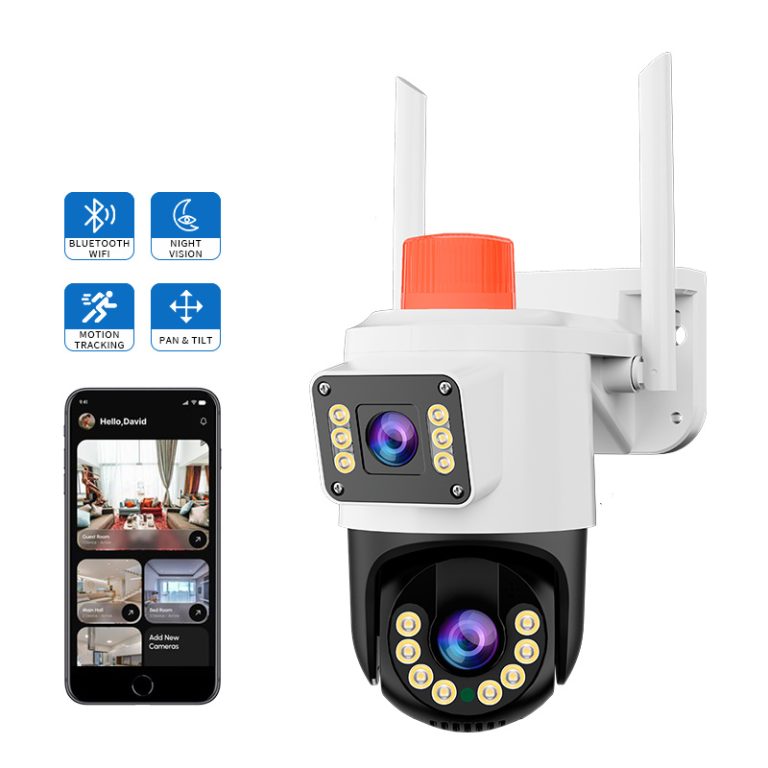
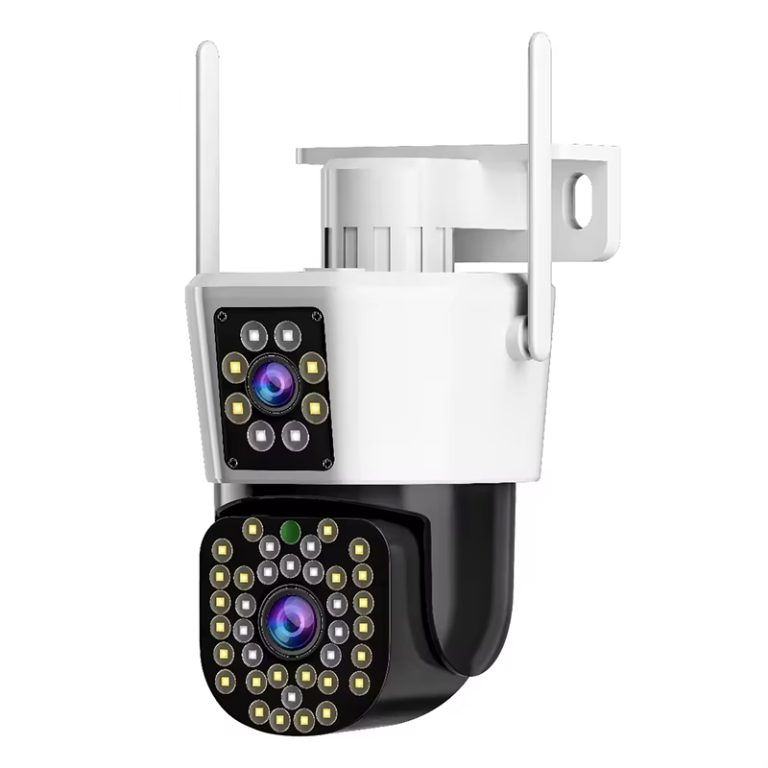
Dual-lens PTZ systems allow one lens to maintain a fixed panoramic view while the second dynamically tracks moving targets. A representative design is the Jortan 8 IP camera, which integrates synchronized fixed-point and PTZ monitoring within one enclosure.
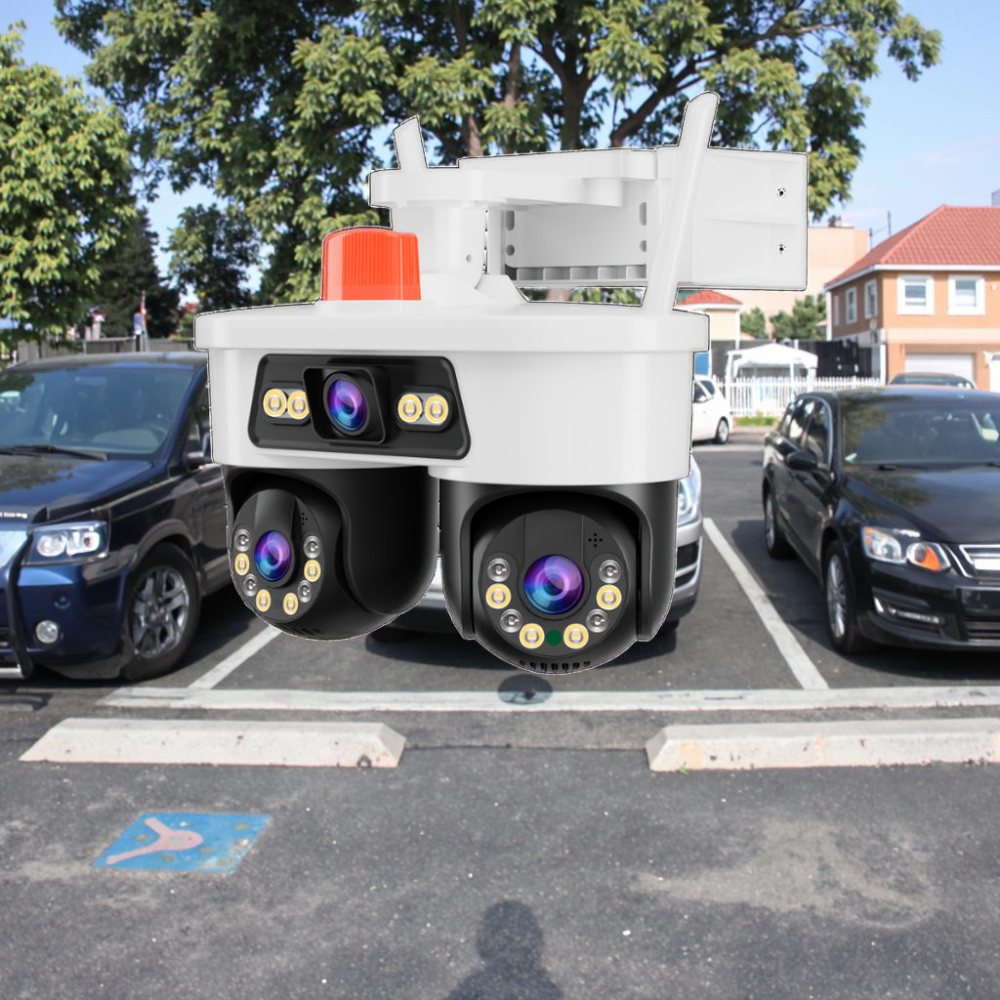
Fixed-view and PTZ lens coordination logic
Synchronized dual-screen monitoring allows you to observe context and detail at the same time rather than switching manually between views. This architecture mirrors professional surveillance layouts while reducing hardware count.
Device consolidation and blind-zone reduction
One multi-lens unit can replace two traditional cameras, reducing wiring complexity, installation time, and long-term maintenance cost while eliminating overlapping blind zones.
How to build a network camera system that works as a security infrastructure?
A network IP camera should be evaluated as part of a technical system, not as a standalone product. System architecture defines scalability, imaging chains determine evidence value, AI logic governs alarm credibility, storage design protects continuity, and network and power engineering shape operational stability. When these layers align, your camera network functions as an active security infrastructure rather than passive recording hardware.
FAQs
Q: Is higher resolution always the most important factor when buying a network IP camera?
A: No. Sensor sensitivity, lens quality, encoding efficiency, and night performance often have a greater impact on usable footage than megapixel numbers.
Q: Should you rely only on cloud storage for security footage?
A: You should not. Local storage ensures continuity during connectivity failures, while cloud storage protects against physical loss. Dual-layer storage is more resilient.
Q: Does AI detection significantly reduce operational workload?
A: Yes. Human-shape recognition and tracking greatly reduce false alarms caused by weather, animals, and lighting changes, improving system trust and response efficiency.