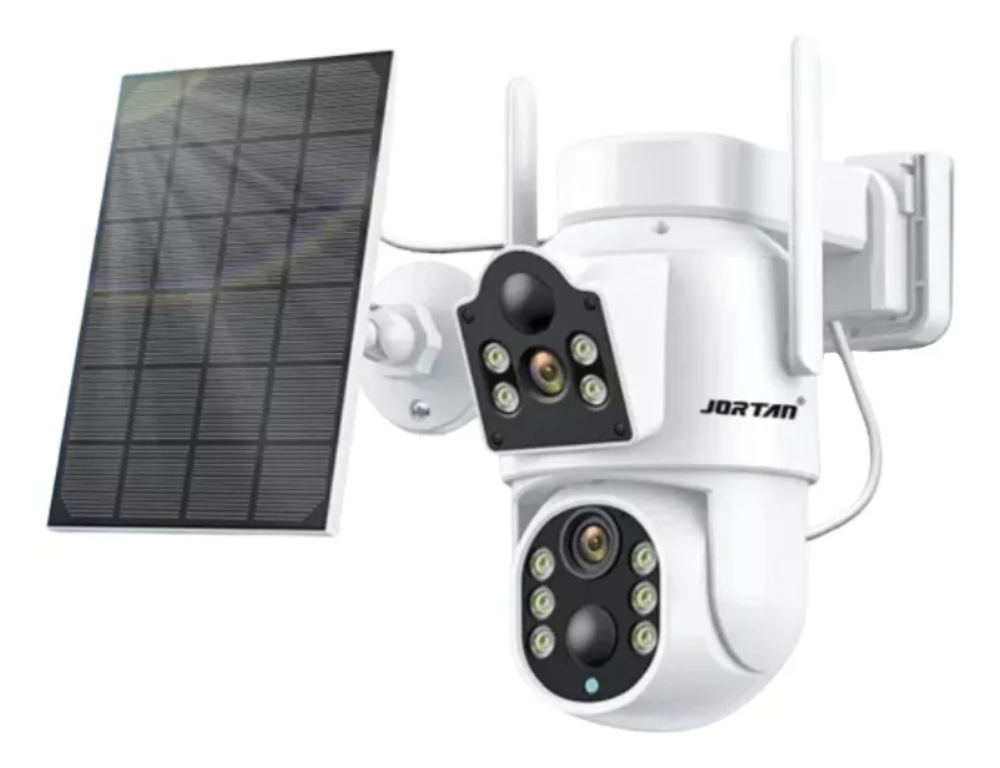
Solar WiFi cameras are no longer simple consumer devices, but function as autonomous edge systems that combine imaging, networking, power management, and on-device intelligence into a tightly coupled architecture. Performance does not depend on one specification alone, but on how efficiently each subsystem collaborates with the others. When power strategy, firmware logic, installation geometry, and communication behavior are aligned, stability improves noticeably. When they are misaligned, even high-end hardware degrades quickly in the field. This article examines performance improvement and maintenance from a system-level perspective.
Why does solar WiFi camera performance depend on system balance rather than a single component?
A solar camera operates under strict energy constraints. Every wake cycle, frame encode, and AI inference task consumes stored power. A balanced architecture, therefore, matters more than peak specifications.
How does power generation limit long-term stability?
Panel efficiency, battery chemistry, and charging logic shape daily energy availability. Devices using lithium iron phosphate cells, for example, tolerate deeper discharge and more cycles, which improves seasonal reliability. Field data also shows that insufficient panel exposure often causes “false faults” that appear as network instability but are actually power starvation.
How does firmware behavior influence energy efficiency?
Low-power operation depends heavily on firmware scheduling. Features such as PIR-triggered wake-up, adaptive bitrate compression, and event-only recording significantly reduce unnecessary processing. Architectures using AI pre-analysis at the sensor level can maintain high detection accuracy while avoiding continuous full-frame processing, thus extending operational uptime.
How can installation choices directly affect imaging reliability?
Many performance complaints originate not from hardware limits but from installation decisions.
How does camera orientation affect solar charging efficiency?
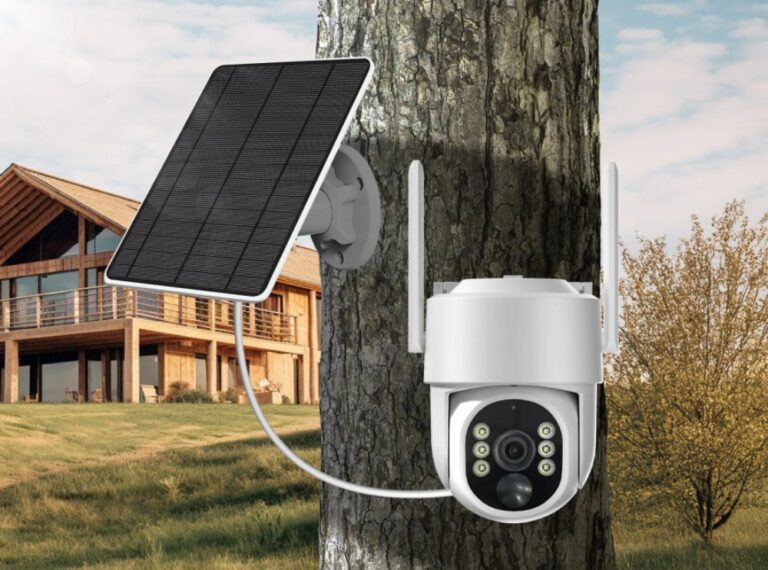
Solar panels must face the strongest available daylight window with minimal shadow interference. Even a partial obstruction for several hours can reduce charging efficiency enough to destabilize night operation. Dust accumulation on panels further reduces effective input and should be considered part of regular maintenance.
How does field-of-view selection influence detection accuracy?
Wide framing that captures large areas of sky, reflective surfaces, or moving foliage increases false triggers. Target-focused framing improves both detection accuracy and power efficiency by reducing unnecessary AI processing cycles.
How should network configuration be optimized for solar WiFi cameras?
Wireless behavior directly impacts energy use. Poor signal quality forces repeated retransmission, frequent reconnection, and longer active durations.
How does router placement influence packet loss?
Signal attenuation through reinforced concrete, metal doors, or dense walls raises retry rates. Devices with stronger wireless penetration performance perform better under marginal conditions, but placement optimization remains essential for stability.
How can dual-mode storage reduce connectivity stress?
Cameras supporting local TF storage and cloud backup can continue event recording even during brief network interruptions, which avoids repeated reconnection attempts and prevents data loss when connectivity is unstable.
How can night-vision configuration improve clarity without draining batteries?
Night operation typically consumes more energy than daytime monitoring due to illumination systems and a higher processing load.
How should full-color and infrared modes be scheduled?
Smart switching between infrared mode and white-light full-color mode reduces unnecessary power draw. Trigger-based illumination performs better than continuous lighting in most environments.
How does AI filtering reduce false alarms?
Human-detection algorithms with strong anti-interference capability significantly reduce triggers caused by animals, rain, or vegetation. Devices supporting long-range human detection with high wake accuracy demonstrate better long-term stability in outdoor environments.
Which solar WiFi camera models support energy-aware operation in real deployments?
Some platforms integrate hardware and firmware features specifically for low-power, long-cycle operation.
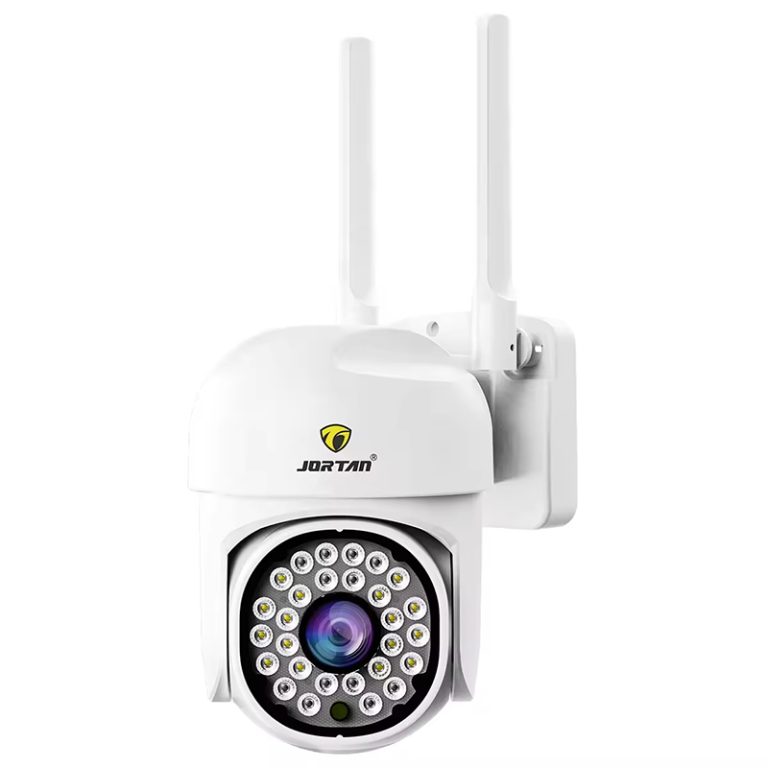
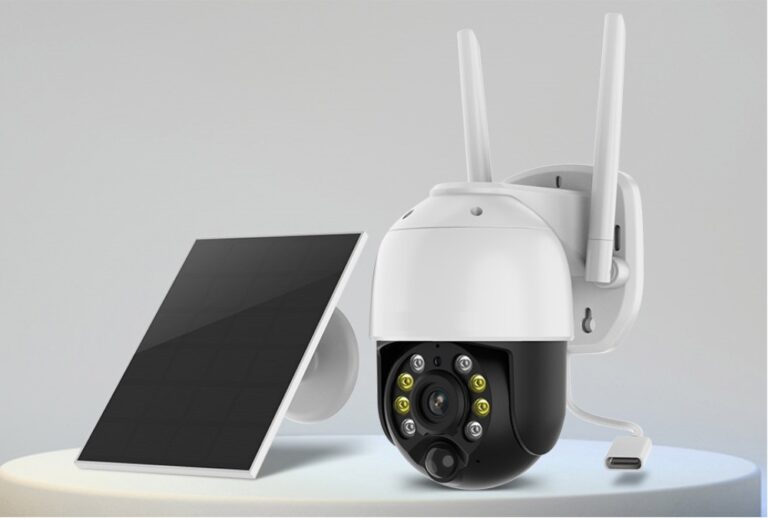
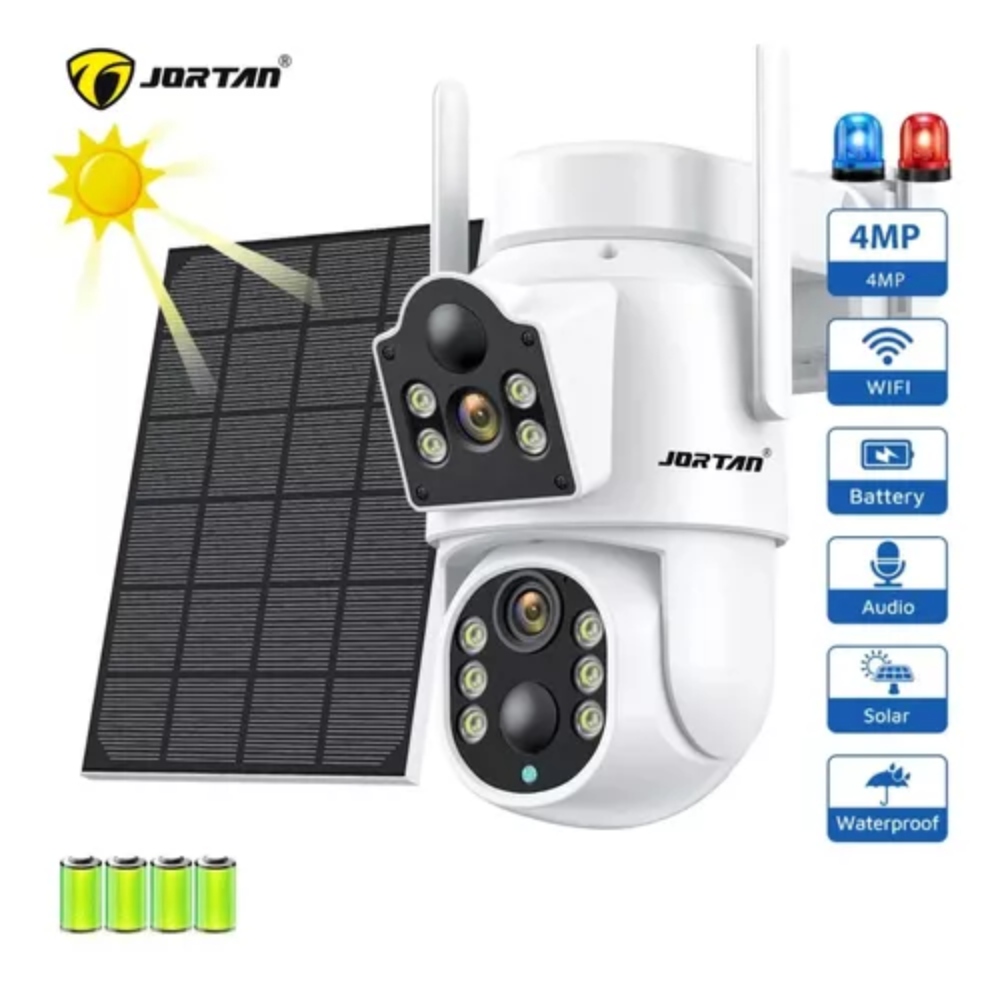
The JT-8699T solar WiFi camera reflects a design philosophy focused on power discipline rather than raw performance. It supports PIR-based human sensing, dual storage (local TF and cloud), and mobile alarm push. Its system architecture emphasizes low-power operation, with reliable wireless connectivity and continuous high-temperature testing at 65 °C to ensure stability under harsh outdoor conditions. Such characteristics are well-suited for unattended outdoor sites where maintenance access is limited.
When is a higher-capacity solar platform more suitable?
Sites such as orchards, construction zones, or perimeter areas often generate higher event frequency and require greater energy reserves.
The 8185XM solar WiFi camera is positioned for more demanding environments. Its design supports extended operation across multiple cloudy days and emphasizes long-range human detection accuracy. Such characteristics make the model suitable for the application scenarios such as fish pond protection, construction site monitoring, and orchard security, where continuous operation and low false-trigger rates matter more than compact form factor. Devices with this orientation often perform better in semi-industrial deployments.
Who designs and supports full-stack solar WiFi camera ecosystems?
At this stage in system evolution, device performance is inseparable from the capability of the supplier behind it.
Why does Jortan focus on solar-first surveillance architecture?
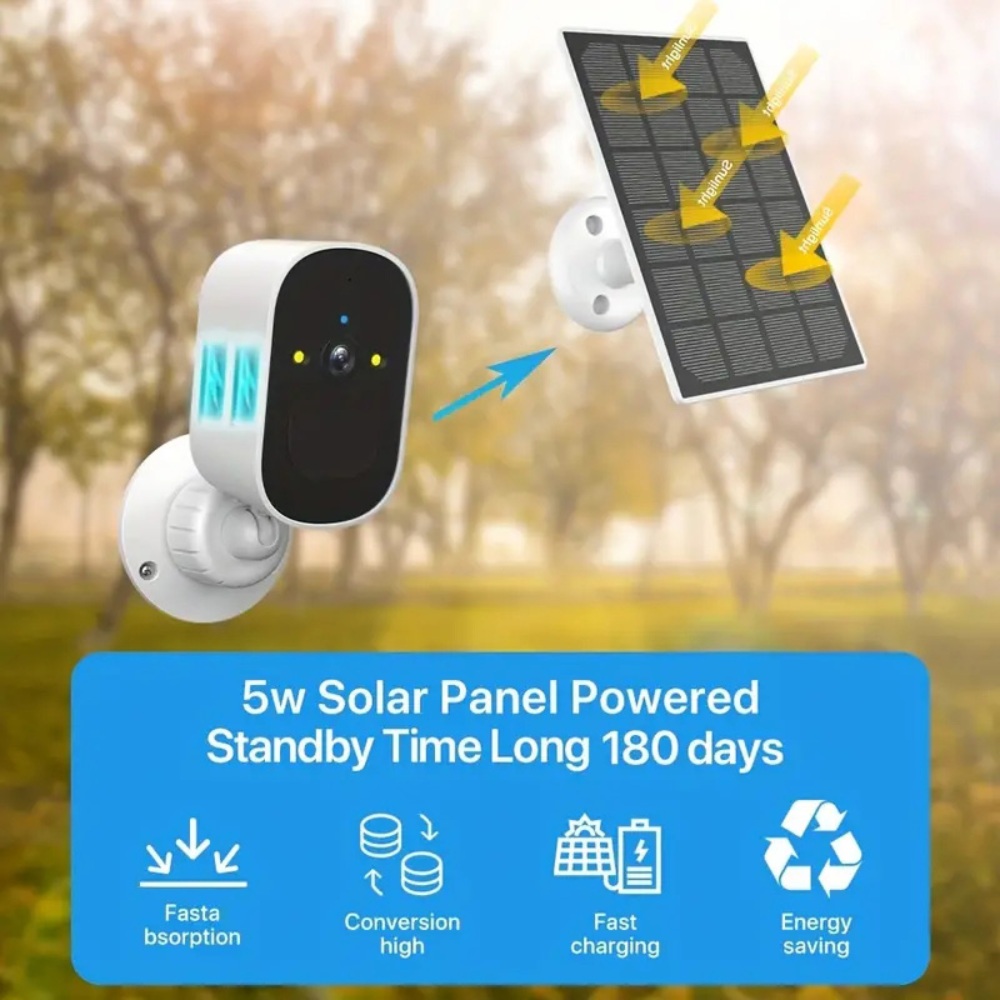
Jortan is a manufacturer that has concentrated the product development around wireless and solar-powered surveillance for more than a decade. Our portfolio emphasizes off-grid scenarios such as farms, construction sites, courtyards, and remote perimeters.
Our products focus on PIR-based intelligent detection, dual-storage protection mechanisms, high-temperature endurance testing, and large-scale field deployment adaptability. This approach allows devices to function not only as cameras but as coordinated edge nodes that remain stable across power, climate, and network variability.
How should preventive maintenance be scheduled for solar WiFi cameras?
Maintenance directly determines lifecycle stability.
How often should solar panels be cleaned?
In dusty or agricultural environments, panel cleaning every one to three months prevents gradual power degradation. Even thin dust layers reduce charging efficiency enough to cause winter instability.
How should battery health be evaluated?
Battery degradation appears as shorter standby time, slower recovery after cloudy days, and frequent offline behavior. Monitoring charge–discharge patterns provides more actionable insight than relying on nominal capacity figures.
What operational practices extend service life in harsh environments?
Outdoor electronics face continuous stress from UV exposure, humidity, and thermal cycling.
How does firmware updating prevent silent failures?
Firmware updates often refine power scheduling, optimize AI trigger logic, and improve network resilience. Devices left on outdated firmware frequently exhibit higher wake frequency and poorer battery behavior over time.
How should event logs be reviewed?
High wake frequency, repeated reconnection attempts, or abnormal alert volumes often indicate configuration imbalance. Reviewing these indicators allows early correction before physical degradation occurs.
FAQs
Q1: Can solar WiFi cameras operate reliably during long periods of cloudy weather?
A: Yes. If panel capacity, battery size, and event frequency are properly matched. Systems designed with energy-aware firmware tolerate multi-day low-light conditions better.
Q2: Does higher resolution always improve surveillance effectiveness?
A: Not necessarily. Higher resolution increases processing load and bandwidth demand. Detection accuracy and system balance often matter more than pixel count.
Q3: How frequently should a solar WiFi camera system be physically inspected?
A: Quarterly inspection is recommended, with additional checks after severe weather to verify panel cleanliness, mounting stability, and enclosure sealing.