Self-storage gets judged by one question: can the operator reconstruct what happened, to whom, when. The industry’s loss pattern says the question arrives late and specific, a stolen unit, a tampered lock, a rental dispute about what entered the facility, and the answer to each is a frame that has to exist already. Coverage planning therefore reads backwards from identification rather than forwards from camera count. This walks the plan a self storage security camera gets judged on, zone by zone, starting at the gate, then the corridors, then the unit rows. A commercial CCTV buyer who treats those as three different products solves most of the problem before the first cable.
The Gate Carries the Whole Timeline
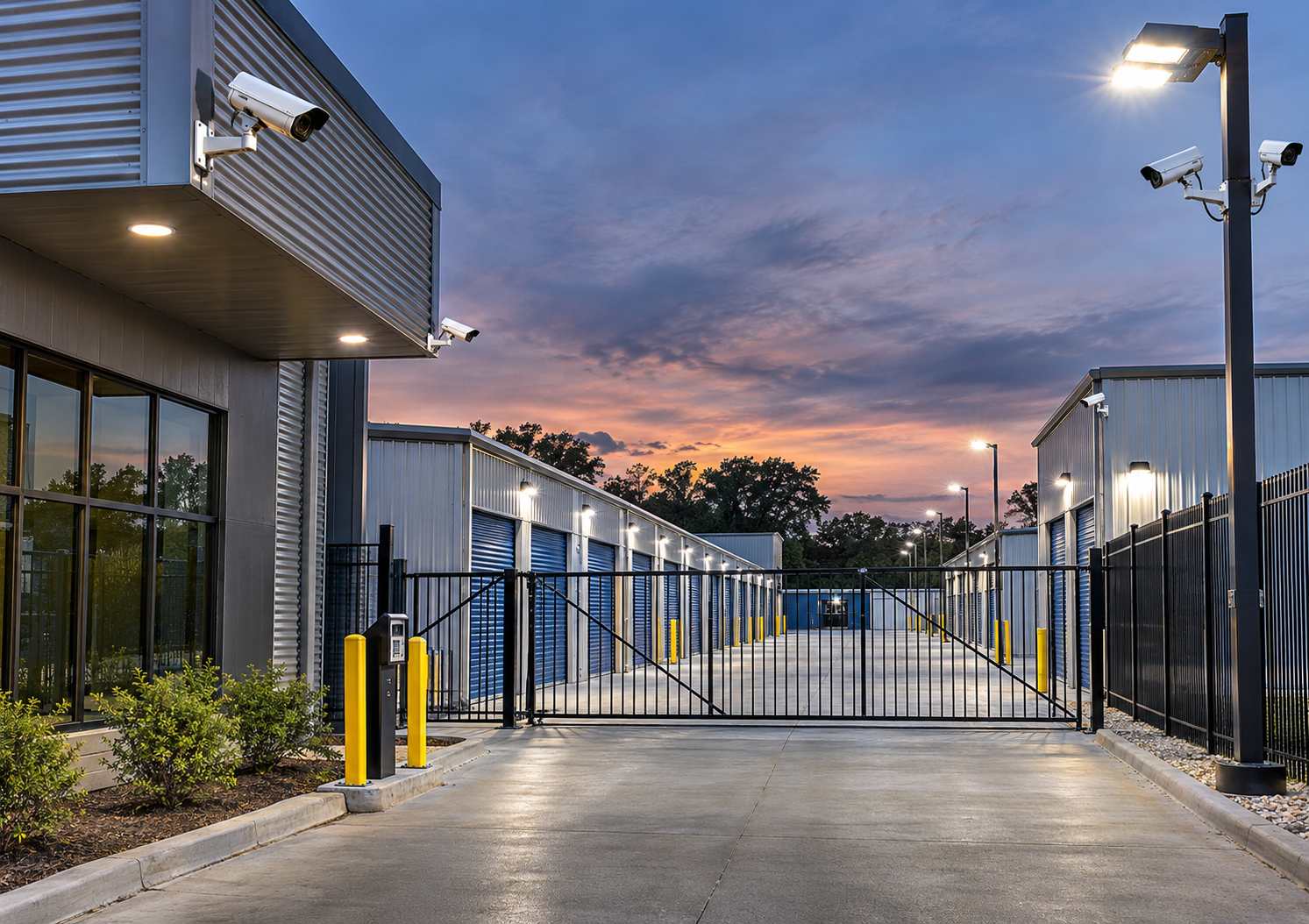
The gate is the facility’s evidence spine, and it carries two jobs people usually give one camera. First job, plate capture at the entry point, which means a camera aimed along the approach rather than across it, at an angle and height chosen for plates rather than for overview, with shutter behavior matched to headlights and nighttime approach lighting. Second job, identity at the office and the kiosk, the transaction point where faces meet paperwork. A wide-angle over the counter covers both badly. The plan splits them: one plate camera at the lane, one entry camera at the face angle, both time-locked to the access log so a gate event and a rental record share one clock. The gate also owns the facility’s clock problem, since gate events anchor every later timeline, and a drifting timestamp on the entry camera poisons the whole sequence.
Corridors Reward Facing the Walk
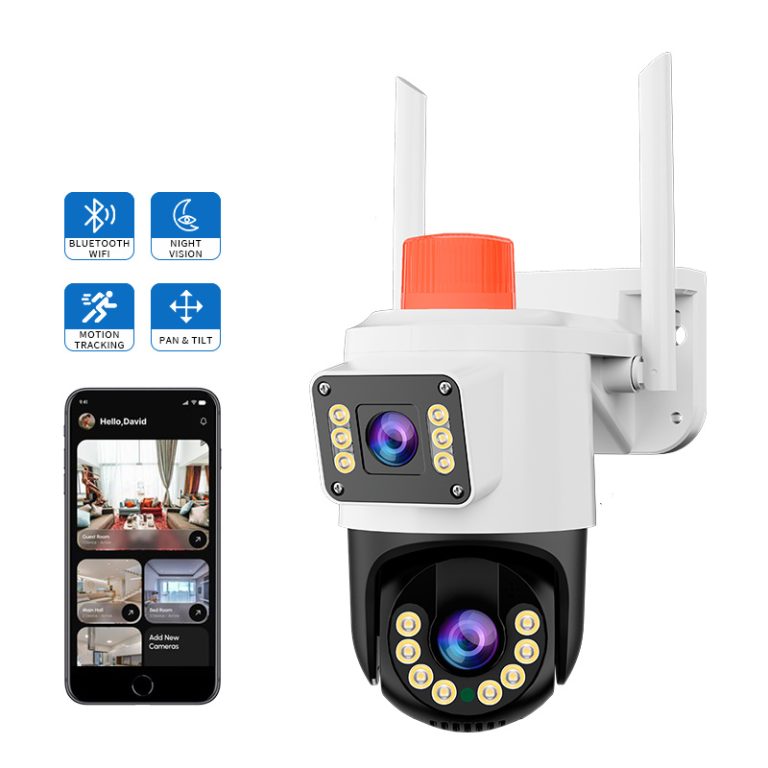
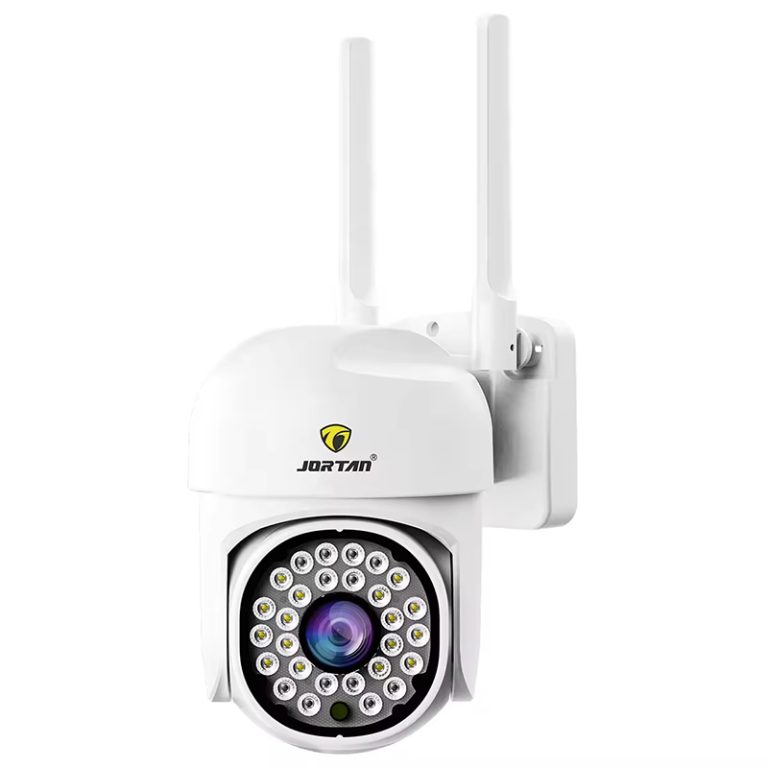
Corridors reward the boring choice. Long, narrow, repeatedly lit, corridor coverage is about identification walking toward the camera, which means fewer cameras, well placed, facing the traffic direction, at the resolution the corridor’s length actually supports rather than the number the datasheet advertises. The failure mode is a corridor camera mounted to watch the corridor’s length when the evidence question is one doorway along it, so faces pass sideways and small. The other corridor discipline is lighting honesty: LED tube lighting with flicker behavior some cameras render as bands, so the anti-flicker setting belongs in commissioning, per camera, not left at default. Night corridors with motion-activated lighting add a design question, whether cameras ride the lights’ schedule or hold their own night performance, and a full-color night camera with a light-warning response such as the JT-9689UQJ answers the quiet-hours question with one device rather than two.
Unit Rows are Won From the Ends
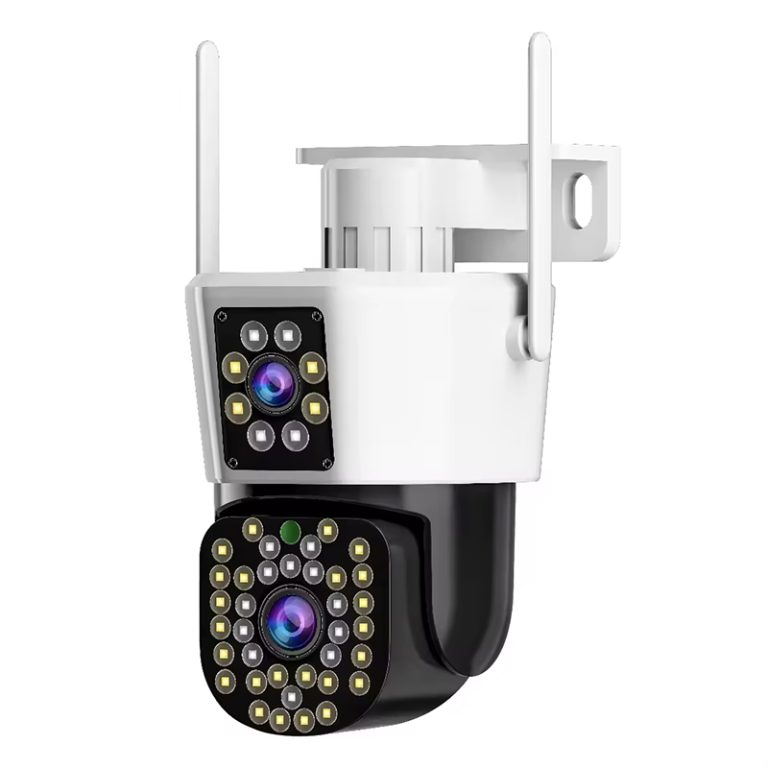
Unit rows are the cheapest zone to cover and the most expensive to get wrong, because the row is where losses physically happen and the row is long. Three rules travel well. End-of-row cameras look down the aisle at the door faces, which catches lock manipulation at the angle that shows hands rather than backs. Row intersections get a camera seeing both directions at the walk speed that leaves a usable face. Lighting per row beats resolution per camera, since an aisle that sits in shadow produces noise no sensor redeems, and IR bounce off the near shelving blinds a camera the buyer believes is working. The economics argue the same way a distributor already knows: one well-placed camera at a row end plus working light beats three dark-row cameras, and the evidence review after an incident is where that argument gets won or lost. Facility operators rolling out across sites standardize this into a pattern: gate set, corridor set, row-end set, counted per layout.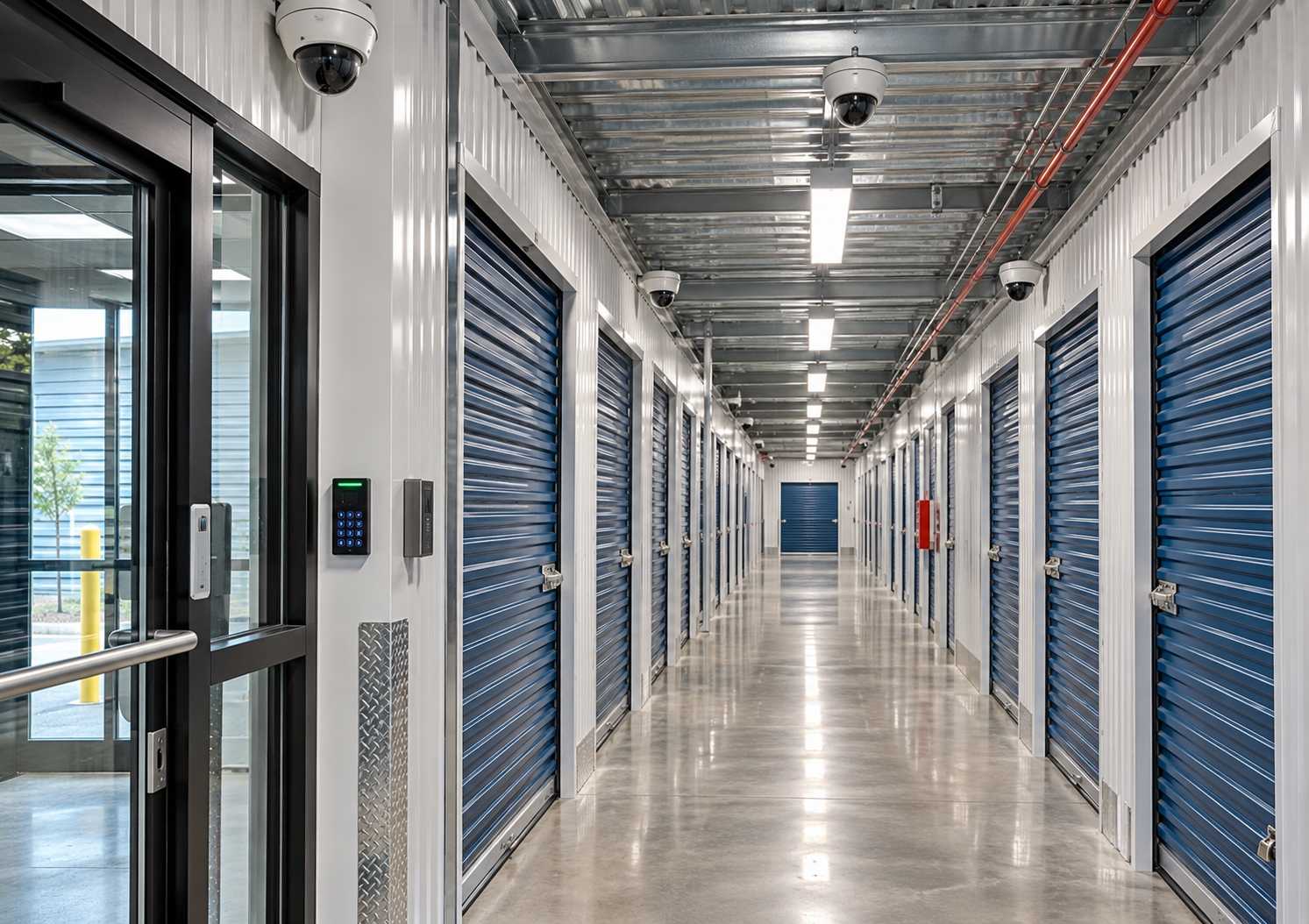
Retention, Clocks, and the Export Discipline
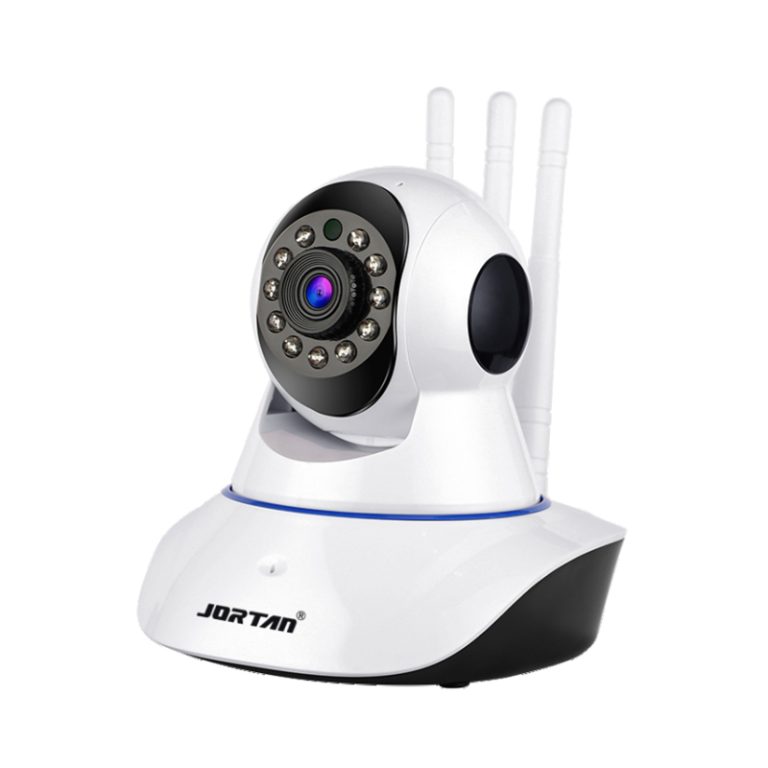
The layer above cameras is what makes the plan sellable to an insurer and usable in a dispute. Recording retention should reflect the facility’s actual dispute window, since a claim surfaces weeks out and a week of storage answers none of it, which pushes compressed recording modes and motion-only retention over continuous full-frame where budgets bind. Access control integration means the gate log, alarm events, and video share one timeline, so the review answers a question in minutes instead of an evening. And the retention of evidence itself, clips from incidents exported and stored outside the recorder, because the recorder’s loop will erase exactly the clip that becomes interesting in month three. Operators specifying across a portfolio standardize on the Jortan commercial range with a per-layout pattern sheet, requested as a coverage plan review on the first site, which turns every new site acquisition from a design project into an order.
Conclusion
Gate for plates and faces, split into two angles rather than one compromise. Corridors facing the walk, lights and flicker settings handled at commissioning, resolution matched to the length rather than the catalog. Rows covered from ends and intersections with the lighting budget spent before the resolution budget. Above all three, the recorder questions that decide whether the plan survives a real dispute: retention against the claim window, one clock across access and video, and incident clips that leave the system before the loop erases them. Self-storage plans get scored by one test, whether a review meeting can reconstruct an event from them, so the useful habit is designing backwards from that meeting.
FAQ
Q1: How many cameras does a self-storage facility need?
A1: Layout-driven rather than area-driven: gate and office angles first, corridor ends and office transactions, row-end and cross-aisle cameras per row. The count falls out of the layouts, and facilities sharing a layout standard share a pattern sheet instead of redesigning per site.
Q2: What resolution matters most in a storage facility?
A2: The gate plate lane and the row-end door faces, in that order. Corridor middles rarely face identification demands, and spending the budget where faces and plates actually appear beats uniform resolution across zones that never answer a question.
Q3: Should storage cameras run continuous recording?
A3: Continuous at the gate, since the lane never sleeps and events anchor everything. Motion-activated with sane pre-buffering serves corridors and rows well, buying longer retention on the same disk, and the retention length should be set against the facility’s dispute window rather than a default.