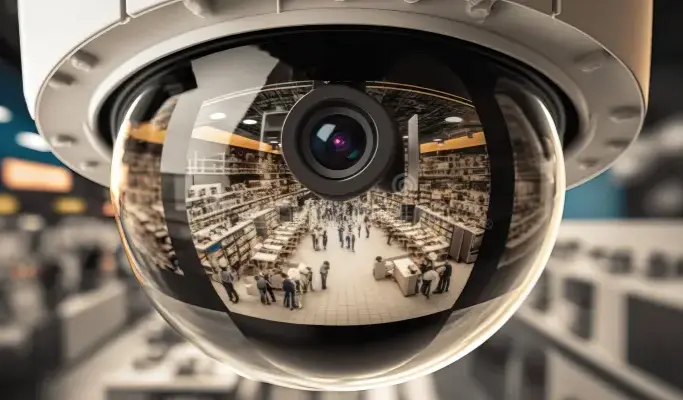
For B2B buyers, panoramic-style security cameras are not just a wider lens on the wall. The useful part is more direct. One device may cover more ground, leave fewer blind areas, and make the drawing of camera points less messy. This matters in warehouses, parking areas, store entrances, logistics yards, and open outdoor spaces.
The Growing Importance of Panoramic-Style Security Cameras in Modern Projects
Panoramic-style security cameras are increasingly drawing people’s attention because there exists a growing demand for wider coverage while the financial condition and installation room remain constrained. It happens frequently in practical projects.
Fixed-lens cameras can be applied to many locations like entrances, corridors, cashiers, gates, and narrow spots in general. However, they fail to provide adequate coverage when facing larger scopes. Some applications, including logistics centers, intersections in warehouses, university entrances, and parking areas, require a broader context than what a fixed view could provide.
Panoramic-style cameras help deal with those situations since their wider field of view allows the buyer to install fewer camera spots. Open spaces generally pose challenges in deploying poles yet need large-scale surveillance systems.
Moreover, along with the rapid advancement of AI technology, the surveillance cameras today come with advanced functions like human tracking, facial recognition, motion tracking, crying/sound detection, pet detection, and both audio and visual alarms. Although all these functions look appealing theoretically, they need practical testing from the perspective of B2B buyers. A warehouse uses the cameras differently from a retail business. A parking lot needs to use the cameras in a different way compared to the indoor hall.
Core Features That Define Panoramic-Style Security Cameras
The term “panoramic-style security cameras” can mean several things. Some models use a fisheye lens. Some use two or more lenses. Some work with PTZ movement. So buyers need to look at the real structure. Before ordering, check how the image is made.
Multi-Sensor Design in Real Projects
Many panoramic-style products use more than one sensor. Each lens covers part of the scene, then the camera or platform combines those views. This type can be useful in halls, shop floors, parking entrances, warehouse intersections, and open commercial spaces. A fisheye model is usually compact and neat. A multi-imager model may give better direction-based detail. A PTZ-panoramic hybrid can first show the full area and then zoom into a selected zone.
Advanced Imaging Capabilities for Complex Environments
Lighting is where many cameras start to show their limits. Building entrances and exits are the only access points to work and production areas. Due to the high contrast in lighting, ordinary cameras struggle to clearly capture facial details. Therefore, a high-definition infrared camera with wide dynamic range (WDR) is required.
For panoramic-style cameras, lighting is even more complicated. A wide scene may include a bright doorway, a dark corner, a window, and a shaded loading area in one frame. If the camera cannot balance these areas, the user may get a wide image but still miss the useful details.
System fit is another point. A model may look fine in its own app, but some project buyers need VMS connections. Some may need Onvif/GB28181. Some may need local storage, NVR, or platform viewing. These things should be checked before the order, not after the goods arrive.
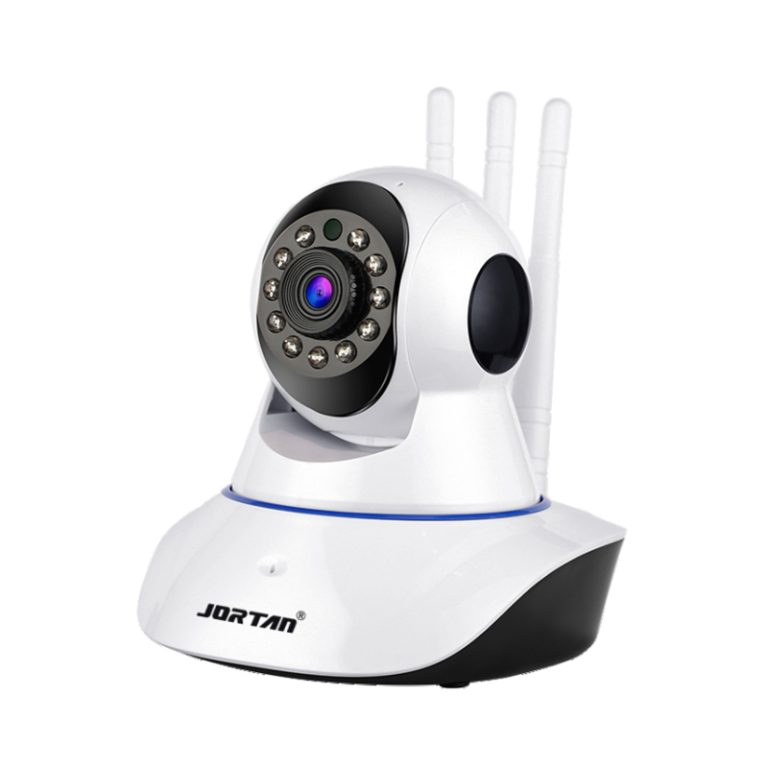
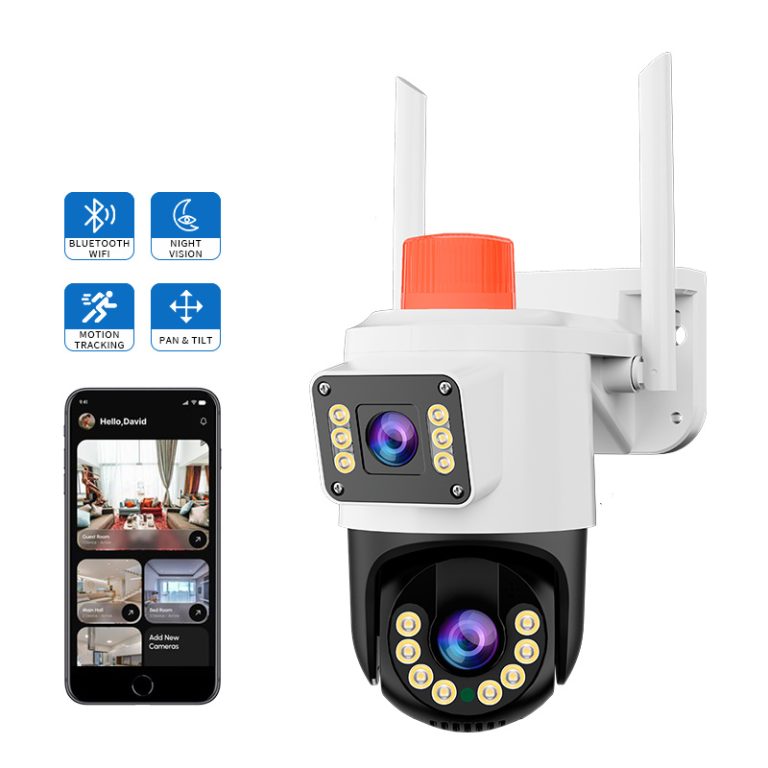
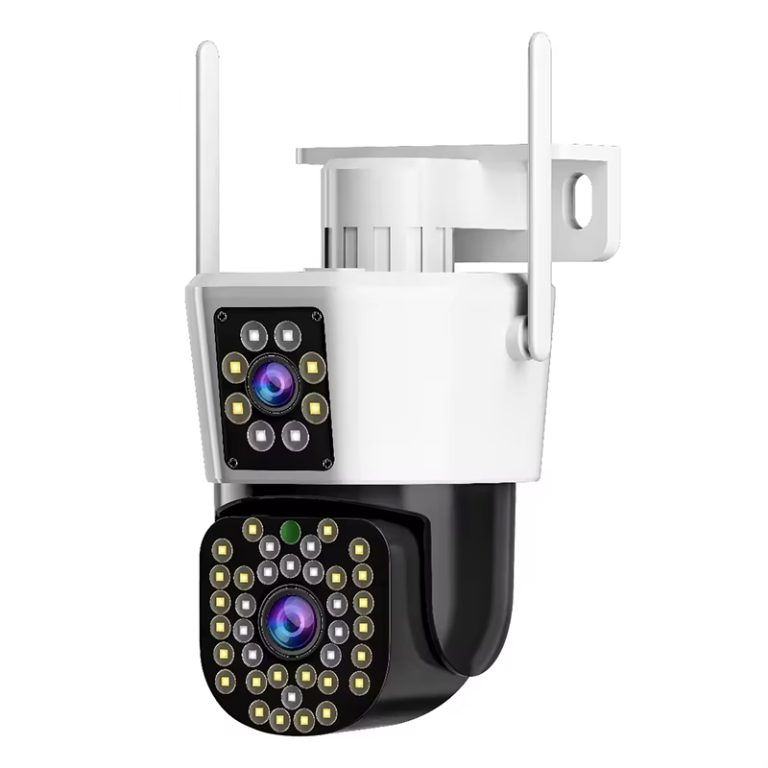
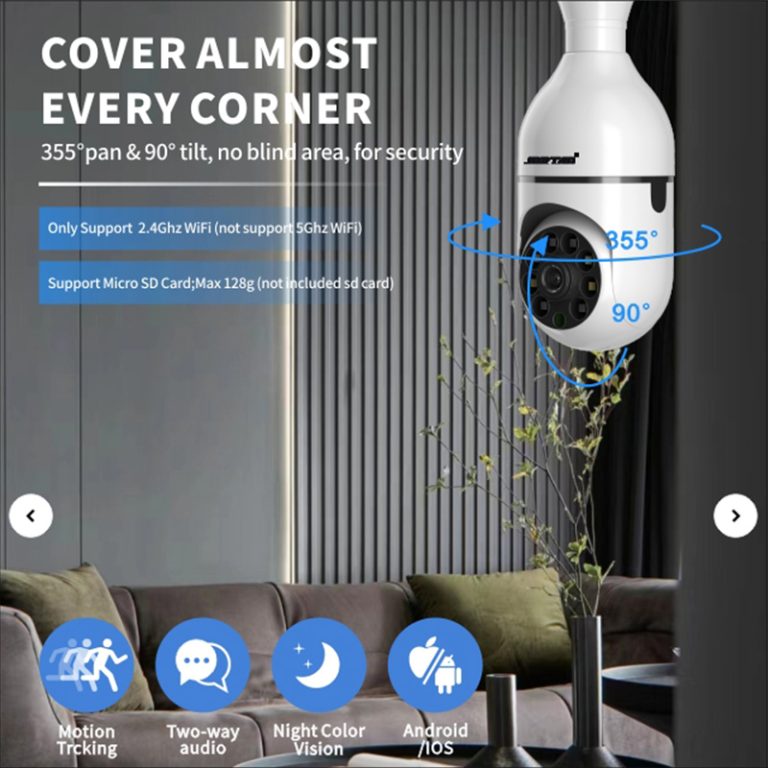
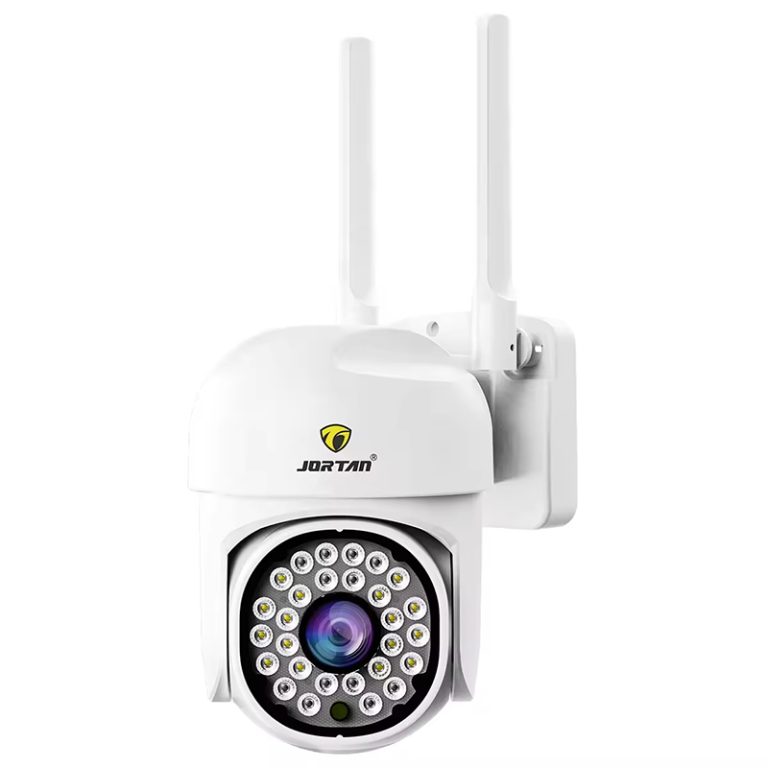
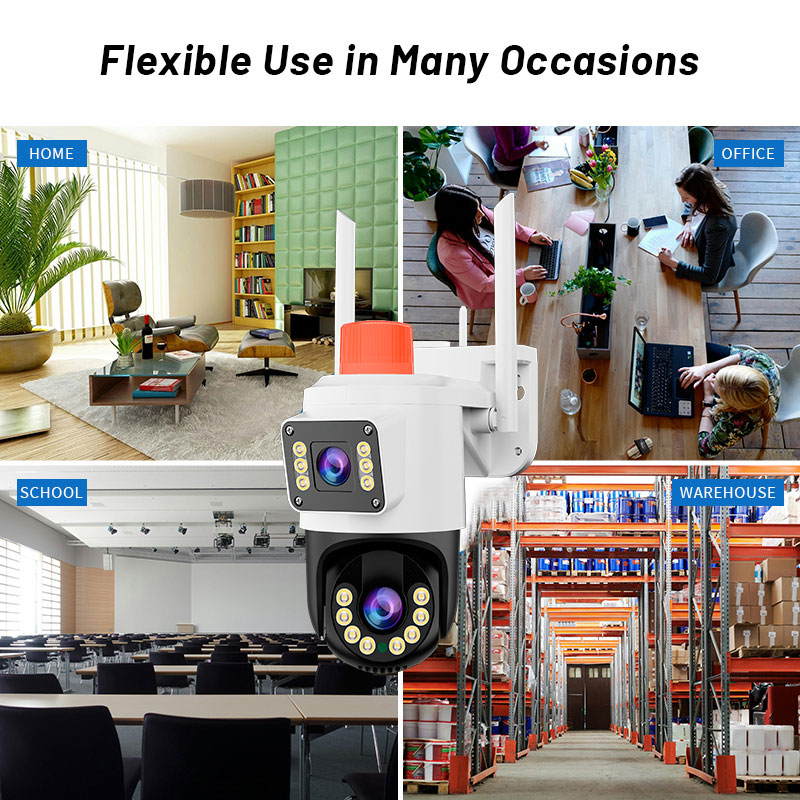
For panoramic-style security camera projects, Jortan offers several relevant models, including JT-8177, JT-8293QJ, JT-9697QJ, and JT-9687PRO. These products include features such as 360-degree coverage, dual-lens design, auto-tracking, wide-angle viewing, night vision, motion detection, and two-way audio. Buyers can review these models when sourcing cameras for warehouses, parking areas, shop entrances, and other wide-area monitoring projects.
Advantages of Panoramic Cameras in Large-Area Surveillance Projects
Enhanced Coverage with Fewer Devices
A single panoramic camera can sometimes replace several fixed-lens cameras. Not everywhere, but in selected areas. A doorway still needs a focused view. A license plate point also needs a more specific camera. But in a lobby, a parking area, a warehouse crossing, or an open yard, a wider view can reduce blind areas.
The panoramic picture has 360-degree full coverage, with no blind spots in monitoring, and the close-up picture provides details. This kind of setup is helpful when the buyer wants both a general scene and enough detail for review. If you are looking for such a product, you might as well take a look at the series of products of Jortan.
Improved Situational Awareness and Incident Response
A wider view gives users more context. In a narrow camera view, a person may enter the screen and disappear quickly. With a panoramic-style camera, the path can be seen for longer. This is useful in parking lots, store entrances, open halls, and logistics yards.
Support intelligent motion tracking. This function can help the user follow movement in a wider scene. But again, testing is necessary. Motion tracking should be checked with people walking, vehicles passing, shadows moving, and lights changing at night. If the tracking is unstable, it can create more work for the user instead of less.
Applications Driving Adoption Toward 2026 Projects
Smart Cities and Public Infrastructure Monitoring
Panoramic-style security cameras are often used in transportation hubs, plazas, parks, and open public areas. These places need broad visibility, but adding too many devices may make installation and maintenance more difficult.
The fusion of panoramic video of the real scene has applications in cases where there are requirements for wide views and local pictures of the area. For instance, a panoramic camera located on a higher point could give us an overview, whereas another camera placed at a lower height captures the local pictures from locations like gates, roads, and other important spots within the premises.
Commercial and Industrial Environments
In logistics centers, factories, and warehouse sites, panoramic-style cameras can be used near entry gates, storage areas, loading docks, and shared working zones. Entrances and exits are crucial areas for security throughout the entire building campus. Monitoring points are required at each entrance, ensuring clear visibility of the license plates and faces of vehicles entering and exiting.
Retail complexes can also use wide-view cameras in shared areas, store entrances, and aisles where one camera needs to cover more space.
Procurement Advice for B2B Buyers in 2026
A panoramic-style security camera should be selected from the site plan first. Indoor and outdoor projects are different. A ceiling-mounted fisheye camera may work well in a store. It may not suit an outdoor gate. A multi-lens model may fit a warehouse yard, but it may be too much for a small shop.
Combining panoramic-style cameras with PTZ, bullet, or dome cameras is often more practical. The panoramic unit gives the wide scene. A bullet or PTZ camera can handle key detail points. This mixed layout is easier to explain to project customers because each camera has a clear job.
Buyers should also ask about MOQ, lead time, customization scope, packaging, firmware version, and after-sales support. For brand owners, OEM/ODM support may include housing color, logo, app display, packaging design, and user manual language.
Approved samples should be kept. This helps with later reorders. Compare the new batch with the approved sample, including image color, housing finish, lens angle, firmware, accessories, and label position.
FAQ
Q1: What should procurement teams prioritize when selecting panoramic-style security cameras?
A1: Start with the site. Check viewing angle, image distortion, WDR effect, low-light image, mounting height, storage method, and VMS fit. If the buyer needs private branding, also ask about OEM/ODM customization.
Q2: How do panoramic IP cameras improve cost efficiency compared with traditional setups?
A2: A panoramic IP camera may cover a wider area than one fixed-lens camera, so some projects need fewer camera points. This can reduce cables, brackets, installation time, and later maintenance. The unit price may be higher, but the total project cost can still be reasonable.
Q3: Can these systems integrate with existing smart city infrastructure?
A3: Yes, many panoramic-style systems support open protocols like Onvif or GB/T28181 standards. Before procurement, buyers should confirm 360° visibility, AI-driven analytics support, bandwidth needs, storage method, and platform compatibility.