
AI security cameras are entering more everyday B2B buying talks in 2026. For many distributors this shift does not come from advanced technology by itself. It comes instead from customer questions about false alarms, night performance, wider site coverage, and quicker response. Warehouses, shops, parking areas, farms, and outdoor projects now seek more practical camera functions. Because of this, AI features are becoming part of how buyers compare product lines and suppliers.
Emerging Trends in AI Security Cameras for 2026
The AI security camera market keeps evolving quickly. Innovations in analytics, processing, and connectivity drive this change. Distributors who prepare for bulk orders in 2026 must grasp how these shifts affect product choices and deployment plans.
Advancements in AI Video Analytics
AI video analytics now go past basic motion detection. They move toward better object and behavior recognition. Companies use large AI models to identify all kinds of objects and read alarm image content. These models spot targets such as drones, birds, animals, balloons, and kites. They also filter out false alarms from civil aircraft, clouds, and sunlight. This raises accuracy in complex settings.
Deep learning models support adaptive surveillance that improves through ongoing training. The models cut high-gain noise and raise the signal-to-noise ratio by 6–12 dB. They fix issues like smeared license plates and blurred faces at night. Real-time analytics boost situational awareness by spotting unusual actions such as loitering or intrusion within seconds.
The Shift Toward Edge AI Processing
Edge AI changes surveillance setups by moving computation closer to the data source. This cuts latency and lowers reliance on cloud systems while raising resilience. Local processing also supports privacy rules because sensitive footage stays on the device for analysis.
The camera spots abnormal behavior like climbing or gathering, starts a voice warning, and links to the access control lock. Response time drops to within 8 seconds. For distributors who handle large projects, edge-ready devices make scaling easier across spread-out networks.
Integration with Smart Ecosystems
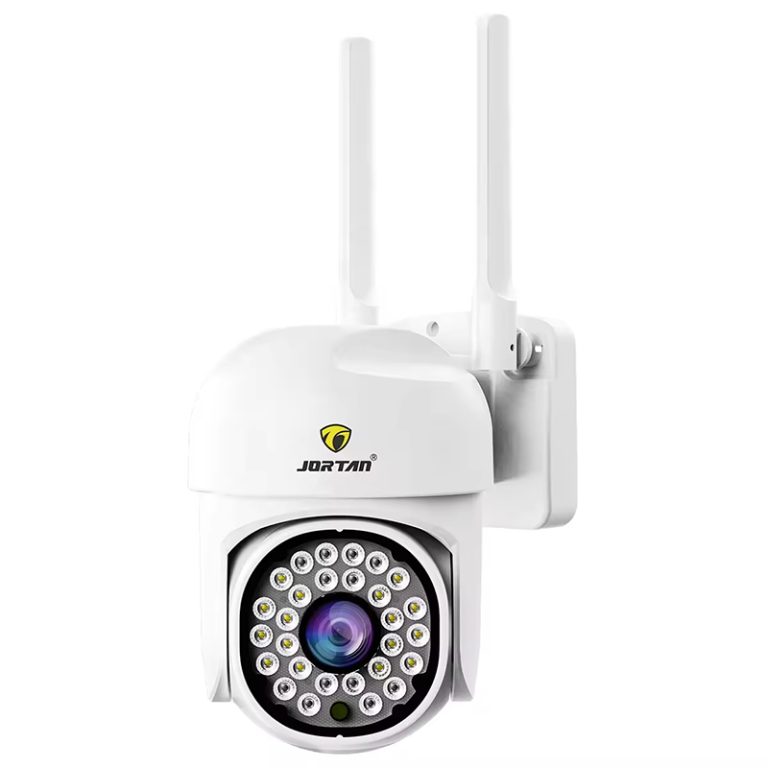
AI security cameras now link into wider IoT systems. They work with smart home devices, building management platforms, and access control tools. This creates unified monitoring setups. Users can download an app and check their sites or homes from any location. Demand for open APIs grows because integrators want easy links between different brands. Product like Jortan’s JT-9999 Pro use a dual-core DSP design and offer several interfaces for smooth network growth.
Key Technical Features Distributors Should Evaluate
Choosing an AI security camera for bulk orders should not start from a long feature list. For distributors, the safer way is to look at what can really be tested before shipment.
Image Quality and Sensor Technology
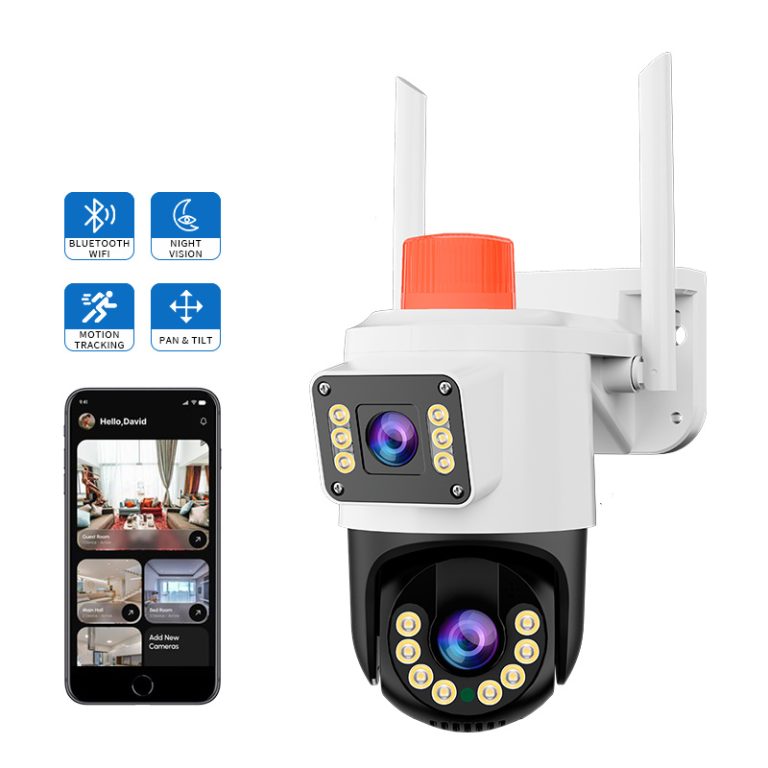
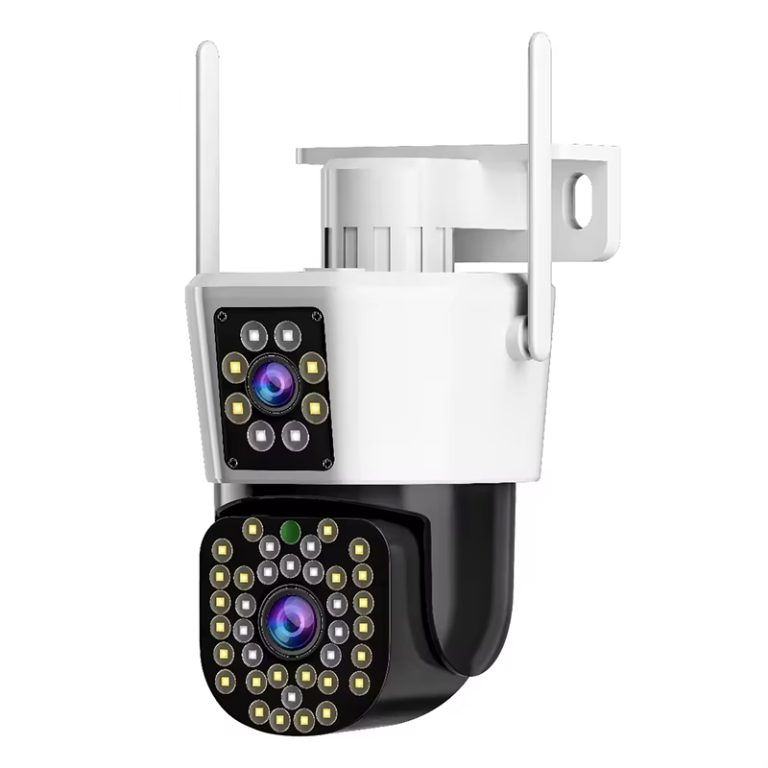
Image quality needs to be checked together with the sensor, lens, resolution, and low-light performance. For example, some Jortan dual-lens models use two 2MP 1/2.8-inch CMOS sensors. Their listed low-light parameters include 0.01 lux in color mode and 0.001 lux in black-and-white mode, both with AGC on and 0 lux with IR.
Lens choice also affects the final result. A wider view can cover more space, but the edge of the image may not always stay clear. A tighter lens may show more detail at one point, but it covers less area. Distributors should also check infrared night vision, starlight full color, dual-light warning, and the actual image at night.
AI Detection and Tracking Performance

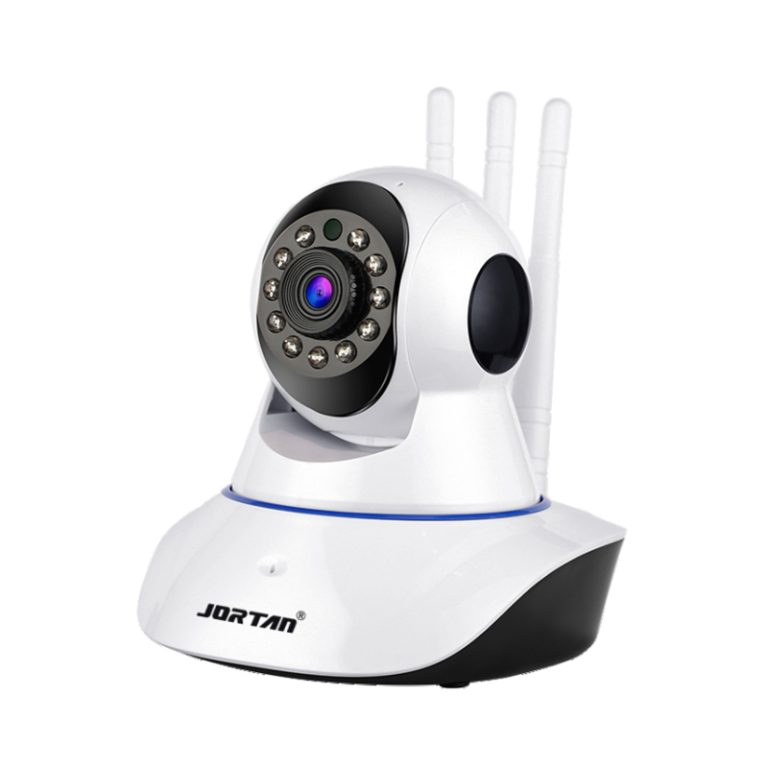
For AI functions, buyers should focus on what the camera can actually detect and track. Jortan products have functions such as human shape detection, human shape tracking, human motion tracking, motion detection, face detection, sound detection, abnormal sound detection, and AI auto tracking on selected models. These functions are useful for warehouses, shops, parking areas, construction sites, and outdoor projects. Still, they should be tested carefully before a bulk order.
Connectivity and Storage Options
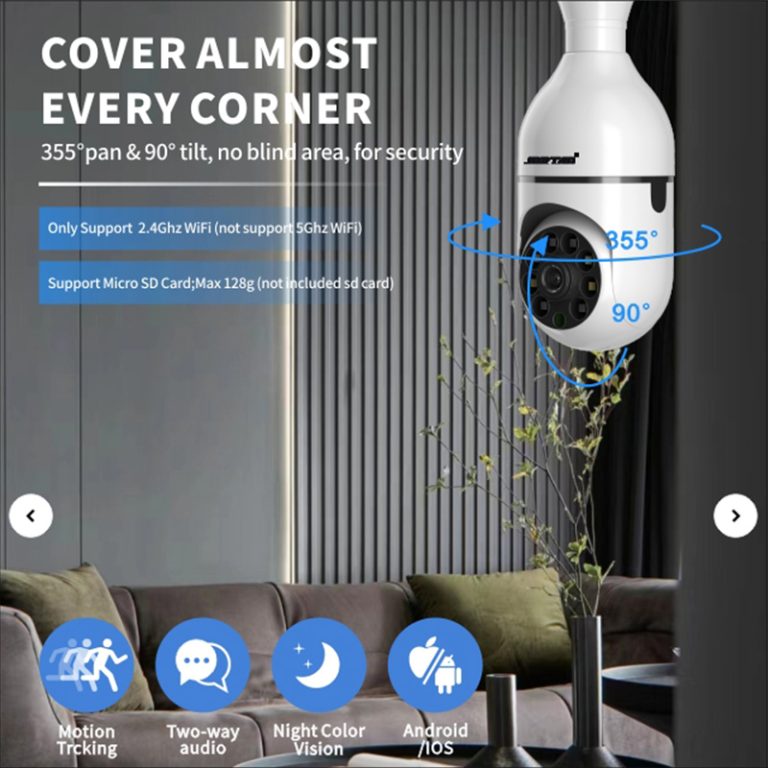
Connectivity should match the project environment. Some models have 2.4G WiFi, an RJ45 network port, a 10M/100M adaptive Ethernet port, and ONVIF support. These options are useful because not every buyer uses the same setup. A small shop may only need WiFi. A warehouse project may ask for a wired network or NVR connection.
Storage also needs to be confirmed by model. Some models support cloud storage, NVR, Micro SD card, memory card, or local TF card up to 256 GB. Before placing orders, distributors should confirm the exact APP, network mode, storage method, and protocol support. This is especially important when the same product line will be sold to different users, including shops, warehouses, outdoor yards, and project installers.
Security and Compliance Considerations in 2026 Deployments
As AI cameras grow more independent, cybersecurity must keep pace to guard both systems and user privacy.
Cybersecurity Safeguards in AI Cameras
Current devices add layers of protection such as encrypted boot and firmware checks. Regular OTA updates fix problems fast. Distributors should confirm vendors share clear details on update schedules before large orders.
Data Privacy Regulations Affecting Surveillance Systems
Rules like GDPR and CCPA demand careful handling of personal footage. On-device anonymization helps protect identities during recording or remote viewing. Retention and third-party access policies must match local laws to limit risk in cross-border work.
Strategic Priorities for Distributors in the AI Security Camera Market
To stay competitive amid fast changes, distributors must focus on vendor reliability, technical skill, and stock flexibility.
Supplier reliability is especially important. Distributors should choose factories that can provide firmware updates, APP support, spare parts, and consistent product versions for repeat orders. This helps reduce after-sales pressure when cameras are sold to warehouses, shops, parking areas, and outdoor project customers.
Sales teams also need to explain AI functions in simple business terms. Instead of only listing features, they should connect them with real value, such as fewer false alerts, faster event response, easier project use, and lower maintenance pressure.
Stock planning needs good forecasts because AI camera models advance quickly with new algorithms. Keeping a mix of proven units such as JT-9690 Pro and newer releases lowers the risk of outdated inventory while staying ready for future bids.
For distributors looking for a supplier that can support both AI security camera features and long-term product planning, Jortan is a practical option to review. Its product range covers AI tracking cameras, human detection models, night vision cameras, solar cameras, and outdoor WiFi security cameras, while its OEM/ODM service can support logo, packaging, App, and appearance customization. This helps distributors build a more flexible product line instead of relying on only one standard camera model.
FAQ
Q1: Are these cameras suitable for both indoor and outdoor deployments?
A1: Yes. Models with wide dynamic range and dual-light fusion keep clear images in varied lighting. IP-rated housings add outdoor durability.
Q2: Can distributors request customized features?
A2: Many suppliers allow changes such as lens setups or algorithm adjustments for specific projects. Jortan’s flexible OEM program supports tailored AI security camera solutions that match client needs.
Q3: How does after-sales support work for large-scale installations?
A3: Dependable vendors supply direct technical help and regular OTA updates. Working with Jortan delivers ongoing firmware improvements and professional maintenance across the product life.