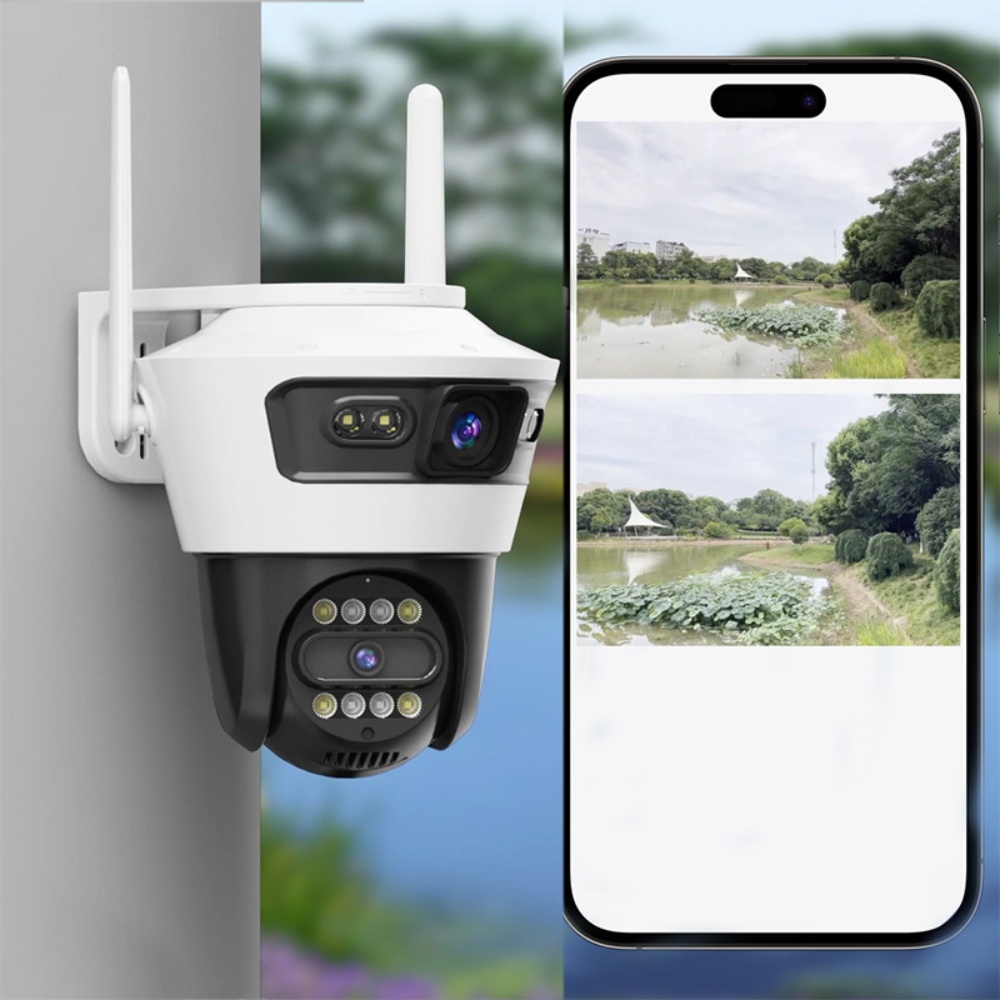
PTZ WiFi cameras have shifted from simple remote-controlled lenses into integrated sensing platforms that combine mechanical motion, intelligent detection, adaptive imaging, and flexible networking. Selecting the right model today requires evaluating how these layers cooperate under real operating conditions rather than comparing specifications in isolation.
Why does PTZ architecture matter in modern WiFi surveillance?
A PTZ camera is not only an optical system but also a mechanical system. Its structure for rotation defines the reliability of the camera’s ability to reposition itself with continuous use, its response time to a command for tracking, and the stability of the image while rotated.
How does pan-tilt rotation affect coverage efficiency?
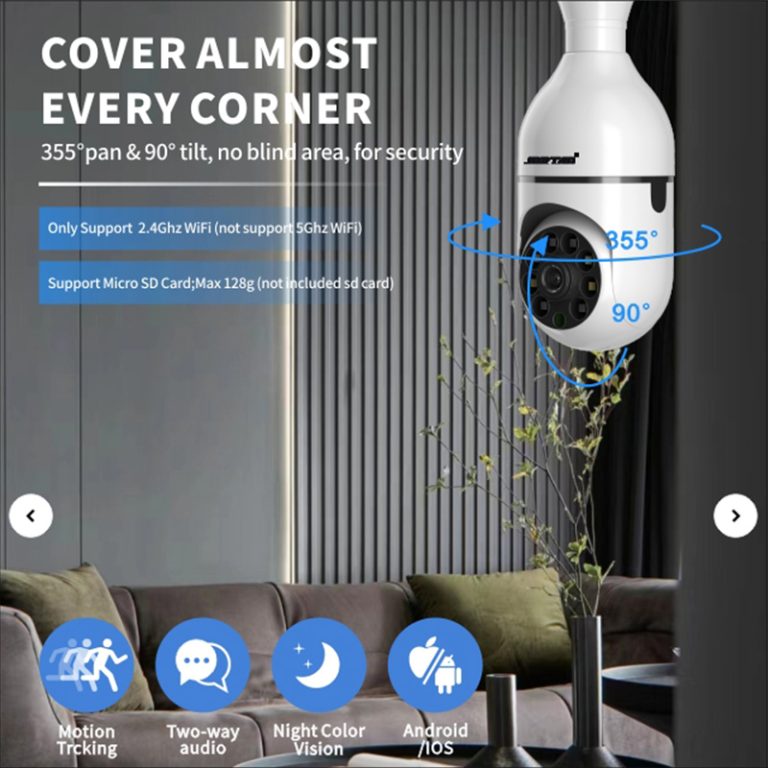
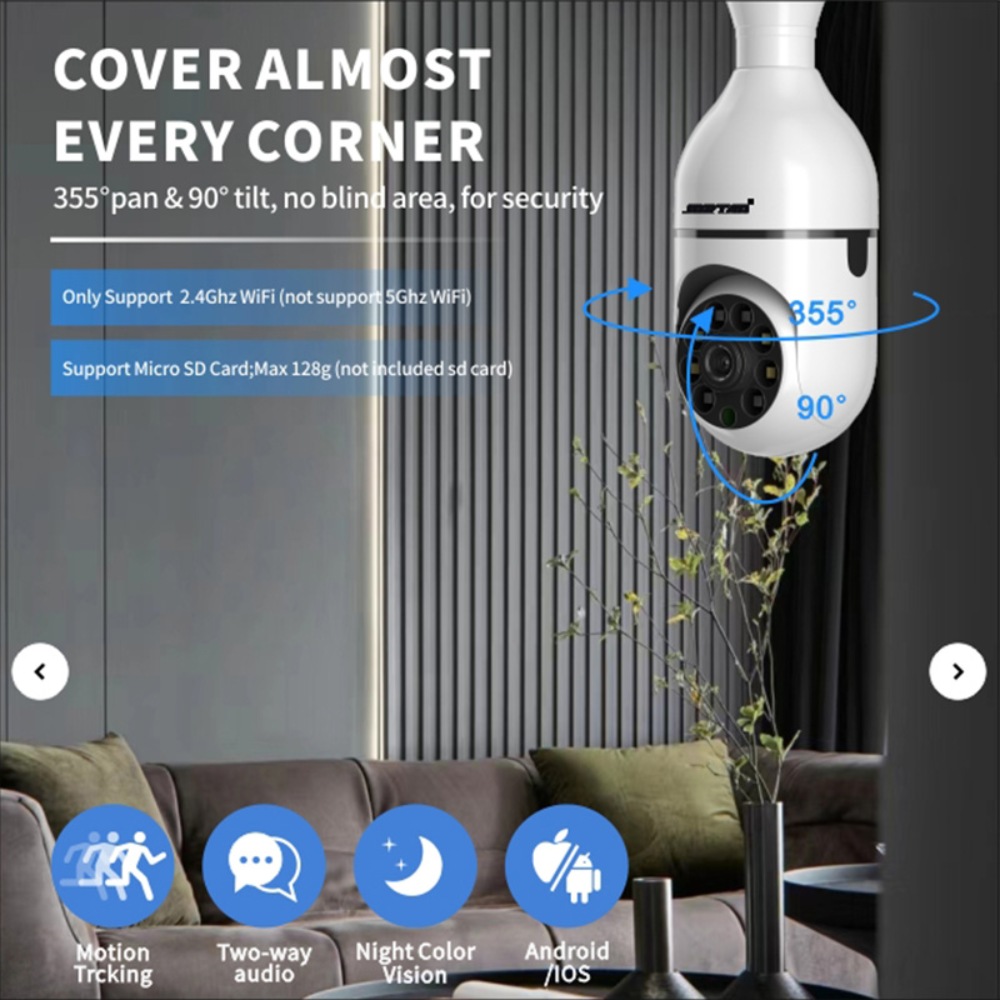
The majority of contemporary PTZ WiFi cameras allow a range of approximately 355° horizontally and 90° vertically. This configuration enables a single device to cover the position of several static cameras of fixed angles in a medium-scale area without creating blind spots or increasing the device density.
Mechanical precision is another factor that affects the device’s repeatability. When the camera is moved to a preset position, a lack of precision can lead to drift over time.
When does optical movement outperform fixed wide-angle design?
However, the disadvantage of wide-angle lenses is that the target is compressed, and it is difficult to identify the facial or behavioral characteristics of the target. In places where the distance is not fixed, such as courtyards, parking lots, sections of the warehouse, or retail sections, pan-tilt with moderate zoom capabilities will provide spatial resolution while maintaining awareness, although fixed lens systems will rarely do this.
What image performance parameters actually influence real monitoring results?
Resolution numbers attract attention, but practical performance depends on sensor sensitivity, night-mode design, and encoding efficiency.
Why is full-color night vision more than a marketing feature?
Many modern PTZ WiFi cameras employ multi-mode night systems, including infrared black-and-white, continuous white-light color, and intelligent hybrid switching that activates color only when motion occurs. This design minimizes light pollution while retaining evidence quality when human presence is detected. Jortan’s dome and PTZ series show structured three-mode night operation and integrated white-light/infrared arrays, achieving usable color footage at distances around 50 meters in suitable environments.
How do noise reduction and encoding impact clarity over bandwidth?
Advanced encoding techniques, similar to the H.265 standard, can reduce storage and bandwidth usage by about 50% while reducing motion noise and block artifacts when operating in low-light conditions. The newer PTZ cameras have 2D/3D noise reduction and adaptive bit rate control, allowing for smoother video in poor WiFi conditions and extending the life of the SD card.
How should motion detection be evaluated in PTZ WiFi cameras?
Detection quality determines whether alerts assist operations or create fatigue.
Why does human-shaped filtering reduce operational noise?
AI-based human-shape detection modules filter shadows, insects, headlights, and rain. The human-figure models of some cameras prioritize silhouette and movement continuity, significantly lowering false alerts in outdoor deployments.
What happens when detection logic is combined with PTZ tracking?
When detection triggers mechanical tracking, the camera preserves event continuity. Instead of isolated snapshots, operators receive a motion narrative, including entry point, path, dwell area, and exit route, contributing to improving post-event review and shortening response time.
What storage architecture best balances reliability and accessibility?
Recording systems should assume both connectivity failure and physical damage.
How do local TF cards and cloud storage complement each other?
Most modern PTZ WiFi systems support Micro-SD cards from 8 GB to 128 GB with cyclic overwrite plus optional cloud storage. They have predictable retention ranges from about 36 hours at 8 GB to more than 20 days at 128 GB, while cloud services provide off-device redundancy and remote retrieval.
Why does storage duration scale matter in commercial deployments?
Retention determines investigative depth. Warehouses, retail spaces, and logistics yards often require multi-day history to identify theft patterns or liability incidents. Systems that compress efficiently and manage overwrites automatically reduce manual intervention and storage maintenance risk.
Where does connectivity flexibility become critical in field deployment?
Real sites rarely match network assumptions.
How does built-in hotspot mode support offline environments?
Many Jortan PTZ WiFi cameras include an internal AP hotspot. Even without routers or external internet, a technician can connect directly to the device within a short range for live viewing and configuration. This feature is especially useful during initial installation, remote construction sites, or emergency network outages.
Why does simple onboarding affect long-term system usability?
Three-step activation flows—power, app installation, pairing—lower configuration error rates in multi-camera projects. Reduced setup friction also shortens training cycles for staff turnover scenarios.
Which real products illustrate strong PTZ WiFi architecture in practice?
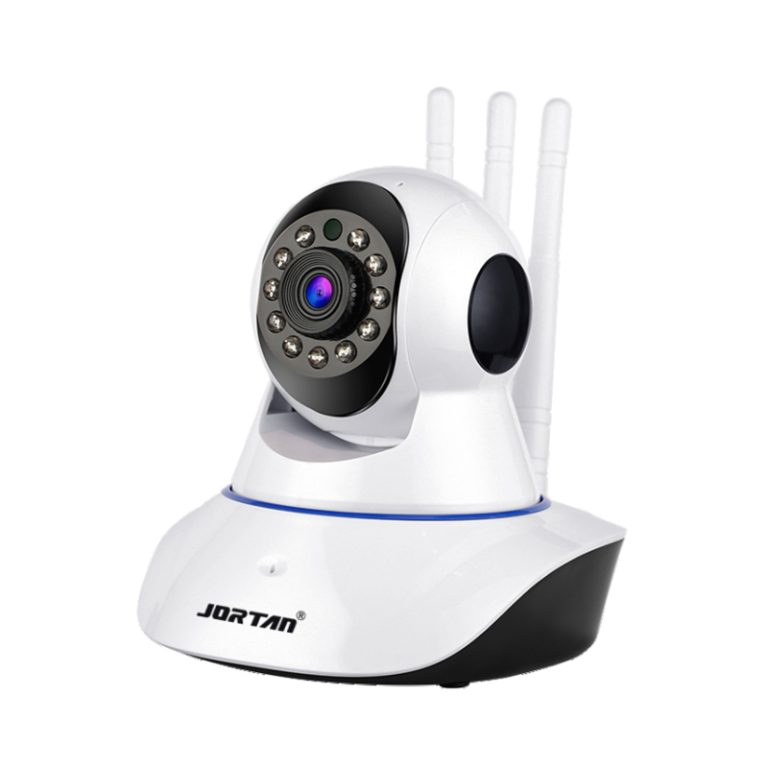
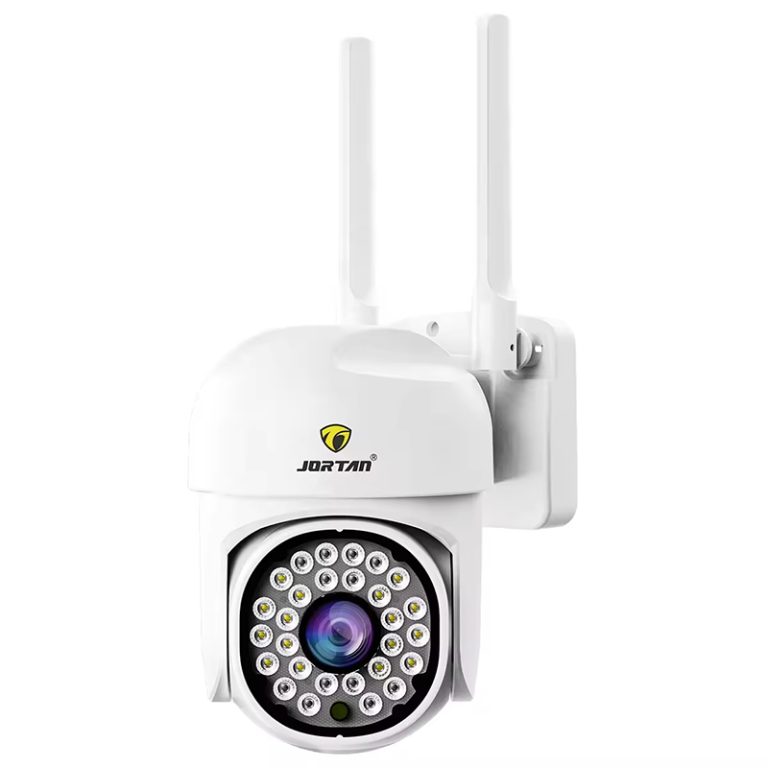
The JT-8177 PTZ WiFi IP camera reflects a mature mid-range PTZ WiFi design philosophy, including IP66 enclosure protection, 355° horizontal and 90° vertical rotation, integrated human-shape detection, multi-mode full-color night vision, two-way audio, built-in hotspot connectivity, and dual local/cloud storage support.
The platform does not focus on extreme resolution, but rather on mechanical reliability, detection accuracy, and storage integrity, which are unaffected across residential courtyards, storefronts, and entrance points.
Where does product architecture evolve beyond single-lens PTZ logic?
Large or complex spaces often exceed what one optical channel can interpret efficiently.
How does dual-channel monitoring improve spatial awareness?
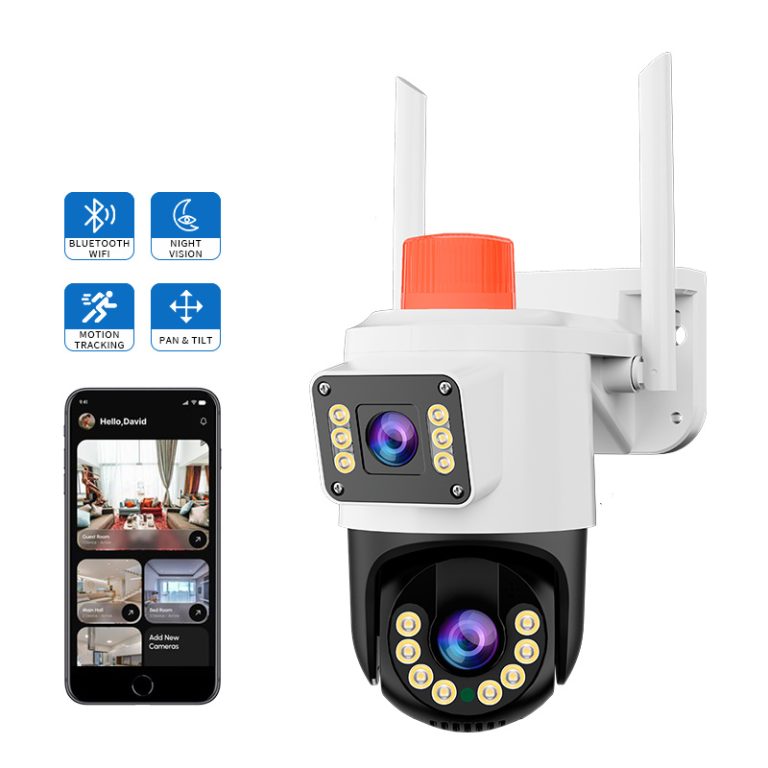
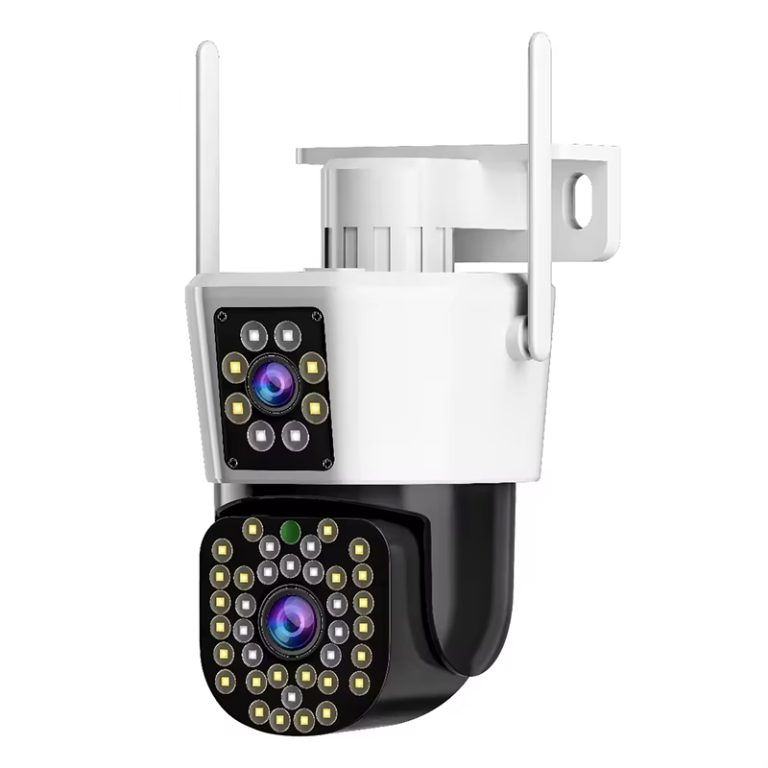
Dual-lens and multi-sensor architectures divide tasks: one channel preserves panoramic context, and another executes PTZ tracking. This structure prevents target loss during fast motion and supports simultaneous area supervision and detail capture.
Why does this matter for complex scenes such as warehouses or courtyards?
Warehouses and yards present intersecting motion paths. Multi-channel PTZ platforms allow operators to verify background activity while the tracking lens isolates primary subjects, reducing situational ambiguity.
How does a mature engineering system translate into long-term reliability?
Hardware quality reflects organizational discipline. Zhejiang Jortan Electronic Technology Co., Ltd. operates from Yiwu with integrated production, design, and quality control facilities over 30,000 square meters, combining in-house technical teams with standardized manufacturing processes and international compliance testing.
Our PTZ WiFi product lines consistently apply IP-grade enclosures, structured night-vision lighting arrays, adaptive encoding pipelines, and standardized detection modules rather than experimental one-off designs. This uniform architecture simplifies maintenance, firmware support, and large-scale deployment planning.
Which model demonstrates higher-end architectural scalability?
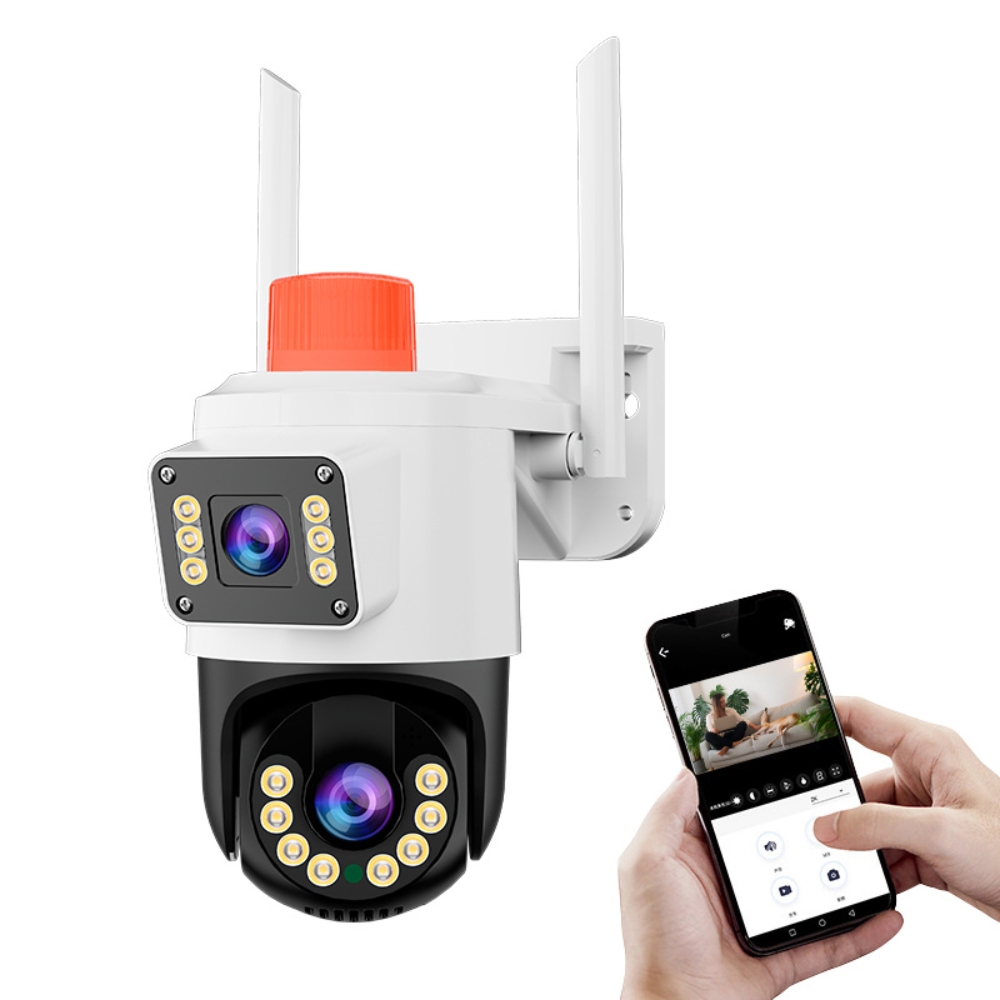
As scene complexity rises, mechanical precision and multi-channel processing become decisive. The JT-9689UQJ PTZ WiFi camera emphasizes extended spatial coverage, stronger tracking persistence, and multi-lens coordination. It is suited to logistics parks, open courtyards, and large commercial perimeters where long-range identification and simultaneous area awareness are required.
How should final selection align with real project conditions?
Choosing a PTZ WiFi camera is ultimately contextual.
Which environments require higher weather resistance?
Outdoor installations must withstand rain, dust, and temperature changes, and therefore, IP66-rated enclosures and mounting hardware with corrosion resistance are required to maintain mechanical stability and electrical insulation integrity after many years.
When should tracking capability outweigh raw resolution?
When the operational value is based on the interpretation of movements, such as intrusion routes, loitering behavior, or asset approaches, the importance of tracking capabilities and alert reliability is higher than the pixel count.
FAQs
Q: Is it better to have a higher megapixel for a PTZ WiFi camera?
A: No. The sensitivity of the sensor, the approach to night vision, the efficiency of the codec, and the stability of the tracking mechanism may be more important than the megapixel rating.
Q: Can PTZ WiFi cameras operate reliably without continuous internet access?
A: Yes. Devices with built-in hotspot modes and local SD recording remain operational during network outages, while cloud storage adds redundancy when connectivity returns.
Q: What is the most common mistake in PTZ WiFi camera selection?
A: Prioritizing headline specifications while neglecting mechanical durability, detection accuracy, and storage architecture, which ultimately determine long-term system reliability.