
In real surveillance projects, the debate between HD cameras and IP cameras is not a marketing issue but a system-architecture decision that affects signal stability, deployment cost, scalability, image usability, and long-term maintenance. If you design solutions for campuses, factories, logistics parks, commercial buildings, or distributed sites, you must know that image clarity alone does not guarantee reliable evidence or operational efficiency. Transmission logic, encoding methods, network behavior, storage pathways, and failure tolerance often decide whether a system performs consistently after installation.
This article examines the structural differences between HD cameras and IP cameras from a practical engineering viewpoint. You will know how each architecture behaves under load, where risks typically appear in real deployments, and how to select the right technology for different environments rather than relying on product labels.
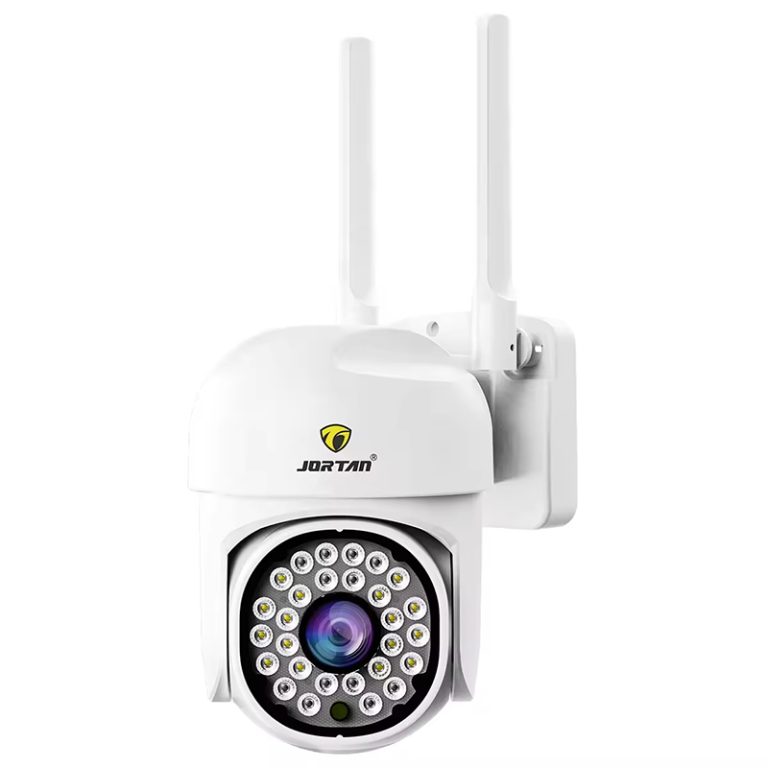
As you evaluate these differences, it also becomes clear why Jortan has positioned its IP camera designs around stability, adaptability, and field reliability instead of marketing-driven features. Our product philosophy prioritizes predictable behavior in unstable networks, low-light environments, remote locations, and multi-user access conditions. Rather than assuming ideal infrastructure, many of our designs are built to operate when bandwidth fluctuates, power conditions are imperfect, or connectivity is intermittent. The result under this product philosophy is equipment that integrates smoothly into real deployment constraints instead of forcing the environment to adapt to the device.
What fundamentally separates HD cameras from IP cameras at the signal architecture level?
The difference between these two types of security cameras begins long before image quality. HD cameras, especially traditional HD analog types, usually rely on point-to-point signal transmission through coaxial or similar physical media. The video signal follows a fixed path, and the system behaves as a closed circuit. This architecture can feel predictable, but it becomes rigid as the system grows.
IP cameras operate as network endpoints. Each device becomes an addressable node that encodes, compresses, and transmits data using network protocols. That structural shift changes everything about scalability, redundancy, monitoring flexibility, and system management.
How analog-style HD transmission limits flexibility in distributed or expanding systems
HD camera systems typically assume stable cabling paths, limited transmission distance, and fixed topologies. Once installed, expansion often requires additional cabling, additional recording hardware, and manual configuration across multiple devices. In large campuses or multi-building environments, it quickly becomes a constraint rather than a strength.
How IP architecture transforms cameras into networked data sources rather than isolated endpoints
With IP cameras, each device behaves like a managed network asset. You can route data through switches, segment networks logically, apply bandwidth control, introduce redundancy, and integrate with other systems, which allows you to scale from ten devices to thousands without redesigning the entire topology.
Why does image quality alone fail to explain real performance differences?
Marketing often reduces the discussion to resolution numbers. That viewpoint ignores the more important operational factors that determine whether footage is usable during incidents.
Why compression efficiency, dynamic range behavior, and noise control affect evidence usability more than pixel counts
High resolution produces large data streams and often produces several problems:
- If compression is inefficient, bandwidth collapses, or storage fills rapidly
- If noise control is poor, low-light scenes lose critical details
- If dynamic range handling is weak, strong backlight or reflective environments destroy usable contrast.
Modern IP systems are designed to manage these trade-offs intelligently through encoding strategies, adaptive bitrates, and scene-aware processing.
How full-color night logic, dual light sources, and intelligent switching improve real-world identification reliability
Advanced IP cameras often integrate intelligent light management. Full-color night modes, infrared transitions, and human-triggered lighting activation improve object recognition while limiting unnecessary light pollution. It is not cosmetic but directly affects whether faces, plates, or movement patterns under poor lighting can be identified.
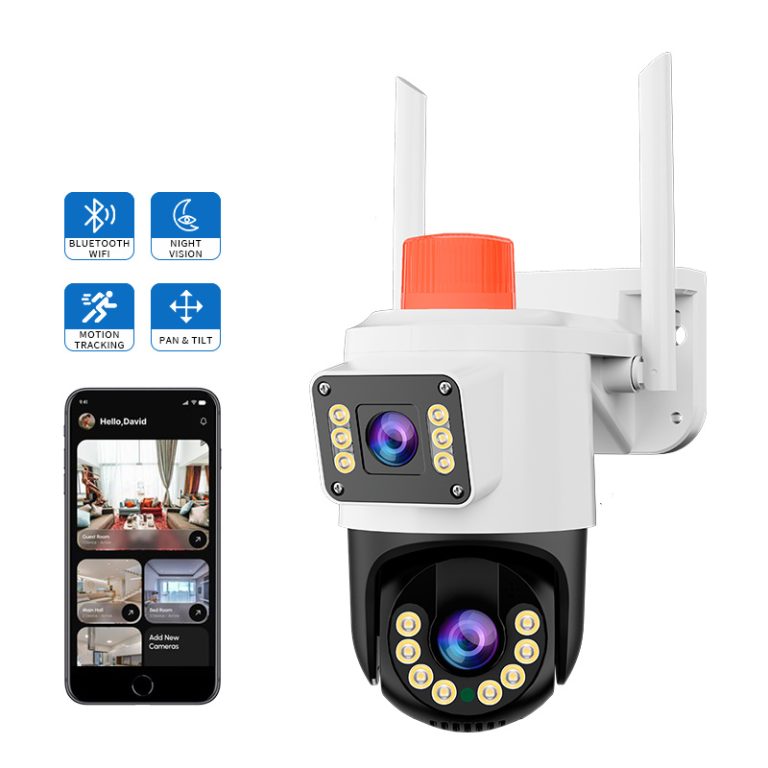
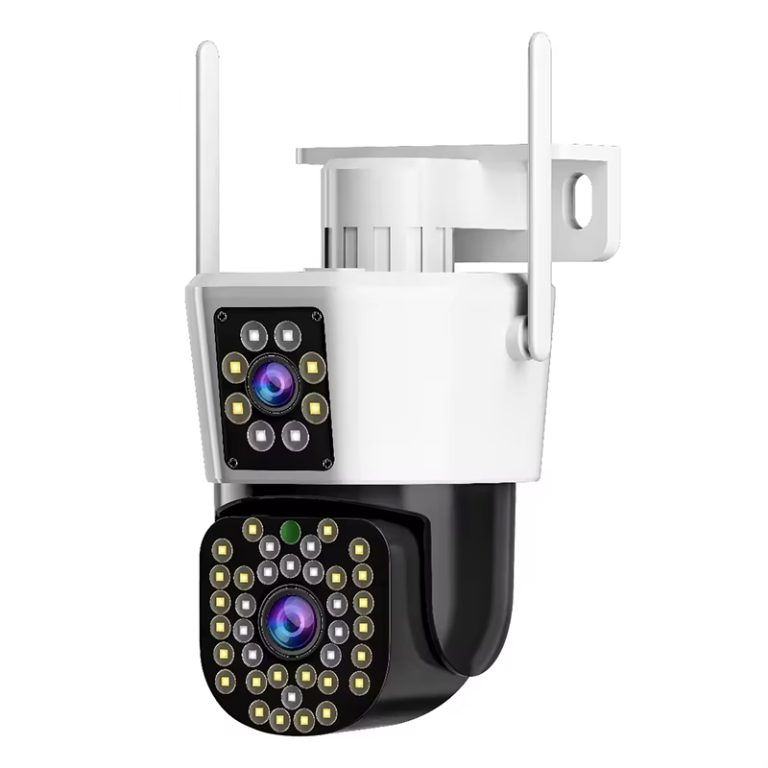
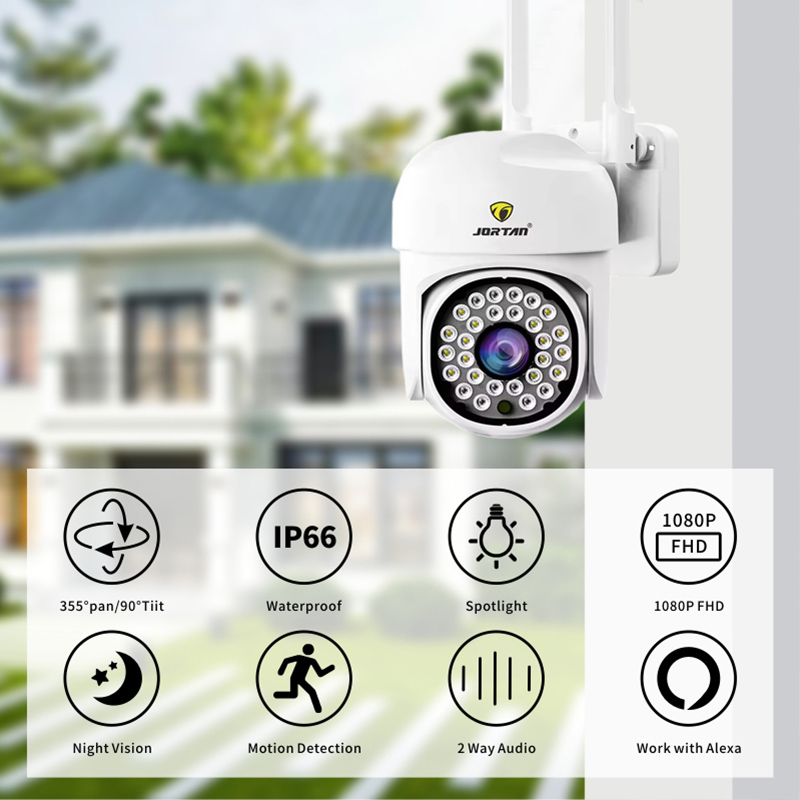
The JT-8161QJ IP camera is a clear example of this approach. Its support for dual light sources, adaptive night behavior, wide dynamic range, bidirectional audio, and intelligent detection reflects a system designed for environments where lighting conditions fluctuate constantly. Instead of relying on static presets, the device adapts to scene changes in real time, which improves both image continuity and practical usability. If you’re interested in this product, you can contact us by visiting the official website for cooperation.
How do deployment and maintenance realities favor IP systems in long-term projects?
Initial installation cost often drives short-term decisions, but long-term stability usually tells a different story.
Why centralized management, remote updates, and software-level configuration reduce lifetime operational cost
HD systems frequently require on-site configuration for many adjustments. Firmware updates, channel reconfiguration, and diagnostics can become labor-intensive when equipment is geographically dispersed. In contrast, IP cameras allow centralized management platforms to handle updates, configuration, diagnostics, and user access control remotely.
How fault isolation and modular replacement reduce downtime in complex environments
When a node in an IP system fails, the failure is often isolated to a single endpoint, while some traditional architectures can allow one failure point to affect multiple channels. Modular replacement becomes faster when each device operates independently.
When does an HD camera still make practical sense?
Despite the advantages of IP systems, HD cameras are not obsolete in every scenario.
Why short-distance, fixed-layout, budget-limited projects can still justify HD deployment
In small retail spaces, temporary installations, or short-distance environments with stable cabling and no expansion plans, HD systems can still deliver acceptable performance at a controlled cost.
Why future scalability and system integration should influence your decision more than the initial price
If the project may expand, integrate with access control, support analytics, or connect across multiple sites, IP architecture quickly becomes a more rational foundation.
How do network behavior and bandwidth planning influence IP camera reliability?
IP cameras succeed or fail based on how realistically you design the surrounding infrastructure.
Why poor bandwidth planning, unmanaged switches, and flat networks create false impressions of device instability
Many perceived “camera problems” are actually network design problems. Packet loss, congestion, and unmanaged broadcast traffic can degrade performance even in well-designed devices. For this problem, proper segmentation, QoS policies, and bandwidth modeling are essential.
How adaptive encoding, dual streams, and local buffering improve resilience under unstable connectivity
Advanced IP cameras often support dual streams, adaptive bitrates, and local storage. These capacities allow them to maintain recording continuity even when upstream connectivity degrades temporarily, and are quite important in industrial sites, remote locations, and mobile deployments.
How should you choose between HD and IP based on actual usage rather than labels?
Choosing correctly requires evaluating your scenario rather than the product brochure.
Why site topology, risk tolerance, expansion plans, and operational model matter more than specifications
A logistics center with multiple buildings, a hospital campus, and a distributed retail chain each impose different requirements. The right choice depends on how you manage data, respond to incidents, and scale infrastructure over time.
How professional buyers align architecture choices with long-term accountability rather than short-term savings
If you are responsible for system uptime, auditability, and evidence integrity, architectural decisions should prioritize predictable performance. Properly designed IP systems provide more tools to achieve that consistency.
Conclusion
The difference between HD cameras and IP cameras is not a matter of definition. It is a matter of system behavior. HD systems tend to offer simplicity within constrained environments, and IP systems offer architectural flexibility, operational scalability, and long-term adaptability when engineered properly.
If the projects involve growth, multi-site management, variable environments, or evolving operational demands, IP architecture is quite necessary, rather than optional. The most reliable deployments are built not on marketing features, but on structural logic that respects how systems behave under real conditions.
FAQs
Q: Can IP cameras work reliably in environments with unstable internet connections?
A: Yes. Many IP cameras support local storage, adaptive bitrates, and buffering. When designed correctly, they continue recording locally even if external connectivity degrades.
Q: Are HD cameras easier to maintain for small projects?
A: In small, fixed environments with minimal expansion plans, HD systems can be simpler to deploy and maintain because their architecture is less dependent on network configuration.
Q: Does higher resolution automatically mean better surveillance results?
A: No. Image usability depends on lighting behavior, dynamic range, compression efficiency, and noise control. Resolution alone does not guarantee clear identification in real conditions.