
When you develop or evaluate a solar-powered security camera system, the key question is not whether solar energy can power a camera, but whether the system can maintain energy balance across variable environmental conditions while sustaining uninterrupted surveillance behavior. Continuous surveillance imposes strict requirements on power stability, load predictability, and recovery margin. This article addresses those requirements from a system-engineering perspective, focusing on how solar panels, storage, and low-power camera architectures operate together to support long-duration, grid-independent monitoring.
Why Can Solar-Powered Security Cameras Work Continuously Without Grid Power?
At a professional level, solar surveillance viability depends on energy closure rather than peak performance. Continuous operation is achieved only when energy inflow, storage, and consumption remain in equilibrium across day–night cycles and adverse weather.
The Energy Balance Logic That Determines Whether Continuous Surveillance Is Feasible
You evaluate feasibility by comparing daily harvested energy against daily system demand, not instantaneous wattage. Solar panels produce intermittent output, while cameras require sustained availability. The system must therefore accumulate surplus energy during productive hours and redistribute it later. Failure typically occurs when nighttime consumption or multi-day low-irradiance periods are underestimated.
In practice, reliable systems operate with conservative margins—average generation exceeds average demand, and storage capacity covers extended deficits. Continuous surveillance is not a function of the panel alone but of the entire energy loop, which behaves predictably over time.
How Does a Solar Panel Convert Sunlight Into Usable Power for Camera Systems?
Solar panels often tend to be treated as passive components by people. However, in surveillance applications, they are active contributors to system stability. Their output characteristics influence every downstream decision.
From Photovoltaic Output to Regulated DC Power in Surveillance Applications
Photovoltaic cells generate variable a DC voltage influenced by irradiance, temperature, and load impedance. Security cameras, however, require tightly regulated input to avoid brownouts, encoding faults, or network dropouts. For this reason, direct panel-to-camera connections are avoided.
Instead, the panel feeds a regulated charging stage that conditions voltage, limits current, and prioritizes storage replenishment. Only after regulation does power reach the camera subsystem. This design ensures that transient fluctuations in solar output do not propagate into imaging, processing, or transmission components, which is essential for maintaining recording integrity.
What Role Does Energy Storage Play in Maintaining 24/7 Surveillance?
Without storage, solar power only enables daytime operation. Continuous surveillance requires temporal decoupling between generation and consumption.
How Do Battery Capacity, Depth of Discharge, and Cycling Strategy Affect Runtime
Battery capacity determines the working time of the system without solar input, but capacity alone is insufficient. You must also comprehensively consider various factors, including depth of discharge limits, charge acceptance rates, and cycle degradation. Aggressive discharge shortens battery life and destabilizes voltage under load.
Well-designed systems not only limit discharge depth and prioritize partial cycling but also allow batteries to survive thousands of cycles while maintaining usable capacity. The design of storage is therefore a longevity decision as much as a runtime calculation, especially for remote deployments where maintenance access is limited.
How Do Low-Power Architectures Reduce the Energy Demand of Security Cameras?
Reducing consumption often has greater reliability gains than increasing generation. Solar-compatible cameras are built around power-aware design principles.
Power Optimization at the Sensor, Processor, and Transmission Levels
Energy demand is distributed unevenly across subsystems. Image sensors draw modest power, while encoding, wireless transmission, and night illumination dominate consumption. Effective systems minimize active processing time, employ efficient codecs, and reduce transmission duty cycles without sacrificing evidentiary value.
This is where architectural decisions matter more than component selection. A camera optimized for solar use treats power as a limited resource, allocating it dynamically rather than continuously drawing peak load.
How Does a Solar Camera Manage Power During Nighttime and Low-Light Periods?
Night operation is the most demanding phase of continuous surveillance. No generation occurs, and visual requirements increase.
Night Operation Strategies That Preserve Surveillance Continuity
Infrared or assisted illumination raises consumption significantly. To remain viable, solar cameras adopt adaptive night strategies—switching between monochrome and color modes, adjusting frame rates, or prioritizing event-driven capture.
These strategies are not compromises but engineering controls that preserve system uptime. The objective is not maximum visual fidelity at all times, but uninterrupted situational awareness within defined energy constraints.
What Engineering Factors Decide Whether a Solar Camera Works Reliably in the Field?
Laboratory performance rarely translates directly into field reliability. Deployment variables dominate long-term success.
Installation Orientation, Environmental Variables, and System Margin Design
Panel orientation, shading patterns, dust accumulation, and seasonal sun angles all affect yield. Engineers account for these by derating expected generation and designing storage for worst-case scenarios rather than average conditions.
Systems that fail in the field usually do so because environmental losses were treated as anomalies rather than constants. Reliable solar surveillance assumes imperfect conditions from the outset.
How Can You Apply These Principles When Selecting a Solar Surveillance Solution?
Selection decisions should focus on system coherence, not feature lists. The goal is operational certainty.
Applying System-Level Power Logic to Real-World Solar Camera Selection
You evaluate whether generation, storage, and consumption have been pre-matched or left for the integrator to reconcile. Integrated designs reduce uncertainty by embedding power logic into the product rather than the deployment.
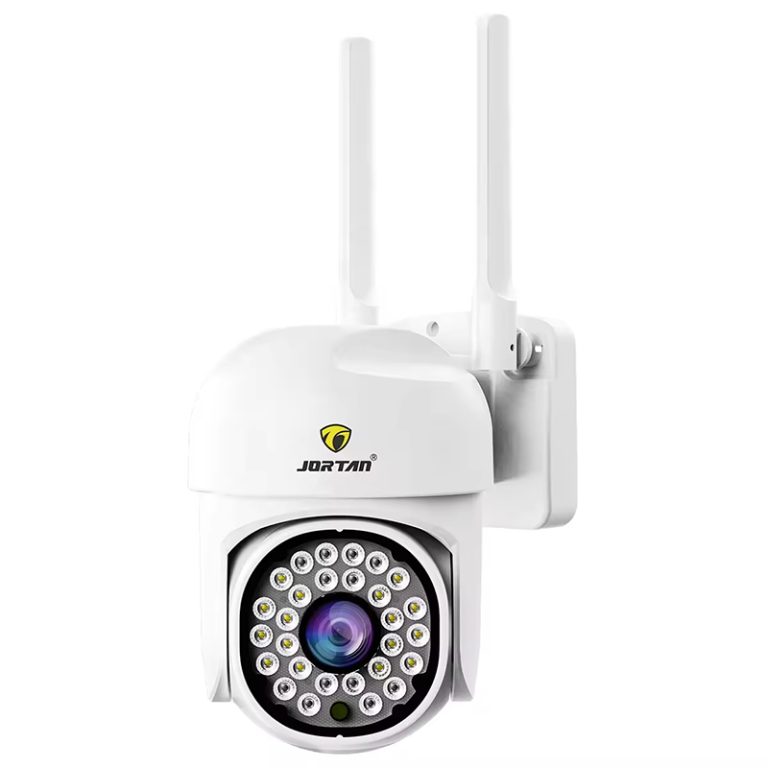
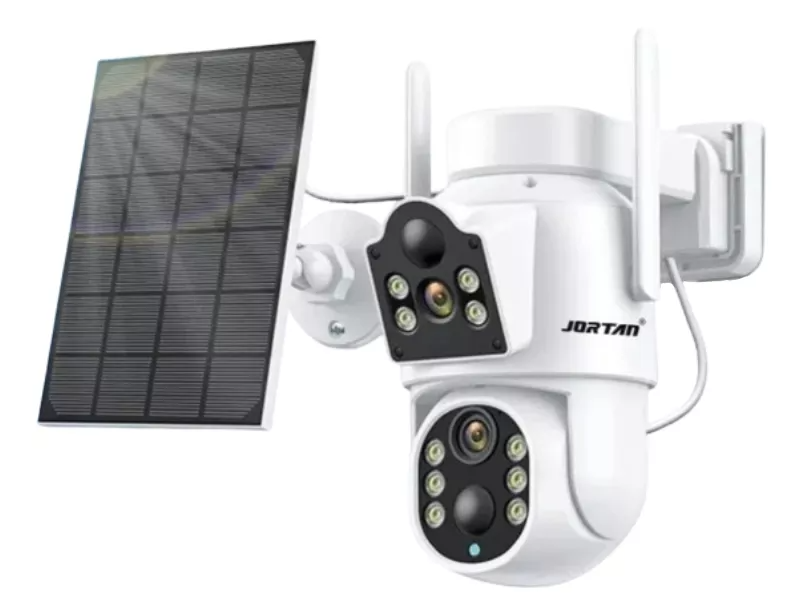
For example, solutions such as the JT-8699T solar camera reflect a system-level approach where low-power imaging, regulated solar input, and storage behavior are designed together, making them more suitable for unattended, off-grid surveillance scenarios.
Where Do Integrated Solar Camera Systems Show Clear Advantages Over Modular Builds?
Modular systems offer flexibility but introduce variability. Integrated systems favor predictability.
Why Integrated Design Reduces Power Loss, Failure Points, and Maintenance Load
Each additional interface introduces loss and potential failure. Integrated solar cameras consolidate power regulation, storage management, and load control under a unified logic, reducing inefficiencies and simplifying diagnostics.
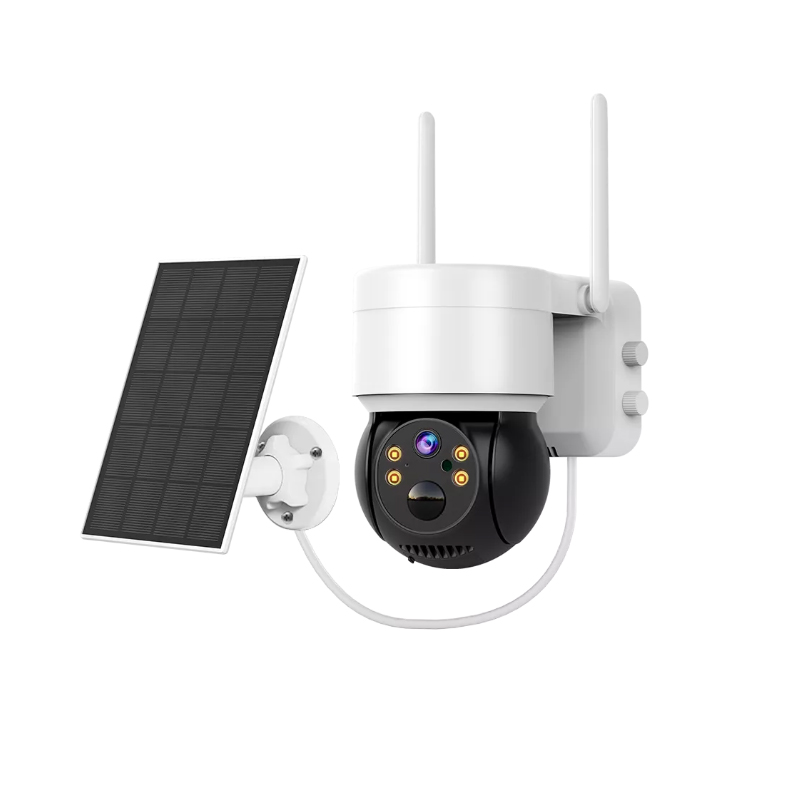
For long-term, remote monitoring, devices such as the JT-8258T solar camera demonstrate why integration matters—fewer assumptions are left to the installer, and operational behavior is more consistent across deployments.
Where Jortan Fits Into Solar Surveillance Engineering?
When you assess solar surveillance products, the most capable suppliers are not those offering the largest panels or highest pixel counts, but those that treat energy as a system constraint rather than a specification.
Jortan operates within this framework by aligning low-power camera architecture, regulated solar input, and storage behavior into cohesive designs intended for long-term, grid-independent operation. Rather than positioning solar as an accessory, its systems reflect a power-first philosophy that aligns with how continuous surveillance actually functions in the field. For expert users, this approach reduces uncertainty during planning and increases confidence during deployment.
FAQs
Q: Can a solar-powered security camera truly support continuous surveillance year-round?
A: Yes, provided the system is engineered around conservative energy assumptions, sufficient storage, and adaptive load management rather than peak specifications.
Q: Is panel size more important than battery capacity in solar surveillance systems?
A: Battery capacity and discharge strategy often matter more, as they determine resilience during extended low-generation periods.
Q: What is the most common cause of failure in solar camera deployments?
A: Overestimating real-world solar yield and underestimating nighttime and seasonal energy demand.