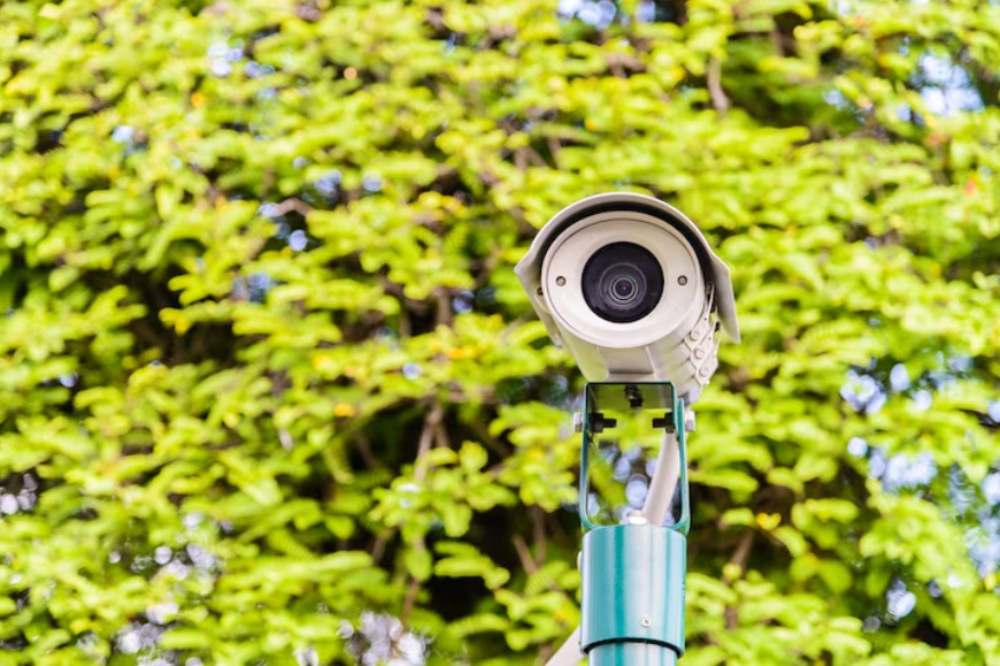
When you secure outdoor property, the challenge is not image clarity alone. Outdoor environments feature unstable lighting and networks, changing weather, and poor conditions for maintenance. A smart IP camera placed outdoors needs to function as an independent system node instead of a simple recording device.
Effective outdoor security depends on predictable behavior under failure conditions— how the camera processes light, how it encodes and transmits data, how it decides what events matter, and how it continues operating when networks degrade. This article analyzes how smart IP cameras function at each of these layers, focusing on system behavior rather than feature marketing.
How Does a Smart IP Camera Capture and Convert Outdoor Scenes into Actionable Data?
How image sensors, optics, and ISP pipelines cooperate under unstable outdoor lighting
Before any data reaches the network, you rely on the optical and processing chain to produce stable signals from unstable environments. Open-air views frequently feature highly dynamic range conditions, including bright sunlight, reflective surfaces, dark areas, rain, or mist, none of which can be corrected downstream if the initial capture suffers damage.
The lens controls light intake and reduces distortion, while the image sensor converts light into electric signals amid different levels of brightness. The ISP handles noise removal, color adjustment, and exposure balancing in real time. In outdoor security, this pipeline must prioritize signal consistency, not aesthetic saturation. Excessive sharpening or aggressive noise reduction may improve appearance but reduce forensic reliability.
If this front-end chain is poorly balanced, downstream AI detection and compression efficiency degrade immediately. You cannot compensate for unstable input with software alone.
How Is Video Encoded and Transmitted Reliably from Outdoor Locations?
Why compression strategy and bitrate control matter more than raw resolution
Once video frames are produced, the next constraint is transport. Outdoor deployments rarely enjoy stable uplink bandwidth. Wind, interference, or shared networks introduce latency and packet loss that can collapse naive streaming pipelines.
Smart IP cameras, therefore, rely on advanced encoding strategies such as H.265-class compression, which preserves structural detail at lower bitrates. More importantly, adaptive bitrate control ensures continuity rather than peak quality. For outdoor security, a complete record at moderate fidelity is more valuable than intermittent ultra-high resolution footage.
You should also consider how dual-stream architectures support parallel use cases—a lower-bitrate stream for live monitoring and alerts, and a higher-fidelity stream for local or cloud storage. This division allows the system to respond quickly despite worsening network conditions.
How Do Smart IP Cameras Decide What Is Worth Alerting You To?
How on-device analysis reduces false alarms in open outdoor environments
Outdoor environments generate constant motion of various objects, including foliage, animals, rain, light transitions, and so on. If every movement triggered alerts, the system would become unusable. Smart IP cameras therefore perform edge-side event filtering before any alert reaches you.
Rather than reacting to pixel changes alone, on-device logic evaluates shape, trajectory, and persistence. Human-driven models take priority over vertical motion patterns and proportional geometry, and dismiss irregular or repetitive environmental noise. Such methods reduce wrong warnings but maintain sensitivity to genuine intrusions.
Edge processing also shortens response time. Decisions are made locally, without a round-trips to cloud platforms, which is critical when you require immediate notification or deterrence.
How Does Pan-Tilt-Zoom Architecture Extend Outdoor Coverage Without Adding Cameras?
Why mechanical control remains critical despite software intelligence
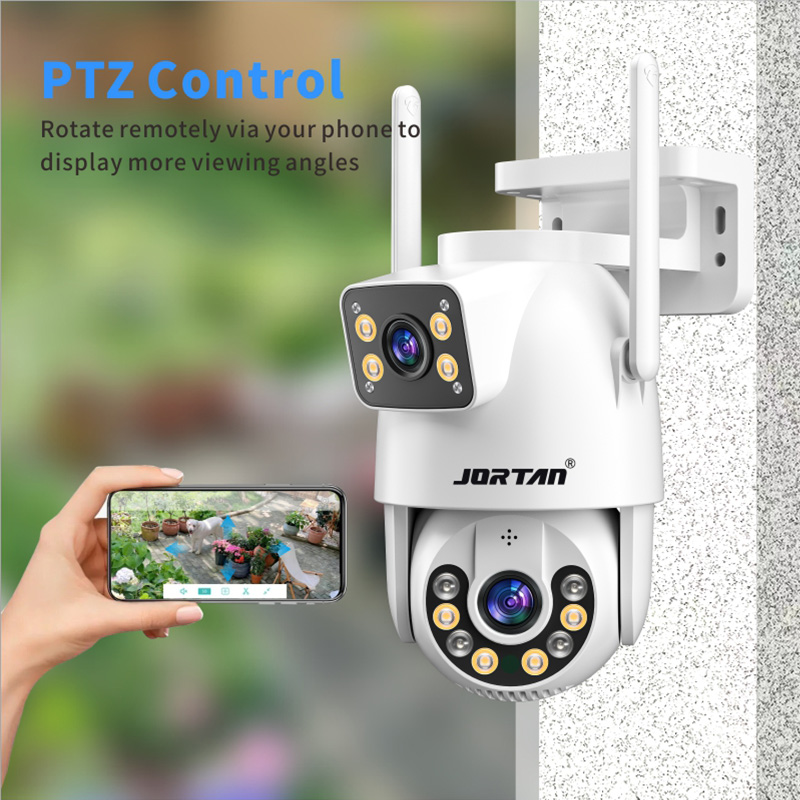
Software intelligence cannot replace a physical perspective. Fixed-view cameras always leave unseen sections in broad outdoor zones like yards, boundaries, or vacant grounds. PTZ design solves this issue by allowing a single device to adjust its viewing direction on demand.
Mechanical rotation enables both scheduled patrols and event-driven tracking. When paired with intelligent triggers, the camera can shift focus toward detected activity rather than recording static backgrounds. This reduces the total number of cameras required while preserving coverage continuity.
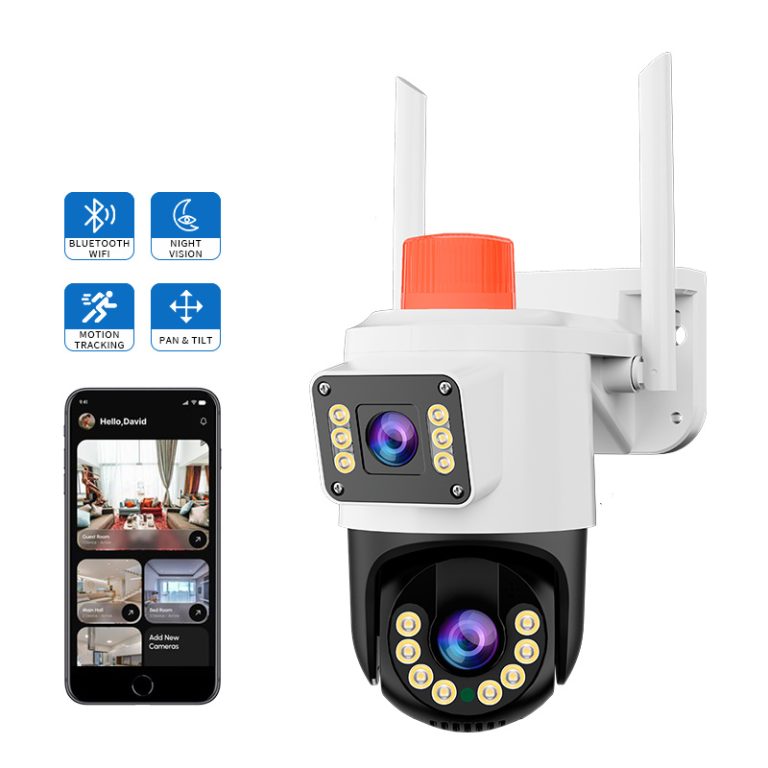
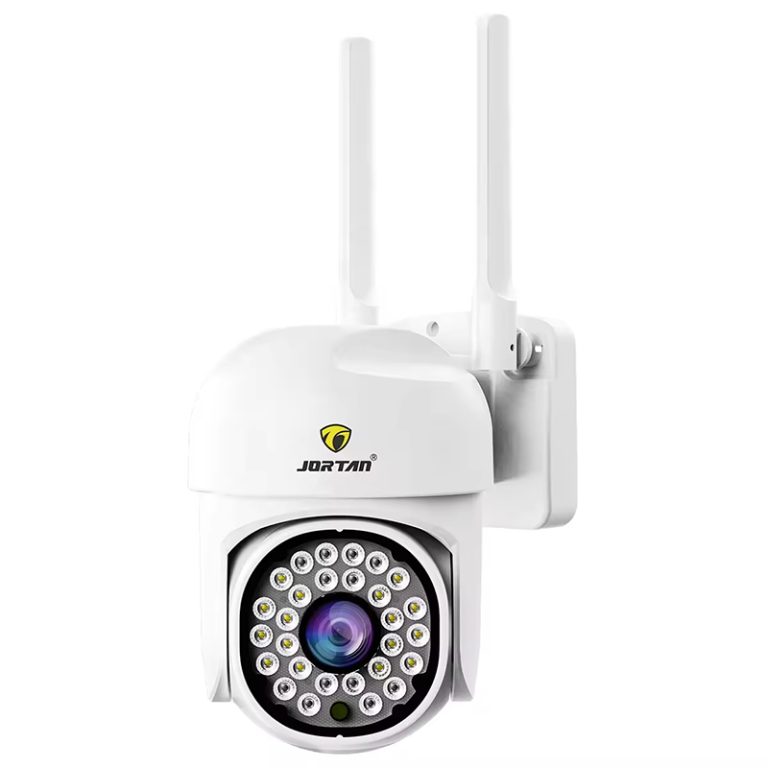
A practical example of this architectural approach can be seen in the JT-9697QJ IP camera, where coordinated horizontal and vertical rotation supports wide-area surveillance without sacrificing positional accuracy. In such systems, PTZ is not an accessory—it is a core component of spatial security logic.
How Do Smart IP Cameras Continue Operating When Networks Fail?
Why local logic and fallback connectivity define true outdoor reliability
Outdoor security systems must assume that networks will fail. Fiber cuts, router outages, or wireless interference are common in perimeter environments. A smart IP camera must therefore remain functional in isolation.
Local storage ensures that video evidence is preserved even when upstream links drop. Equally important is the camera’s ability to maintain local access paths, such as direct device connections or short-range fallback modes, allowing you to retrieve footage without cloud dependency.
This autonomy transforms the camera from a terminal into an independent evidence node, capable of recording, classifying, and storing events regardless of network state. For critical outdoor property, this distinction defines whether incidents are merely observed or properly documented.
How Is Long-Term Outdoor Deployment Achieved Without Constant Maintenance?
How enclosure design, power stability, and thermal control shape lifespan
Outdoor cameras face continuous environmental stress, including temperature cycles, moisture ingress, dust, and electrical fluctuation. Long-term reliability depends on enclosure integrity, thermal release, and power regulation.
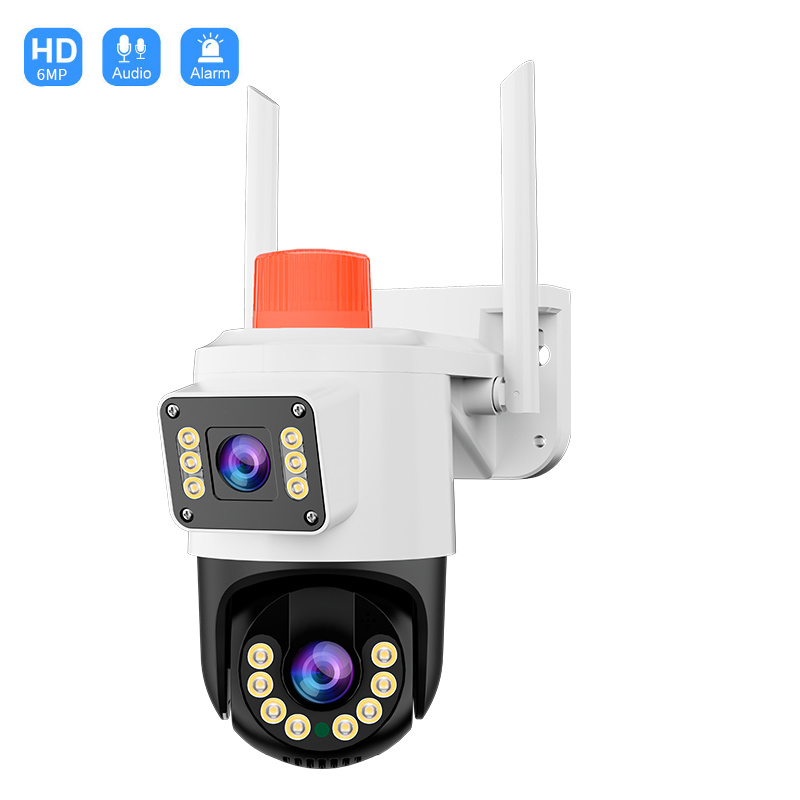
Ingress protection ratings address water and particles, but the internal heat management determines the lifespan of some components. Sensors, processors, and power modules degrade rapidly under unmanaged heat. Stable voltage regulation is equally essential, particularly for PTZ motors and night illumination systems that draw variable loads.
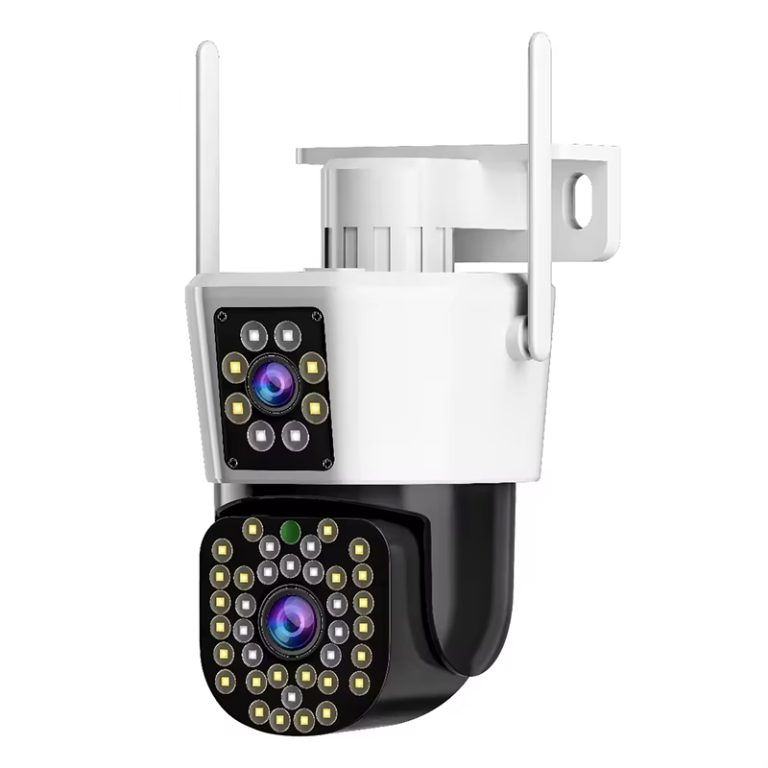
You can observe these design priorities reflected in the JT-9689UQJ IP camera, where enclosure sealing, rotation stability, and continuous operation considerations are treated as system-level requirements rather than add-on features.
How Does a Professional Manufacturer Fit into an Outdoor IP Camera Strategy?
Why system thinking matters more than isolated device features
At scale, outdoor security is not about selecting individual devices but about assembling interoperable system nodes that behave consistently over time. This is where manufacturer philosophy becomes relevant.
Jortan positions our outdoor IP camera designs around deployment logic rather than feature excess. Our emphasis lies in stable imaging pipelines, edge-side intelligence, mechanical reliability, and autonomous operation under constrained conditions.
For you as an expert user, this approach reduces integration friction. Devices that follow coherent system principles are easier to deploy, scale, and maintain across diverse outdoor environments without constant re-calibration.
What Makes a Smart IP Camera Suitable for Outdoor Property Security?
A smart IP camera earns its place in outdoor security not through headline specifications, but through predictable performance under uncertainty. As brightness varies, networks fail, or environments change, the system must continue to observe, choose, and record without supervision.
When assessing outdoor cameras as system components, including optical, computational, mechanical, and operational, you move beyond marketing claims toward architectures that actually protect property. In outdoor security, reliability is not a feature. It is the outcome of disciplined system design.
FAQs
Q1: Why are outdoor smart IP cameras more sensitive to the design of the system than indoor models?
A: Outdoor environments have uncontrolled variables such as weather, lighting extremes, and network instability, which expose weaknesses in power regulation, imaging pipelines, and local processing that indoor systems rarely encounter.
Q2: Is higher resolution always beneficial for outdoor property security?
A: No. Excessive resolution increases bandwidth demand and storage load without improving evidentiary value if compression and stability suffer. Consistent, well-encoded footage is more valuable than intermittent ultra-high-definition streams.
Q3: What should be evaluated first when deploying smart IP cameras outdoors?
A: How the camera behaves during failure scenarios, including network loss, low light, or power fluctuation, should be assessed first because these moments define whether the system truly secures your property.